By Nurse K – Primary Health Care Nurse
A child vomiting with no fever can be scary for any parent. As a primary healthcare nurse and mum, I am here to help you understand the causes, safe home care steps, and when to worry.
Many parents immediately fear the worst. However, vomiting without fever is common in children and is often caused by a mild, short-lived condition.
As a primary healthcare nurse, I’ve seen many parents panic in this situation. The good news is that in most cases, the cause is not serious. However, there are times when vomiting may need medical attention.
In this article, I’ll explain the common causes, the warning signs to watch for, and what you can safely do at home.
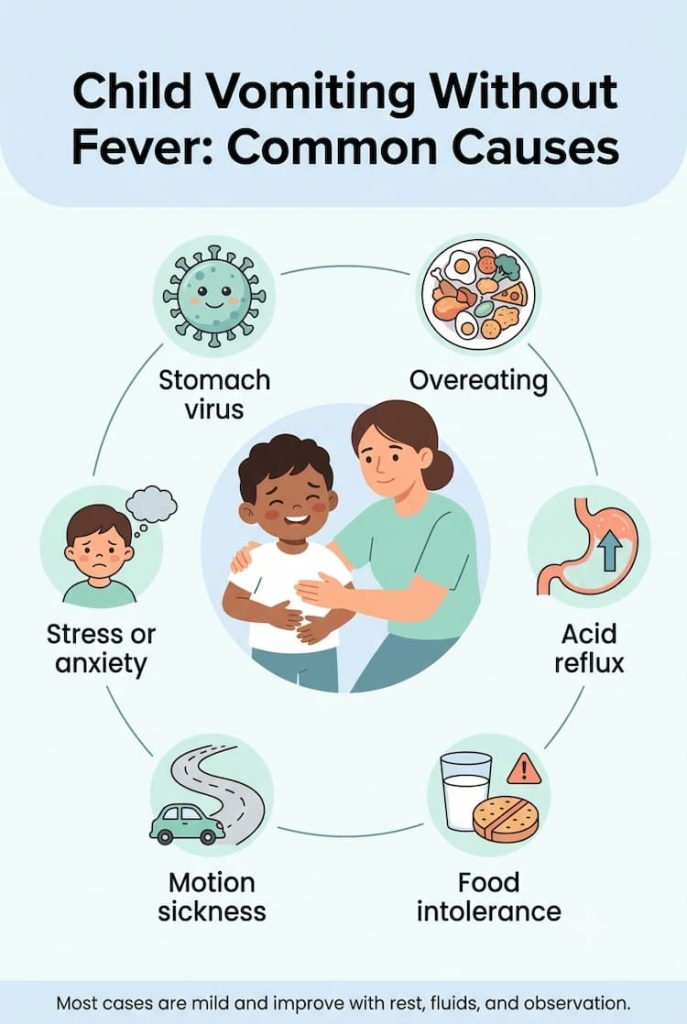
Common Causes of Child Vomiting with no Fever
There are several reasons why a child may vomit without having a fever.
1. Stomach viruses (early stage)
Sometimes vomiting is the first symptom of a stomach virus.
Fever or diarrhoea may develop later — or not at all.
2. Overeating or eating too quickly
Children often eat fast or overeat, especially when they enjoy a meal.
This can irritate the stomach and lead to vomiting.
3. Acid reflux
Some children experience reflux, in which stomach contents come back up.
This is more noticeable:
• at night
• after lying down
• after certain foods
4. Food intolerance or sensitivity
Certain foods may not agree with your child’s system.
Common triggers include:
• dairy
• oily foods
• highly processed snacks
5. Motion sickness
Travelling in a car or sudden movement can cause nausea and vomiting in some children.
Children can sometimes vomit due to the following:
• anxiety
• stress
• excitement
This is more common than many parents realise.
Red Flags: When You Should Be Concerned
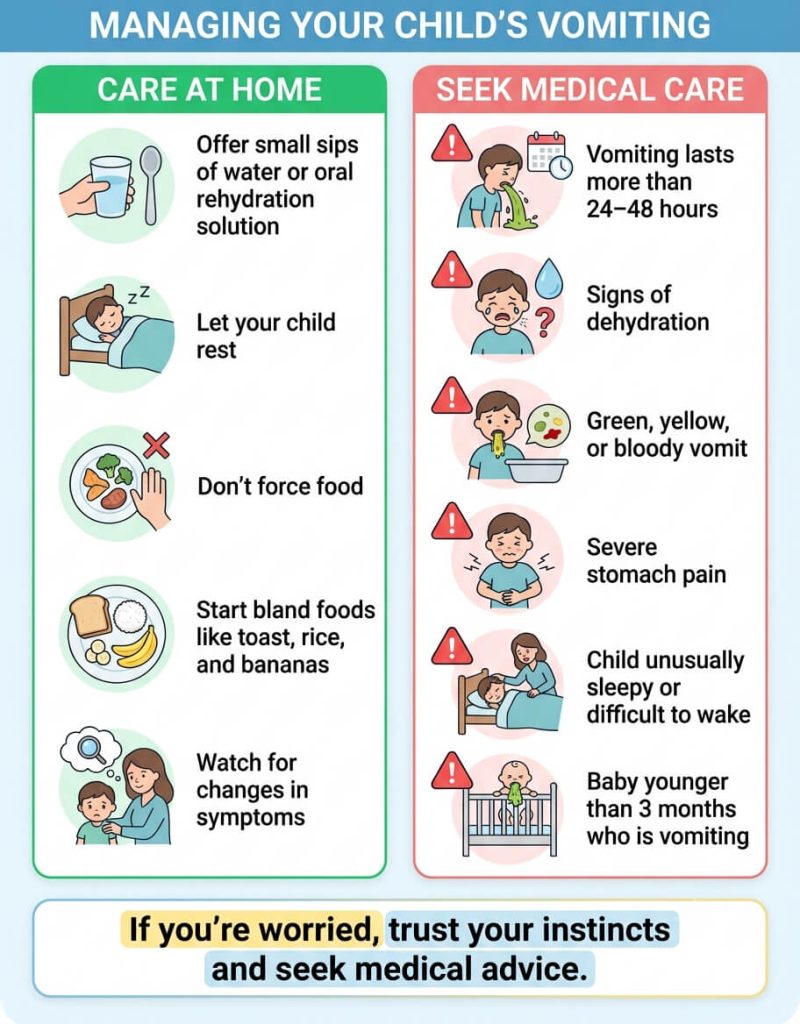
While most cases are mild, sometimes vomiting may signal something more serious.
You should seek medical advice if your child has:
• Vomiting that lasts more than 24–48 hours
• Signs of dehydration
• Severe or persistent abdominal pain
• Unusual sleepiness, confusion, or weakness
• Vomiting that is green, yellow, or contains blood
Signs of dehydration include:
• dry mouth
• no tears when crying
• sunken eyes
• passing very little urine
Important:
If your baby is younger than 3 months, vomiting should always be checked by a healthcare professional.
What Parents Can Do at Home
If your child seems otherwise well, there are simple steps you can take at home.
1. Give small amounts of fluid
Offer fluids in small, frequent sips rather than large amounts at once.
Good options include:
• water
• oral rehydration solutions
• clear fluids
2. Let your child rest
The body needs energy to recover. Allow your child to rest as much as needed.
3. Don’t force food
If your child is not hungry, that’s okay.
Start with light foods once vomiting settles:
• toast
• rice
• bananas
Take note of:
• when the vomiting happens
• what your child ate before
• any other symptoms
This can help identify the cause.
When to Visit a Clinic
Even without a fever, it’s best to visit a clinic if:
• vomiting continues or worsens
• your child shows signs of dehydration
• your child seems very unwell
• you feel unsure or concerned
As a nurse, I always tell parents the following:
Trust your instinct—if something doesn’t feel right, get it checked.
A Calm Reminder for Parents
Remember, child vomiting with no fever is usually not serious, but knowing the red flags is essential
In many cases, it is temporary and manageable at home with the right care and observation.
Knowing what to watch for can help you stay calm and make confident decisions for your child.
If you found this post helpful, you might also like:
Clinic or Hospital for a Sick Baby? Emergency Warning Signs Parents Should Know
Home Care for Diarrhoea in Toddlers: A Nurse’s Guide for Busy Mums
Baby Gas and Wind: How to Relieve Trapped Gas and Soothe a Gassy Baby

Nurse K is a practising PHC nurse in South Africa. She writes anonymously to help busy mums raise healthy little ones. Real advice. No jargon. No judgement.
Medical Disclaimer
BusyMumsWorld provides general information for educational purposes only. I am a registered nurse, but the content on this site does not constitute medical advice and does not replace an in-person consultation with your healthcare provider.
Always seek professional medical advice for yourself or your child. Do not delay seeking care because of something you have read on this site.
If you are experiencing a medical emergency, call emergency services immediately.