By Kubershnie Manikam – Primary Health Care Nurse
Seeing your child with a fever can make even the most confident parent anxious. As a nurse and parent, I completely understand that worry. The good news is that most fevers are your child’s body doing exactly what it should—fighting off an infection.
In this article, I’ll guide you through what counts as a normal fever, signs to watch for, practical home care tips, and special considerations for newborns. By the end, you’ll feel more confident about what you can safely manage at home and when to call your doctor.
Fever in Newborns: Special Considerations
Fever in a newborn under 3 months old is treated much more seriously than in older children. Even a temperature of 38°C should prompt immediate medical attention. Their immune systems are still developing, and infections can progress rapidly.
For example, I once cared for a 6-week-old baby whose parents noticed a slight rise in temperature. Though the baby seemed alert, we immediately referred her to the clinic. Early evaluation ensured she received timely observation and fluids, preventing complications.
Signs that your newborn may be unwell include lethargy, poor feeding, vomiting, diarrhoea, rapid breathing, or a rash. If any of these appear, contact your doctor immediately. Home management is not advised in this age group.
Understanding Fever in Children
A fever is simply when a child’s body temperature rises above the normal range of 36.5–37.5°C. Most often, it is a sign that their immune system is doing its job. Fever is usually caused by viral infections such as colds or the flu, minor bacterial infections, or, occasionally, after routine immunisations.
I remember seeing a 3-year-old with a temperature of 38.2°C after a mild cold. She was playing, drinking fluids, and smiling between her sneezes. In such cases, home monitoring and comfort measures are sufficient.
Measuring Temperature Safely:
- Oral thermometers are best for children over 4–5 years.
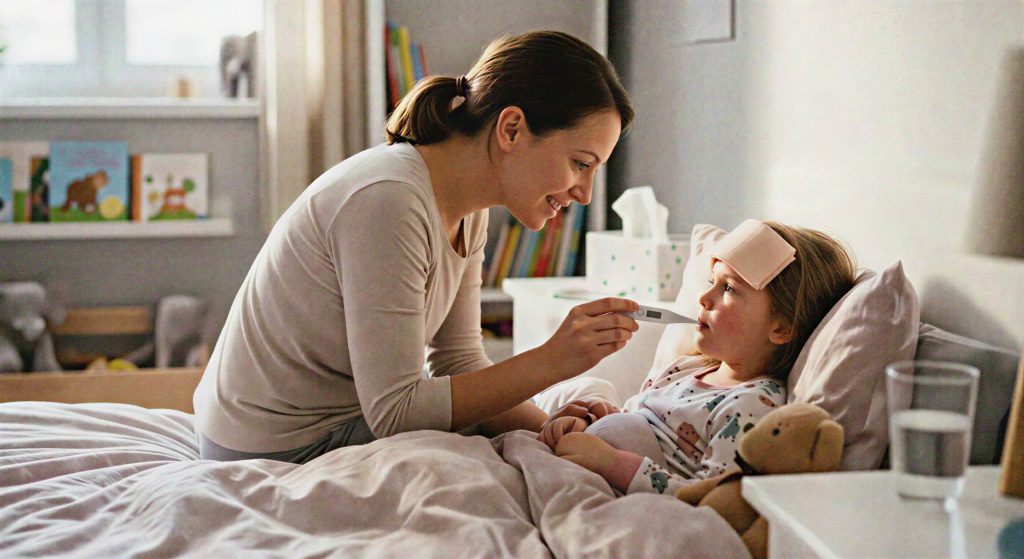
- Rectal thermometers are the most accurate for infants.
- Underarm (axillary) readings are safe but less precise.
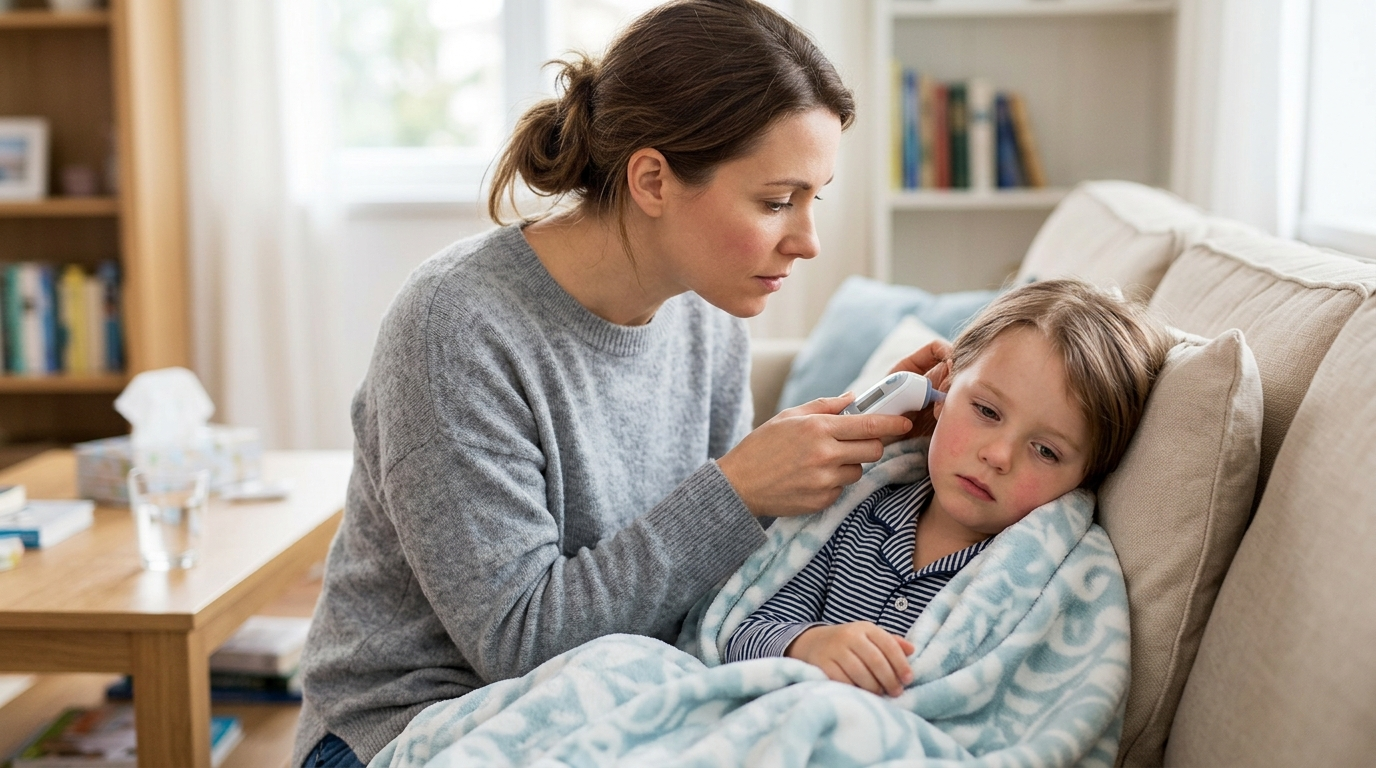
- Ear (tympanic) thermometers are quick and convenient for children over 6 months.
What’s Considered Normal
Most mild fevers are short-lived and harmless. An alert child who is drinking fluids and playing can usually stay at home without worry. Remember, a fever itself is not a disease but a symptom of the body fighting infection.
For instance, I once cared for a 6-year-old with a fever of 37.8°C after a runny nose and cough. She was eager to play with her toys and eat lunch. Her fever resolved within 24 hours without any intervention.
You can also check my article on child vomiting if your child has both fever and vomiting.
When to Be Concerned
It’s important to know the warning signs. Call your doctor if your child:
- Has a temperature above 40°C
- Has a fever lasting more than 3 days
- Appears unusually lethargic or irritable
- Cannot keep fluids down or shows signs of dehydration
- Develops a rash, seizures, or difficulty breathing
For example, a 2-year-old patient came in with a temperature of 40.2°C and persistent vomiting. An urgent referral enabled early treatment and a smooth recovery.

Home Care Tips for Fevers
Here’s what you can do safely at home:
- Fluids: Keep your child well hydrated with water, soups, or breast milk/formula.
- Comfort: Dress them in light clothing, keep the room cool, and encourage rest.
- Fever relief: Paracetamol may be used only if advised by your doctor or pharmacist. Avoid guessing doses.
- Observation: Track your child’s temperature and general condition.
I had a 5-year-old with a mild fever who loved playing. By giving fluids and keeping him comfortable, the fever resolved in a day. His parents were reassured and felt empowered to care for him safely at home.
Common Myths About Fever
Many parents worry unnecessarily. Here’s what I tell them:
Myth: “High fever is always dangerous.” Reality: It depends on the child’s overall condition.
Myth: “All fevers must be suppressed.” Reality: Mild fevers are part of the immune response and often help fight infection.
I once reassured a mother who was panicking over a 38.5°C fever. Her child was alert, drinking fluids, and playing — exactly what I would expect with a typical fever.
When to Seek Professional Help
Contact your doctor immediately if:
- Fever persists beyond 3 days
- The child is unresponsive, extremely irritable, or dehydrated
- Suddenly, unexplained symptoms appear
- For newborns (<3 months), any fever should be evaluated immediately
Child Vomiting But No Fever: Causes, Red Flags, and What Parents Should Do
Wrapping It Up
Most fevers are manageable at home. By carefully monitoring fluids, your child’s comfort, and observing warning signs, you can safely care for your child. Always seek professional advice if you are unsure. Fever is often a sign that your child’s immune system is working effectively.
Child Vomiting But No Fever: Causes, Red Flags, and What Parents Should Do
FAQs
Q: What is a normal temperature for a child?
A: 36.5–37.5°C is normal; a mild fever is 37.5–38°C.
Q: How long can a child safely have a fever?
A: Most fevers last 1–3 days. Contact a doctor if it persists longer.
Q: Can I give my child paracetamol safely?
A: Only follow your doctor or pharmacist’s instructions. Never guess the dose.

Nurse K is a practising PHC nurse in South Africa. She writes anonymously to help busy mums raise healthy little ones. Real advice. No jargon. No judgement.
Medical Disclaimer
Medical Disclaimer
The information provided on BusyMumsWorld is for general informational and educational purposes only. This website does not constitute medical advice, diagnosis, or treatment.
About Me
I am a registered nurse with the South African Nursing Council (SANC). I draw upon my nursing training and clinical experience to provide helpful, evidence-informed information for mothers, babies, and families. However, my role on this website is that of an educator and content creator, not your personal healthcare provider.
No Nurse-Patient Relationship
Your use of this website does not create a nurse-patient relationship between you and me. The content on this site does not replace an in-person clinical assessment, physical examination, or professional medical consultation. In accordance with the Nursing Act, 2005 (Act No. 33 of 2005) and the SANC Code of Ethics, I clearly distinguish between my role as a registered nurse in clinical practice and my role as a content creator.
For Babies and Children
Content related to infant and child health is for educational purposes only. Every child is unique. What works for one child may not be appropriate for another. Always consult your paediatrician, clinic sister, family doctor, or other qualified healthcare provider regarding any medical concerns about your child, including changes in behaviour, feeding, sleep, growth, or physical symptoms.
For Mothers
Content related to pregnancy, antenatal care, postpartum recovery, breastfeeding, and maternal health is for educational purposes only. Your healthcare needs are individual and may change during pregnancy and the postnatal period. Always seek guidance from your doctor, midwife, obstetrician, lactation consultant, or local clinic for any questions about your or your baby’s health.
South African Context
Where possible, I aim to provide information relevant to the South African healthcare context, including public and private healthcare considerations. However, healthcare resources, protocols, and availability may vary by province, facility, and individual circumstance. Always confirm information with your own healthcare provider.
SANC Compliance
In compliance with the rules and ethical guidelines of the South African Nursing Council (SANC):
- I clearly state that the information on this site does not constitute the practice of nursing as defined in the Nursing Act
- I do not offer individualised nursing assessments, diagnoses, or treatment plans through this website
- I encourage all readers to seek in-person care from registered healthcare professionals for their specific health needs
- I maintain professional boundaries by not providing specific medical advice in response to comments, emails, or messages
Emergency Warning
If you or your child is experiencing a medical emergency, do not use this website for advice. Call emergency services immediately:
- National emergency number: 10111 or 112 (from a mobile)
- Medical emergency/ambulance: 10177
- Alternatively, go to your nearest hospital emergency department, clinic, or doctor immediately.
Do not delay seeking emergency care because of something you have read on this website.
Limitation of Liability
I make every effort to ensure the accuracy of the information published on this site. However, medical knowledge is constantly evolving, and information may become outdated. I cannot guarantee that all information is complete, current, or accurate for every individual circumstance. I assume no responsibility or liability for any errors or omissions in the content of this site. Your use of this website is at your own risk.
Affiliate Disclosure
BusyMumsWorld participates in affiliate marketing programmes. This means that some links on this site may be affiliate links. If you choose to purchase through these links, I may earn a small commission at no additional cost to you.
My Commitment to You
I am a registered nurse with the South African Nursing Council (SANC). My recommendations are based on my professional knowledge, clinical experience, and genuine belief that a product may be helpful to my audience. Affiliate partnerships do not influence my clinical judgement, the information I provide, or my commitment to evidence-based content.
Important Note
Products mentioned on this site are for informational purposes only. If a product makes medical claims, please consult your doctor, paediatrician, or other qualified healthcare provider before use. My nursing credentials do not constitute an endorsement of any specific product, and I do not receive compensation for clinical recommendations.
Last Updated: March 2026