If your child has a bug bite, the best treatment is to clean the area, apply a cold compress, and prevent scratching. Most insect bites in children are harmless and heal within a few days, but some signs may need medical attention.
As a primary healthcare nurse and a mum, I know how common and stressful bug bites can be—especially during warmer months. The good news is that most bites can be safely managed at home without medication if you know what to do.
How to Treat Bug Bites in Children
The safest way to treat bug bites in children includes:
- Wash the area with mild soap and water
- Apply a cold compress for 5–10 minutes
- Avoid scratching the bite
- Use soothing remedies like baking soda paste or oatmeal baths
- Monitor for signs of infection
What Is the Fastest Way to Stop Itching From Bug Bites?
The fastest way to stop itching from bug bites in children is to apply a cold compress. Cold reduces swelling and numbs the nerves, helping to break the itch–scratch cycle quickly and safely.
What to Do Immediately After a Bug Bite
Acting quickly can reduce swelling, itching, and the risk of infection.
Step 1 – Remove the Stinger (If Present)
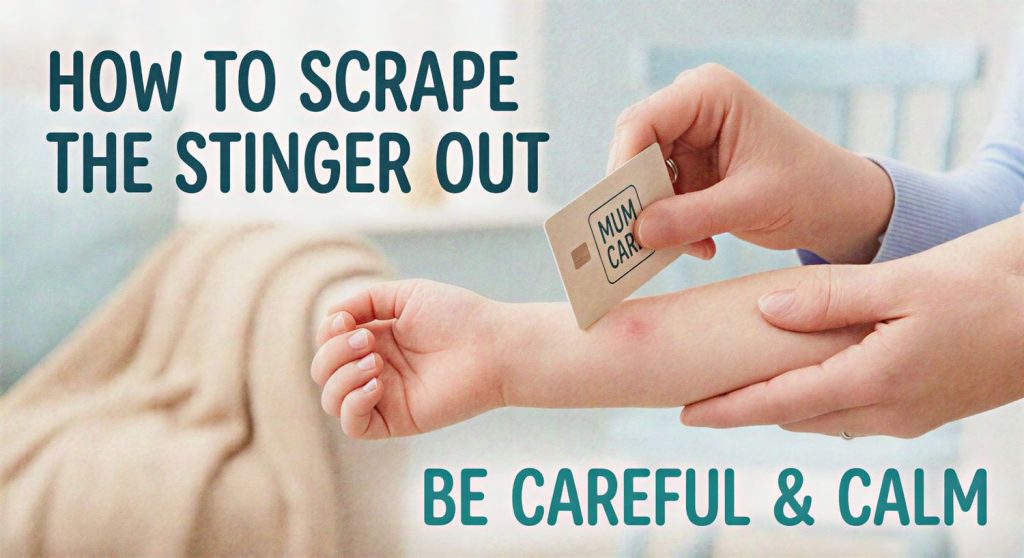
If a bee has left a stinger, gently scrape it out using your fingernail or a flat object like a card. Avoid squeezing it.
Wash the Area
Use cool water and mild soap. Pat dry gently.
Apply a cold compress.
Use a clean cloth with cold water or wrapped ice. Apply for 5–10 minutes.
Common Causes of Insect Bites in Children
Different insects cause different reactions. Knowing the likely cause can help guide treatment.
- Mosquitoes: Small, itchy red bumps
- Bees/Wasps: Painful swelling; bees may leave a stinger
- Ant bites: Painful bumps that may form blisters
- Ticks: Often painless; monitor for rash later
- Midges/Sandflies: Small, itchy bites often in clusters
Natural Ways to Soothe Bug Bites in Children
If your child is uncomfortable, these safe, non-medication methods can help.
Cold Compress
Still, the safest and most effective method. Use for 5 minutes at a time.
Baking Soda Paste
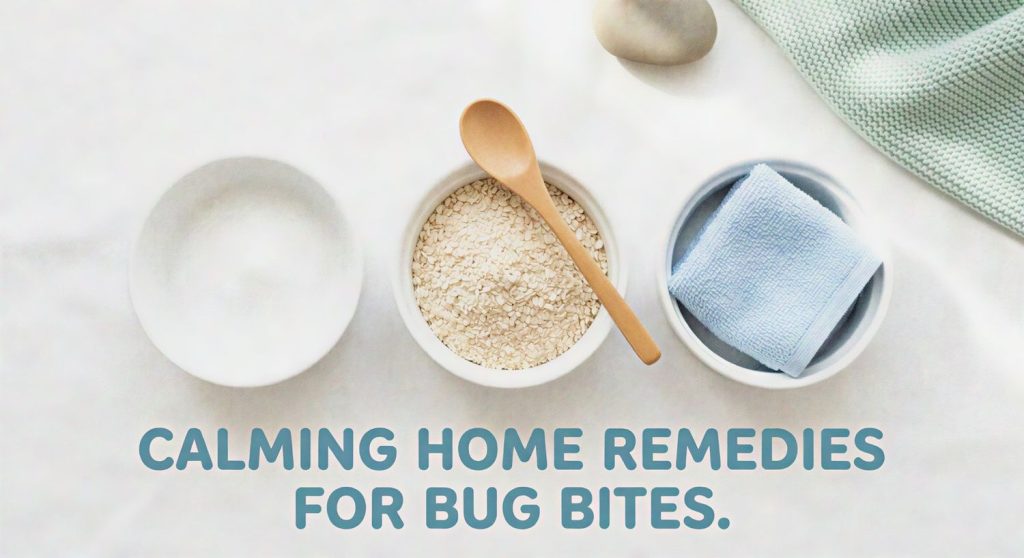
Mix baking soda with a small amount of water. Apply for 10 minutes, then rinse.
Oatmeal Bath
For multiple bites, add finely ground oatmeal to lukewarm bathwater.
Ice Cube Method
Gently rub an ice cube over the bite for short periods to reduce itching.
What Not to Put on Bug Bites in Children
Avoid these common mistakes:
- Toothpaste (can irritate the skin)
- Undiluted essential oils (too strong for children)
- Allowing scratching can lead to infection.
If unsure about any product, consult a pharmacist or doctor.
How to Prevent Bug Bites in Children
Preventing bug bites in children can reduce how often your child experiences itching and discomfort.
- Use mosquito nets for babies
- Dress children in long sleeves outdoors
- Remove standing water around your home
- Keep windows and doors screened
When to See a Doctor for Bug Bites in Children
Most bites heal within a few days, but seek medical care if:
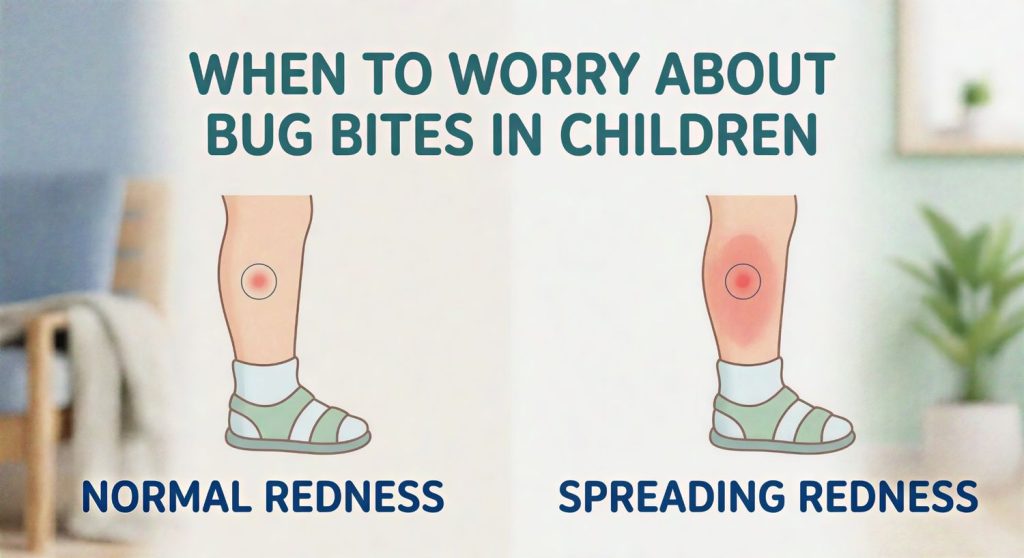
- Redness spreads or worsens after 48 hours
- There is pus or increasing pain
- Your child develops a fever
- Your child seems unusually sleepy or unwell
Emergency Signs (Seek Urgent Help)
Difficulty breathing, swelling of the face, lips, or tongue, widespread rash, or sudden weakness
Frequently Asked Questions
Can a child get an infection from a bug bite?
Yes. Infection can occur if the skin is broken from scratching.
How long do bug bites last in children?
Most improve within 2–3 days, though marks may last longer.
Are some children more sensitive to bites?
Yes. Some children react more strongly, which is normal.
Related Child Health Topics
These topics are often linked, and understanding them can help you care for your child more confidently. While you’re here, you may also find these helpful:
- Child Fever: What Is Normal and What Isn’t
- Managing Mild Allergies at Home: A Nurse Mum’s Guide
- Child Vomiting But No Fever: Causes, Red Flags, and What Parents Should Do
Summary: What to Do for Bug Bites in Children
- Clean the bite
- Apply a cold compress
- Avoid scratching
- Use simple soothing remedies
- Watch for warning signs
Most bug bites are harmless and can be safely managed at home. If your child’s symptoms change or you feel concerned at any point, it’s always best to seek medical advice.

Nurse K is a practising PHC nurse in South Africa. She writes anonymously to help busy mums raise healthy little ones. Real advice. No jargon. No judgement.
Medical Disclaimer
Medical Disclaimer
The information provided on BusyMumsWorld is for general informational and educational purposes only. This website does not constitute medical advice, diagnosis, or treatment.
About Me
I am a registered nurse with the South African Nursing Council (SANC). I draw upon my nursing training and clinical experience to provide helpful, evidence-informed information for mothers, babies, and families. However, my role on this website is that of an educator and content creator, not your personal healthcare provider.
No Nurse-Patient Relationship
Your use of this website does not create a nurse-patient relationship between you and me. The content on this site does not replace an in-person clinical assessment, physical examination, or professional medical consultation. In accordance with the Nursing Act, 2005 (Act No. 33 of 2005) and the SANC Code of Ethics, I clearly distinguish between my role as a registered nurse in clinical practice and my role as a content creator.
For Babies and Children
Content related to infant and child health is for educational purposes only. Every child is unique. What works for one child may not be appropriate for another. Always consult your paediatrician, clinic sister, family doctor, or other qualified healthcare provider regarding any medical concerns about your child, including changes in behaviour, feeding, sleep, growth, or physical symptoms.
For Mothers
Content related to pregnancy, antenatal care, postpartum recovery, breastfeeding, and maternal health is for educational purposes only. Your healthcare needs are individual and may change during pregnancy and the postnatal period. Always seek guidance from your doctor, midwife, obstetrician, lactation consultant, or local clinic for any questions about your or your baby’s health.
South African Context
Where possible, I aim to provide information relevant to the South African healthcare context, including public and private healthcare considerations. However, healthcare resources, protocols, and availability may vary by province, facility, and individual circumstance. Always confirm information with your own healthcare provider.
SANC Compliance
In compliance with the rules and ethical guidelines of the South African Nursing Council (SANC):
- I clearly state that the information on this site does not constitute the practice of nursing as defined in the Nursing Act
- I do not offer individualised nursing assessments, diagnoses, or treatment plans through this website
- I encourage all readers to seek in-person care from registered healthcare professionals for their specific health needs
- I maintain professional boundaries by not providing specific medical advice in response to comments, emails, or messages
Emergency Warning
If you or your child is experiencing a medical emergency, do not use this website for advice. Call emergency services immediately. Alternatively, go to your nearest hospital emergency department, clinic, or doctor immediately.
Do not delay seeking emergency care because of something you have read on this website.
Limitation of Liability
I make every effort to ensure the accuracy of the information published on this site. However, medical knowledge is constantly evolving, and information may become outdated. I cannot guarantee that all information is complete, current, or accurate for every individual circumstance. I assume no responsibility or liability for any errors or omissions in the content of this site. Your use of this website is at your own risk.
Affiliate Disclosure
BusyMumsWorld participates in affiliate marketing programmes. This means that some links on this site may be affiliate links. If you choose to purchase through these links, I may earn a small commission at no additional cost to you.
My Commitment to You
I am a registered nurse with the South African Nursing Council (SANC). My recommendations are based on my professional knowledge, clinical experience, and genuine belief that a product may be helpful to my audience. Affiliate partnerships do not influence my clinical judgement, the information I provide, or my commitment to evidence-based content.
Important Note
Products mentioned on this site are for informational purposes only. If a product makes medical claims, please consult your doctor, paediatrician, or other qualified healthcare provider before use. My nursing credentials do not constitute an endorsement of any specific product, and I do not receive compensation for clinical recommendations.
Last Updated: March 2026