A primary healthcare nurse helps you decide what to do tonight
This fever in children checklist helps South African parents decide whether to wait, visit the clinic, or go to the hospital.
Few things feel as helpless as holding a hot, restless child in the middle of the night. Your heart races. Your mind jumps to worst-case scenarios. You wonder whether you should bundle them into the car or wait until morning.
I have stood next to countless mothers in clinics across South Africa who asked me the same question: “Sister, am I overreacting, or should I be worried?”
Fevers are terrifying. But they are also the body’s natural way of fighting infection. Your job is not to diagnose or to prescribe. Your job is to watch, to comfort, and to know when your child needs more help than you can give at home.
This guide is not medical advice. It is a decision-making framework I have used with parents just like you. It will help you answer one question: Do I wait, visit, or go?
Fever in Children: A Parent’s Decision Guide
Before we walk through the checklist together, let me give you the single most important idea you will read today.
A fever is not an emergency just because the number is high. An emergency is when your child looks and acts a certain way.
Parents often fixate on the thermometer. They panic at 39.5°C but relax at 38.5°C, even if their child looks much sicker at the lower temperature. Stop staring at the number. Start watching your child.
Between fevers, when the temperature has come down a little, does your child play? Do they reach for a toy? Do they make eye contact? A child who returns to their normal self is usually safe to watch at home. A child who never perks up needs to be seen.
That is the difference between worry and action. Let us walk through the rest.
What a Fever Actually Is (And Why It Happens)
Before we talk about worry, let us talk about what is happening inside your child’s body.
A fever is not an illness. It is a response. When your child’s immune system detects an invader—usually a virus or bacteria—it raises the body’s temperature to create an environment where those germs struggle to survive. Your child feels hot because their body is fighting.
That means a fever is not your enemy. It is evidence that your child’s defence system is working.
Most fevers in children are viral. They come, they peak, and they leave on their own. Antibiotics do not help with viral fevers, and the goal is rarely to “break” the fever. The goal is to keep your child comfortable while their body does its job.
But some fevers need a doctor. The skill you are about to learn is not diagnosis. It is triage.
The One Rule That Changes Everything
Before you look at any checklist, remember one thing: You know your child best.
No doctor, no nurse, no algorithm has watched your child wake up from sleep, eat when they are hungry, or cry their particular cry. You have instincts that cannot be coded into a website. Trust them.
If you feel something is wrong, even if no single symptom seems serious, you are allowed to seek help. You do not need permission to be a good parent.
Now, let us walk through how a nurse thinks when a parent brings a feverish child to the clinic.
Age Changes Everything
The very first thing any healthcare worker asks is not how high the fever is. It is how old the child is.
Age changes the rules completely.
A baby under three months with any fever above 38°C does not wait. Their immune system is still new. What might be a mild cold in an older child can become serious very quickly. If your baby is under three months and feels hot, you should go to the doctor or the emergency room. You do not wait until morning.
For babies between three and six months, you have room to watch but not much. A fever in this age group deserves a visit to the clinic. You do not need to rush to the hospital in the middle of the night for a mild fever if your baby is feeding and behaving normally. But you should have them seen within a few hours.
For children over six months, most fevers are managed at home. The number on the thermometer matters less than how your child looks and acts. A child who is playing, drinking, and smiling between fevers is usually fine to watch at home, even if the fever is high.
Age is your first filter. Use it.
The Difference Between a Hot Child and a Sick Child
Here is something many parents do not realise: the height of the fever does not tell you how sick your child is.
A child with a mild fever who is limp, pale, and hard to wake is much sicker than a child with a high fever who is running around the living room.
Stop staring at the thermometer. Start watching your child.
Between fevers, when the medicine has brought the temperature down a little, how does your child behave? Do they reach for a toy? Do they ask for a drink? Do they make eye contact and respond to your voice?
A child who returns to their normal self between fevers is usually safe to watch at home. A child who never perks up, even when the fever drops, needs to be seen.
When to Go Tonight (The Red Flag Questions)
Some signs mean stop waiting. Go to the emergency room.
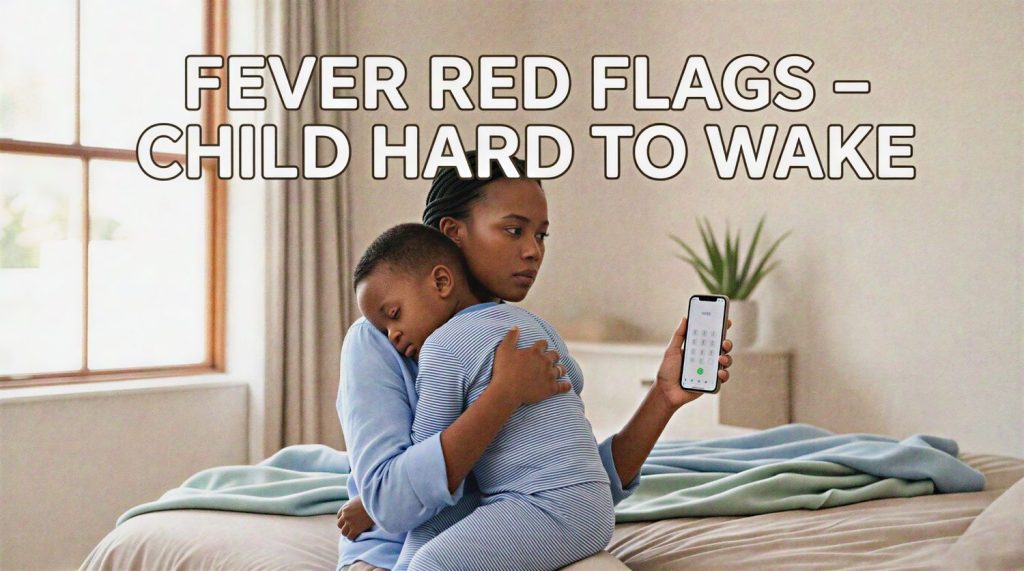
If your child is hard to wake, unusually floppy, or struggling to breathe, do not wait. Go to the emergency room.
Breathing that looks or sounds wrong. Is your child working hard to breathe? Are they pulling in at the ribs or the base of the neck with each breath? Is there a whistling or grunting sound that was not there before? Breathing distress is always a reason to go.
A child who is hard to wake. Most feverish children sleep more than usual, but they should wake up easily when you call their name or pick them up. If your child is floppy, limp, or so sleepy that you cannot keep them awake, do not wait.
No wet nappies. In babies, this is a danger sign. If six hours pass without a wet nappy, or eight to twelve hours in an older child, their body may be losing more fluid than it is taking in.
A rash that does not fade. There is a simple test you can do at home. Press a clear glass firmly against your child’s rash. If the rash disappears or turns pale under the glass, that is reassuring. If the rash stays dark or red even when you press, and your child also has a fever, you need a doctor to check it.
A seizure that you have never seen before. If your child has a convulsion, stiffens, or shakes during a fever, seek medical attention. Most febrile seizures stop on their own and are not dangerous, but this is your first one. You need to be seen.
Your gut. If you look at your child and feel in your bones that something is wrong, you do not need a checklist. You do not need permission. You go.
When to Visit the Clinic in the Morning (The Yellow Light)
Some signs are concerning but not urgent. They mean you should take your child to your local clinic or GP when it opens, but you do not need to go out tonight.
A fever that has lasted more than three days. Most viral fevers last two to three days. If your child is still feverish on day four, it is worth a visit to check whether something else is going on.
Drinking less than half their normal fluids. A child who is still taking some fluid is usually fine to watch overnight. But if you notice your child refusing the bottle, the breast, or the cup, and this has gone on for most of the day, plan to visit the clinic in the morning.
Pain that does not settle. Children with viral fevers often have aches. But if your child is crying in a way that seems different from usual, pointing to a specific spot repeatedly, or cannot get comfortable no matter what you do, let a nurse or doctor see them when the clinic opens.
You are not sure. This is the most common reason parents visit, and it is completely valid. You do not need a crisis to go to your clinic. You can walk in and say, “She has a fever. She is drinking and playing. But I just want to check that I am not missing something.” That is what nurses are for.
When to Stay Home and Comfort (The Green Light)
Most fevers land here. This is the space where your child is uncomfortable but not in danger.
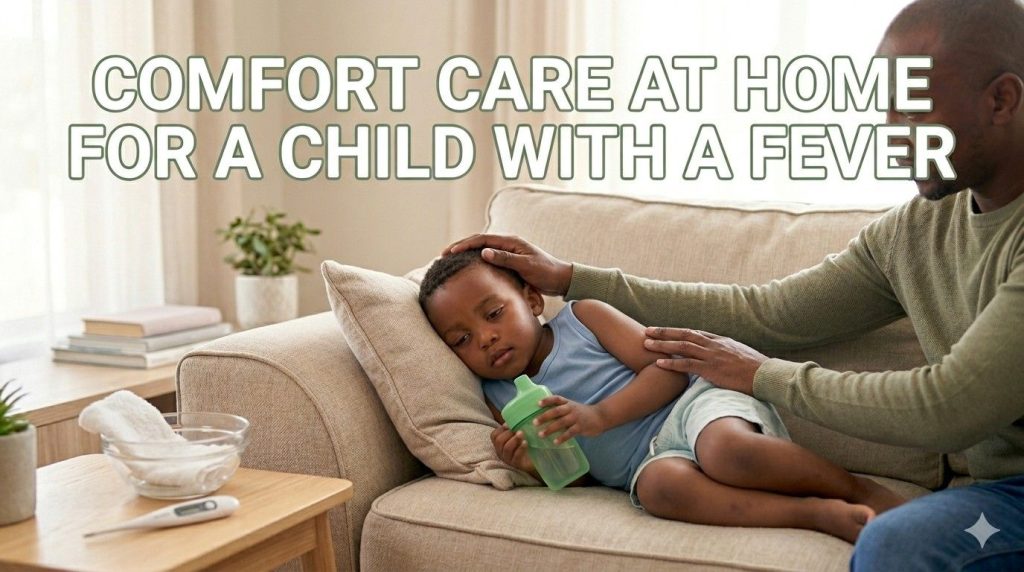
Most children with fever can be cared for at home with rest, light clothing, and fluids. Watch for red flags, but do not panic over the number on the thermometer.
Your child has a fever but is playing with toys, drinking sips of water or milk, and looking at you when you speak. Between fevers, they smile, complain, or ask for food. They are hot, but they are still themselves.
This is the time for home care.
Dress them lightly. You may have been told to bundle a feverish child to sweat out the illness. That is outdated advice, and it can be dangerous. Dress your child in one light layer. If they are shivering, add a thin blanket until the shivering stops, then remove it.
Offer fluids often. Fever makes the body lose water faster. Offer small amounts frequently. A few sips every twenty minutes is better than a full cup that gets refused. For babies, continue breastfeeding or formula as usual. Do not force.
Use lukewarm, not cold, water. If your child is uncomfortable, you can sponge them with lukewarm water. Cold water or ice baths cause shivering, which raises the body temperature further. Warmth is not the enemy.
Let them rest. Feverish children have less energy for a reason. Their body is fighting. Do not force food, schoolwork, or activity. Let them sleep, lie on the couch, or listen to quiet stories.
Check every few hours. You do not need to wake a sleeping child to take their temperature. Sleep is healing. But when they wake naturally, check how they look, feel their forehead, and offer a drink.
A Note on Thermometers (Because Most Parents Have the Wrong One)
If you are still using a forehead strip or an ear thermometer that gives different readings every time, you are not alone. But you deserve better.
For babies and young toddlers, a digital thermometer under the armpit is reliable and simple. Hold their arm gently against their body until the thermometer beeps.
For older children who can sit still, a digital thermometer in the mouth works well, but wait twenty minutes after they have had anything hot or cold to drink.
Do not use glass thermometers. Do not use forehead strips. And if your thermometer has not had a new battery in years, treat yourself to a fresh one. Accuracy matters less than consistency, but you still want a tool you can trust.
When to Reassess
Fevers change. What is true at bedtime may not be true at two in the morning.
Check back in four to six hours. Has the fever gone higher? Is your child drinking less? Are they harder to wake?
If the fever continues for twenty-four hours with no sign of improvement, move from the green light toward the yellow light. Plan to visit your clinic when it opens in the morning.
If your child is still feverish after seventy-two hours, a doctor should see them. Most viral fevers clear by day three. A fever that goes beyond that deserves a second look.
Trust Yourself
You have made it to the end of this guide, which means you are a parent who wants to do right by your child. That already puts you ahead.
Fevers are stressful. But you now have a framework. Age first. Then behaviour. Then red flags, yellow flags, and green flags. When in doubt, visit your clinic. When scared, trust your gut. And when your child is playing between fevers, take a breath. You are handling it.
Most fevers are just the body doing its job. Your job is not to stop the fever. Your job is to watch, comfort, and know when to bring in help.
And now you know.
Frequently Asked Questions About Fever in Children
When should I worry about my child’s fever?
You should worry when your child has red flags: difficulty breathing, trouble waking up, no wet nappies for six to twelve hours, or a rash that does not fade when pressed with a glass. If any of these appear, do not wait. Go to a doctor or emergency room.
How long is too long for a fever in a child?
A fever that lasts more than three days needs attention. Most viral fevers resolve in two to three days. If your child is still feverish on day four, visit your local clinic or GP for advice.
Can a fever in a child go away on its own?
Yes. Viruses cause most fevers in children, and the body clears them on its own. The fever will come down as the immune system wins the fight. You do not need to treat a fever unless your child is uncomfortable. The goal is comfort, not a normal temperature.
What is a normal fever temperature in children?
A normal body temperature is around 37°C. A fever is generally considered to be 38°C or higher. Fevers between 38°C and 39.5°C are common with viral illnesses. Fevers above 39.5°C need closer watching, but the number matters less than how your child looks and acts.
Should I let my child sleep with a fever?
Yes. Sleep is healing. Do not wake a sleeping child to check their temperature or give medicine. When they wake naturally, check how they look, offer fluids, and reassess. If you are worried about red flags like breathing or waking difficulty, check gently without fully waking them.
Can teething cause a fever?
Teething can cause a very mild elevation in temperature, usually below 38.5°C. Teething does not cause high fevers. If your child has a temperature above 38.5°C, look for another cause, like a viral infection. Do not blame teething for a significant fever.
When should I take my child to the emergency room?
Take your child to the emergency room if they are under three months with any fever, if they are struggling to breathe, if they are hard to wake or floppy, if they have a seizure that you have never seen before, or if you feel in your gut that something is seriously wrong. You do not need permission to go.
What if I cannot reach anyone by phone at the clinic?
This is a real problem in South Africa. Many clinics and GP rooms are understaffed, and phones often go unanswered. If you cannot get through by phone, do not wait by the phone. Use your judgment based on this checklist. If your child has red flags, go to the emergency room. If your child has yellow flags (the “visit in the morning” signs), go to the clinic when the doors open, or visit a community healthcare centre that is open 24 hours.
Here are other articles that might interest you:
Child Fever: What Is Normal and What Isn’t
Fever After Vaccination: What Parents Should Expect and When to Worry
Rising Temperature at Night: Should You Worry?
Baby Symptoms Guide: What’s Normal & When to Worry (A Nurse’s Guide for Parents)

Nurse K is a practising PHC nurse in South Africa. She writes anonymously to help busy mums raise healthy little ones. Real advice. No jargon. No judgement.
Medical Disclaimer
Medical Disclaimer
The information provided on BusyMumsWorld is for general informational and educational purposes only. This website does not constitute medical advice, diagnosis, or treatment.
About Me
I am a registered nurse with the South African Nursing Council (SANC). I draw upon my nursing training and clinical experience to provide helpful, evidence-informed information for mothers, babies, and families. However, my role on this website is that of an educator and content creator, not your personal healthcare provider.
No Nurse-Patient Relationship
Your use of this website does not create a nurse-patient relationship between you and me. The content on this site does not replace an in-person clinical assessment, physical examination, or professional medical consultation. In accordance with the Nursing Act, 2005 (Act No. 33 of 2005) and the SANC Code of Ethics, I clearly distinguish between my role as a registered nurse in clinical practice and my role as a content creator.
For Babies and Children
Content related to infant and child health is for educational purposes only. Every child is unique. What works for one child may not be appropriate for another. Always consult your paediatrician, clinic sister, family doctor, or other qualified healthcare provider regarding any medical concerns about your child, including changes in behaviour, feeding, sleep, growth, or physical symptoms.
For Mothers
Content related to pregnancy, antenatal care, postpartum recovery, breastfeeding, and maternal health is for educational purposes only. Your healthcare needs are individual and may change during pregnancy and the postnatal period. Always seek guidance from your doctor, midwife, obstetrician, lactation consultant, or local clinic for any questions about your or your baby’s health.
South African Context
Where possible, I aim to provide information relevant to the South African healthcare context, including public and private healthcare considerations. However, healthcare resources, protocols, and availability may vary by province, facility, and individual circumstance. Always confirm information with your own healthcare provider.
SANC Compliance
In compliance with the rules and ethical guidelines of the South African Nursing Council (SANC):
- I clearly state that the information on this site does not constitute the practice of nursing as defined in the Nursing Act
- I do not offer individualised nursing assessments, diagnoses, or treatment plans through this website
- I encourage all readers to seek in-person care from registered healthcare professionals for their specific health needs
- I maintain professional boundaries by not providing specific medical advice in response to comments, emails, or messages
Emergency Warning
If you or your child is experiencing a medical emergency, do not use this website for advice. Call emergency services immediately. Alternatively, go to your nearest hospital emergency department, clinic, or doctor immediately.
Do not delay seeking emergency care because of something you have read on this website.
Limitation of Liability
I make every effort to ensure the accuracy of the information published on this site. However, medical knowledge is constantly evolving, and information may become outdated. I cannot guarantee that all information is complete, current, or accurate for every individual circumstance. I assume no responsibility or liability for any errors or omissions in the content of this site. Your use of this website is at your own risk.
Affiliate Disclosure
BusyMumsWorld participates in affiliate marketing programmes. This means that some links on this site may be affiliate links. If you choose to purchase through these links, I may earn a small commission at no additional cost to you.
My Commitment to You
I am a registered nurse with the South African Nursing Council (SANC). My recommendations are based on my professional knowledge, clinical experience, and genuine belief that a product may be helpful to my audience. Affiliate partnerships do not influence my clinical judgement, the information I provide, or my commitment to evidence-based content.
Important Note
Products mentioned on this site are for informational purposes only. If a product makes medical claims, please consult your doctor, paediatrician, or other qualified healthcare provider before use. My nursing credentials do not constitute an endorsement of any specific product, and I do not receive compensation for clinical recommendations.
Last Updated: March 2026