Toddler diarrhoea is stressful, but home care for diarrhoea in toddlers is simple. As a mum, your first instinct is to stop it. As a primary healthcare nurse, my first instinct is different.
I do not want to stop the diarrhoea. I want to stop dehydration.
This home care guide for diarrhoea in toddlers is the exact plan I give families at the clinic. No fluff. No judgement. Just the 5-minute hydration rule, the updated BRAT diet, and the three red flags that mean “stop home care and go to the emergency unit”.
Let us get your toddler feeling better.
First, What Type of Diarrhoea Is This?
Not all runny poos are the same. Before you treat it, you need to know what you are dealing with. This saves you days of worry.
Type 1: Acute Gastroenteritis (The Stomach Bug)
This comes on fast. For one hour, your toddler is eating toast, and the next hour, they are on the toilet three times.
Signs to look for:
- Sudden onset of watery poo
- Often with vomiting or fever
- Your child looks miserable and tired
- Highly contagious to the rest of the family
Type 2: Toddler’s Diarrhoea (Chronic)
This one confuses most parents. Your toddler has three or more loose poos a day. You can often see undigested food in it—peas, corn, and carrot pieces floating in water.
Here is the strange part: They are otherwise perfectly happy. They are running, playing, eating, and growing normally.
Nurse’s note: If your child is happy but has loose poos, cut the juice. Apple and pear juice are high in sorbitol and fructose. A toddler’s gut cannot absorb them. The excess sugar draws water into the bowel, causing the runs. Stop juice for 48 hours and watch what happens.
The Hydration Rule That Saves Hospital Visits
In acute diarrhoea, the number of poos matters less than the number of wees. Your toddler can pass loose stools many times a day without danger — as long as they are still producing wet nappies regularly. Dehydration is the real risk, not the diarrhoea itself.
When diarrhoea strikes, the body loses water and electrolytes (sodium and potassium). Giving plain water alone is not enough. It has no salt. Giving juice makes it worse.
The Gold Standard in Home Care for Diarrhoea in Toddlers: Oral Rehydration Solution (ORS)
Oral rehydration solution (ORS) is available at any pharmacy. Ask for the store brand or generic version — it works just as well as the expensive options and costs much less.
The 5-minute rule (this works):
- Give 1-2 teaspoons (5-10 ml) every 5 minutes
- Use a kitchen timer or your phone
- If you give a thirsty toddler a full cup, they will vomit it back up
- Small sips, often, are the secret
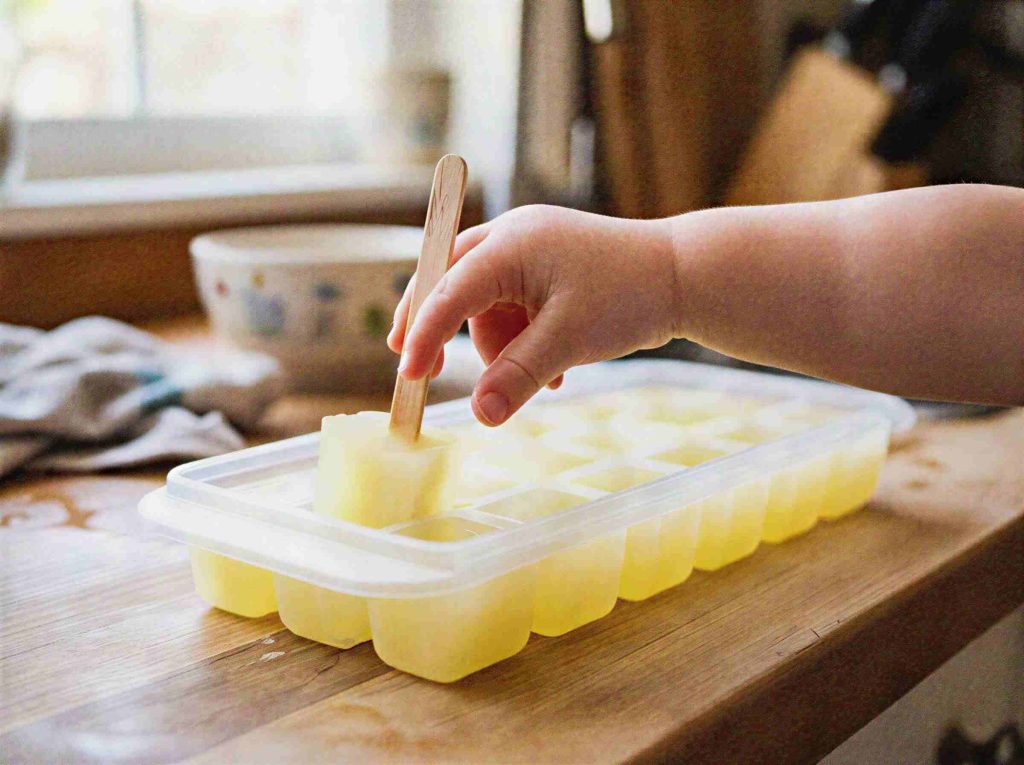
The ice block hack: If your toddler refuses the cup, pour the ORS into an ice cube tray or popsicle mould. Toddlers refuse medicine. They rarely refuse a frozen treat.
What About Breast Milk or Formula?
- Breastfeeding: Keep going. Breast milk has antibodies and fluids. It is the best medicine you have.
- Formula: Stay on full-strength formula. Do not water it down. Watering down formula to “save money” or “ease digestion” can cause a dangerous electrolyte imbalance.
What To Feed (And What To Avoid)
You have heard of the BRAT diet (bananas, rice, applesauce, and toast). In the past, doctors told parents to stop feeding the gut. We do not say that anymore.
The new rule: Feed as tolerated.
Starving a toddler actually damages the gut lining and makes diarrhoea last longer.
| Day | What To Offer |
| Day 1 (active diarrhoea) | Bananas, plain pasta, white rice, dry toast, plain crackers |
| Day 2 (starting to improve) | Refined grains (white rice, white pasta, white couscous, white bread, saltines) Peeled and cooked fruits (stewed apple, peeled pear) Peeled and boiled vegetables (potato, carrot) No skins, no seeds, no grains. |
| Day 3 (recovery) | Return to a normal diet slowly. Avoid rich or fried foods for a few more days |
What to Avoid Completely for Diarrhoea in Toddlers:
- Apple juice and pear juice (high sugar, makes diarrhoea worse)
- Full-strength cordials and sports drinks (too much sugar for little guts)
- Prunes, pears, and stone fruits (natural laxatives)
- Fried or greasy food (hard to digest)
- Full-fat dairy (temporarily hard on the gut)
The Red Flag Checklist (When To Stop Home Care and Call the Doctor)
You can treat mild diarrhoea at home. But you are the mum. You know your child best. The moment you see any of these signs, stop Googling and call your GP or go to A&E.
Call the doctor immediately if:
- Blood or mucus in the nappy looks like redcurrant jelly or slime. This suggests a bacterial infection.
- The skin stays “tented” — gently pinch the skin on their tummy. If it does not spring back quickly, they are severely dehydrated.
- Dry mouth and tongue — the inside of the mouth feels sticky or dry, not wet and slippery.
- No tears when crying — they are screaming, but no tears come out (after 6 months of age).
- Lethargy — they are floppy, difficult to wake, or “out of it”. This is an emergency.
The 6 & 3 rule: If your child is under 6 months old OR has vomited more than 3 times in 24 hours OR has had diarrhoea for more than 3 days, get them checked by a doctor.
Stopping The Spread (The 48-Hour Rule)
Norovirus (the winter vomiting bug) is famous for taking down entire households. Here is something most parents do not know: Alcohol hand gel does NOT kill norovirus. You need soap and warm water.
The 48-hour rule:
Keep your toddler home from nursery, school, playgroup, or the trampoline park until they have gone 48 hours without a loose stool. Not 24 hours. Forty-eight.
Laundry tip: Wash soiled bedding and clothing on a hot cycle (60 degrees Celsius) with a bleach-based detergent. This kills viral particles.
Toilet hygiene: Wipe the toilet seat and flush handle with bleach spray after each use. If your toddler uses a potty, empty it into the toilet, then wash the potty with hot soapy water and bleach spray.
A Final Note From a Nurse
If you are reading this while holding a crying toddler covered in questionable liquid, take a deep breath.
You are doing a great job.
Diarrhoea is scary, but it is usually short-lived. In most cases, viral diarrhoea lasts 3 to 5 days. Your only job right now is to keep those small sips of fluid going in.
When in doubt, check the nappy. If they are weeing (even just a little), the gut is absorbing fluid. You have got this.
Frequently Asked Questions
Q: How long does toddler diarrhoea usually last?
A: Viral diarrhoea typically lasts 5 to 7 days. It often worsens on days 2 and 3, and then it improves. Do not panic if the nappy is explosive on day 2. Seek help if the urine stops.
Q: Can I give my toddler anti-diarrhoea medicine from the pharmacy?
A: No. Never give over-the-counter antidiarrhoeal medications to a child under 12 unless a doctor specifically prescribes it. These drugs stop the gut from moving, which traps bacteria inside the body.
Q: Why does my toddler’s poo smell like rotten eggs?
A: That sulphur smell usually indicates a specific bug like Giardia or rotavirus. It is foul, but it is standard for infectious diarrhoea. The smell alone is not a reason to see a doctor.
Q: Can my toddler go back to nursery after 24 hours of no diarrhoea?
A: No. Wait 48 hours. Many nurseries now enforce this rule. Even if your child seems better, they can still shed the virus and infect others.
Q: What is the difference between diarrhoea and a toddler’s diarrhoea?
A: Acute diarrhoea comes on suddenly with vomiting, fever, or pain. Toddler diarrhoea is chronic (weeks) with no other symptoms. Toddler diarrhoea is usually dietary. Cut the juice first.

Nurse K is a practising PHC nurse in South Africa. She writes anonymously to help busy mums raise healthy little ones. Real advice. No jargon. No judgement.
Medical Disclaimer
Medical Disclaimer
The information provided on BusyMumsWorld is for general informational and educational purposes only. This website does not constitute medical advice, diagnosis, or treatment.
About Me
I am a registered nurse with the South African Nursing Council (SANC). I draw upon my nursing training and clinical experience to provide helpful, evidence-informed information for mothers, babies, and families. However, my role on this website is that of an educator and content creator, not your personal healthcare provider.
No Nurse-Patient Relationship
Your use of this website does not create a nurse-patient relationship between you and me. The content on this site does not replace an in-person clinical assessment, physical examination, or professional medical consultation. In accordance with the Nursing Act, 2005 (Act No. 33 of 2005) and the SANC Code of Ethics, I clearly distinguish between my role as a registered nurse in clinical practice and my role as a content creator.
For Babies and Children
Content related to infant and child health is for educational purposes only. Every child is unique. What works for one child may not be appropriate for another. Always consult your paediatrician, clinic sister, family doctor, or other qualified healthcare provider regarding any medical concerns about your child, including changes in behaviour, feeding, sleep, growth, or physical symptoms.
For Mothers
Content related to pregnancy, antenatal care, postpartum recovery, breastfeeding, and maternal health is for educational purposes only. Your healthcare needs are individual and may change during pregnancy and the postnatal period. Always seek guidance from your doctor, midwife, obstetrician, lactation consultant, or local clinic for any questions about your or your baby’s health.
South African Context
Where possible, I aim to provide information relevant to the South African healthcare context, including public and private healthcare considerations. However, healthcare resources, protocols, and availability may vary by province, facility, and individual circumstance. Always confirm information with your own healthcare provider.
SANC Compliance
In compliance with the rules and ethical guidelines of the South African Nursing Council (SANC):
- I clearly state that the information on this site does not constitute the practice of nursing as defined in the Nursing Act
- I do not offer individualised nursing assessments, diagnoses, or treatment plans through this website
- I encourage all readers to seek in-person care from registered healthcare professionals for their specific health needs
- I maintain professional boundaries by not providing specific medical advice in response to comments, emails, or messages
Emergency Warning
If you or your child is experiencing a medical emergency, do not use this website for advice. Call emergency services immediately. Alternatively, go to your nearest hospital emergency department, clinic, or doctor immediately.
Do not delay seeking emergency care because of something you have read on this website.
Limitation of Liability
I make every effort to ensure the accuracy of the information published on this site. However, medical knowledge is constantly evolving, and information may become outdated. I cannot guarantee that all information is complete, current, or accurate for every individual circumstance. I assume no responsibility or liability for any errors or omissions in the content of this site. Your use of this website is at your own risk.
Affiliate Disclosure
BusyMumsWorld participates in affiliate marketing programmes. This means that some links on this site may be affiliate links. If you choose to purchase through these links, I may earn a small commission at no additional cost to you.
My Commitment to You
I am a registered nurse with the South African Nursing Council (SANC). My recommendations are based on my professional knowledge, clinical experience, and genuine belief that a product may be helpful to my audience. Affiliate partnerships do not influence my clinical judgement, the information I provide, or my commitment to evidence-based content.
Important Note
Products mentioned on this site are for informational purposes only. If a product makes medical claims, please consult your doctor, paediatrician, or other qualified healthcare provider before use. My nursing credentials do not constitute an endorsement of any specific product, and I do not receive compensation for clinical recommendations.
Last Updated: March 2026