Worried About Your Baby Spitting Up After Feeds?
You finish feeding your baby, finally settle them against your shoulder, and then suddenly milk comes back up.
Sometimes it is only a small dribble. Other times it feels like far more milk than your baby could possibly spare.
For many parents, this is where the worry begins.
Is this normal newborn reflux?
Is my baby vomiting?
Are they keeping enough milk down?
As a primary health care nurse, I see these concerns almost daily — especially among exhausted first-time parents trying to figure out what is normal in the newborn stage.
The reassuring news is that reflux in newborns is extremely common. In most cases, babies who spit up are healthy, feeding normally, and simply going through a developmental stage.
The difficult part is knowing when spit-up is harmless and when vomiting may signal something more serious.
Quick Answer: Is Newborn Reflux Normal?
Yes. Most newborns experience some degree of reflux in the early months.
Small amounts of milk coming back up after feeds are usually caused by an immature digestive system and often improve naturally as babies grow.
However, forceful vomiting, dehydration, poor feeding, weight loss, breathing difficulties, or severe discomfort should always be medically assessed.
What Is Newborn Reflux?
Newborn reflux happens when milk flows back up from the stomach into the oesophagus and sometimes out of the mouth.
This happens because the muscle between the food pipe and stomach is still immature in young babies. Since this valve relaxes easily, milk can move upward after feeds.
This is why many babies spit up even when they are otherwise healthy and thriving.
You may notice:
- Small amounts of milk after feeds
- Spit-up during burping
- Milk dribbling from the mouth
- Reflux worsens when lying flat
- Spit-up shortly after feeding
In most cases, babies remain calm and comfortable despite the reflux.
The “Happy Spitter” Explained
Healthcare professionals sometimes call babies with normal reflux “happy spitters”.
A happy spitter is a baby who:
- spits up regularly
- continues feeding well
- gains weight normally
- remains content between feeds
Even babies who spit up several times a day may still be completely healthy.
This is important because many parents assume frequent spit-up automatically means illness. In reality, the baby’s overall well-being matters far more than the amount of milk visible on clothing or blankets.
Spitting Up vs Vomiting: The Key Difference
One of the most important things parents can learn is the difference between normal reflux and vomiting.
Spitting Up
Spitting up is usually gentle and passive. Milk tends to flow out easily, often along with a burp.
Babies usually appear comfortable before and after.
Vomiting
Vomiting is more forceful and active. Your baby may gag, strain, cry, or look distressed before milk comes up.
The volume may also be larger and happen repeatedly.
A simple way to remember it:
Spitting up is passive
Vomiting is forceful
This difference matters because forceful vomiting may sometimes indicate illness or digestive problems that require medical assessment.
What Is Projectile Vomiting?
Projectile vomiting is when milk shoots out forcefully rather than simply flowing from the mouth.
This is different from normal reflux and should always be taken seriously in young babies, especially newborns.
Repeated projectile vomiting can sometimes indicate a medical condition that needs urgent assessment.
If your baby is vomiting forcefully, feeding poorly, or becoming dehydrated, seek medical care promptly.
What Is Silent Reflux?
Some babies have reflux without obvious spit-up. This is known as silent reflux.
With silent reflux, milk comes back up but is swallowed again instead of exiting the mouth.
Because parents cannot always see the milk, silent reflux may be harder to recognise.
Babies with silent reflux may:
- arch their backs during feeds
- cry after feeding
- cough or gag
- seem unsettled lying flat
- wake frequently after feeds
- swallow repeatedly
Not every unsettled baby has silent reflux, but these symptoms may suggest reflux is causing discomfort.
Why Reflux Happens So Often in Newborns
Newborn reflux is usually related to normal development rather than disease.
Several things contribute to reflux in babies:
Immature Digestive Muscles
The stomach valve is still weak in newborns.
Liquid-Only Feeding
Milk flows easily and can come back up more readily.
Small Stomach Size
Newborn stomachs fill quickly.
Swallowed Air During Feeds
Air trapped in the stomach may push milk upward.
Spending Time Lying Flat
Babies spend much of the day lying down, which can make reflux more noticeable.
Even babies feeding correctly can still experience reflux regularly.
At What Age Is Reflux Worst?
Reflux often begins in the first few weeks of life and may become more noticeable around 3 to 4 months of age.
As babies mature, sit upright more often, and begin solids later in infancy, reflux usually improves naturally.
Many babies outgrow reflux by their first birthday.
How Much Spit-Up Is Normal?
One of the biggest surprises for parents is how dramatic small amounts of milk can look.
A little spit-up can spread across clothing or bedding and appear like an entire feed, even when the actual amount is quite small.
If your baby feeds well, gains weight appropriately, has normal wet nappies, and appears content overall, then even frequent spit-up may still be completely normal.
Parents often overestimate how much milk has actually been lost.
Signs Your Baby’s Reflux Is Probably Normal
Reflux is usually not concerning if your baby:
- remains alert and responsive
- feeds reasonably well
- gains weight appropriately
- has normal wet nappies
- appears comfortable between feeds
- only spits up small amounts
Many babies with reflux continue to thrive normally.
When Reflux May Need Medical Attention
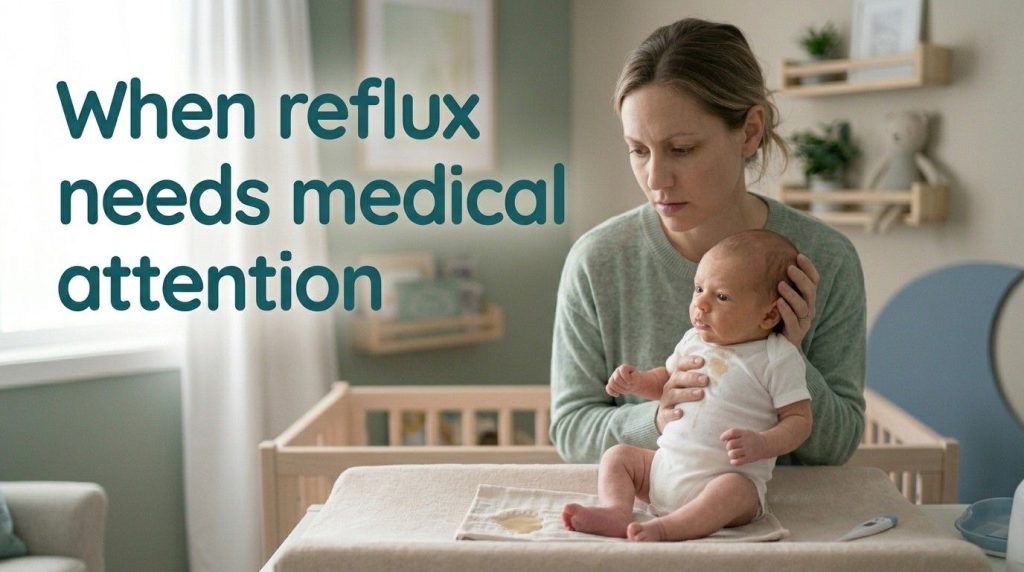
Although most reflux is harmless, some symptoms should never be ignored.
Seek medical advice if your baby has:
- projectile or forceful vomiting
- green or yellow vomit
- blood in vomit
- poor feeding
- weight loss or poor weight gain
- signs of dehydration
- fewer wet nappies
- excessive crying or distress
- breathing difficulties
- fever or unusual sleepiness
It is not reflux alone that is concerning, but how it affects your baby overall.
Reflux vs GERD in Babies
Simple reflux is extremely common in babies and usually improves naturally.
GERD (gastro-oesophageal reflux disease) is more severe. Babies with GERD may experience the following:
- significant pain during feeds
- poor growth
- ongoing feeding difficulties
- severe irritability
- breathing symptoms
Only a small number of babies with reflux develop GERD.
What You Can Do at Home

Most newborn reflux does not require medication.
Simple feeding adjustments may help reduce spit-up and improve comfort.
Feed Slowly
Allow your baby to feed calmly without rushing.
Burp Frequently
Burping during and after feeds may reduce trapped air.
Keep Baby Upright After Feeds
Holding your baby upright for 20–30 minutes after feeding may help.
Avoid Overfeeding
Smaller feeds more often can sometimes reduce reflux.
Stay Calm About Small Spit-Ups
Spit-up often looks worse than it truly is.
Should Babies With Reflux Sleep Upright?
No. Babies should still be placed flat on their backs to sleep, even if they have reflux.
Car seats, swings, pillows, and inclined sleepers are not considered safe sleep spaces for newborns.
Always follow safe sleep recommendations unless specifically advised otherwise by your healthcare provider.
A Better Way to Judge Reflux at Home
Instead of focusing only on the spit-up itself, look at your baby as a whole.
Ask yourself:
- Is my baby feeding reasonably well?
- Is my baby generally comfortable?
- Are wet nappies normal?
- Is my baby alert when awake?
- Is my baby growing appropriately?
If the answer is yes, reflux is usually part of normal infant development.
Trust Your Instincts as a Parent
Parents often notice when something simply feels different or “off”.
Even if symptoms seem mild, trust your instincts if your baby:
- Suddenly feels ill
- becomes difficult to wake
- seems unusually weak
- appears distressed during feeds
- becomes less responsive than normal
It is always appropriate to seek medical advice if you are worried.
Reassurance for Exhausted Parents
Reflux can feel messy, stressful, and frightening — especially during the exhausting newborn stage.
But most babies who spit up are healthy babies.
In many cases, reflux improves naturally as the digestive system matures and babies spend more time upright.
You are not causing the reflux, and you are not failing if your baby spits up frequently.
For most families, this stage gradually gets easier with time.
Frequently Asked Questions
Is newborn reflux normal?
Yes. Reflux is very common in newborns because their digestive system is still developing.
What is the difference between reflux and vomiting?
Reflux is gentle and passive, while vomiting is forceful and often associated with discomfort or distress.
What is silent reflux in babies?
Silent reflux is when milk comes back up but is swallowed again instead of coming out of the mouth.
When should I worry about newborn reflux?
You should seek medical advice if your baby has projectile vomiting, poor feeding, dehydration, breathing problems, or poor weight gain.
Does newborn reflux go away on its own?
Yes. Most babies improve naturally as their digestive system matures during infancy.
If you liked this post, you might also like:
Baby Not Gaining Weight? What’s Normal and When to Worry
Baby Not Feeding Well: What It Really Means and When to Worry
Baby Symptoms Guide: What’s Normal & When to Worry (A Nurse’s Guide for Parents)
Child Vomiting But No Fever: Causes, Red Flags, and What Parents Should Do

Nurse K is a practising PHC nurse in South Africa. She writes anonymously to help busy mums raise healthy little ones. Real advice. No jargon. No judgement.
Medical Disclaimer
Medical Disclaimer
The information provided on BusyMumsWorld is for general informational and educational purposes only. This website does not constitute medical advice, diagnosis, or treatment.
About Me
I am a registered nurse with the South African Nursing Council (SANC). I draw upon my nursing training and clinical experience to provide helpful, evidence-informed information for mothers, babies, and families. However, my role on this website is that of an educator and content creator, not your personal healthcare provider.
No Nurse-Patient Relationship
Your use of this website does not create a nurse-patient relationship between you and me. The content on this site does not replace an in-person clinical assessment, physical examination, or professional medical consultation. In accordance with the Nursing Act, 2005 (Act No. 33 of 2005) and the SANC Code of Ethics, I clearly distinguish between my role as a registered nurse in clinical practice and my role as a content creator.
For Babies and Children
Content related to infant and child health is for educational purposes only. Every child is unique. What works for one child may not be appropriate for another. Always consult your paediatrician, clinic sister, family doctor, or other qualified healthcare provider regarding any medical concerns about your child, including changes in behaviour, feeding, sleep, growth, or physical symptoms.
For Mothers
Content related to pregnancy, antenatal care, postpartum recovery, breastfeeding, and maternal health is for educational purposes only. Your healthcare needs are individual and may change during pregnancy and the postnatal period. Always seek guidance from your doctor, midwife, obstetrician, lactation consultant, or local clinic for any questions about your or your baby’s health.
South African Context
Where possible, I aim to provide information relevant to the South African healthcare context, including public and private healthcare considerations. However, healthcare resources, protocols, and availability may vary by province, facility, and individual circumstance. Always confirm information with your own healthcare provider.
SANC Compliance
In compliance with the rules and ethical guidelines of the South African Nursing Council (SANC):
- I clearly state that the information on this site does not constitute the practice of nursing as defined in the Nursing Act
- I do not offer individualised nursing assessments, diagnoses, or treatment plans through this website
- I encourage all readers to seek in-person care from registered healthcare professionals for their specific health needs
- I maintain professional boundaries by not providing specific medical advice in response to comments, emails, or messages
Emergency Warning
If you or your child is experiencing a medical emergency, do not use this website for advice. Call emergency services immediately. Alternatively, go to your nearest hospital emergency department, clinic, or doctor immediately.
Do not delay seeking emergency care because of something you have read on this website.
Limitation of Liability
I make every effort to ensure the accuracy of the information published on this site. However, medical knowledge is constantly evolving, and information may become outdated. I cannot guarantee that all information is complete, current, or accurate for every individual circumstance. I assume no responsibility or liability for any errors or omissions in the content of this site. Your use of this website is at your own risk.
Affiliate Disclosure
BusyMumsWorld participates in affiliate marketing programmes. This means that some links on this site may be affiliate links. If you choose to purchase through these links, I may earn a small commission at no additional cost to you.
My Commitment to You
I am a registered nurse with the South African Nursing Council (SANC). My recommendations are based on my professional knowledge, clinical experience, and genuine belief that a product may be helpful to my audience. Affiliate partnerships do not influence my clinical judgement, the information I provide, or my commitment to evidence-based content.
Important Note
Products mentioned on this site are for informational purposes only. If a product makes medical claims, please consult your doctor, paediatrician, or other qualified healthcare provider before use. My nursing credentials do not constitute an endorsement of any specific product, and I do not receive compensation for clinical recommendations.
Last Updated: March 2026