Constipation in Children: Safe Home Remedies
Finding safe home remedies for constipation in children can feel overwhelming for any parent. As a primary healthcare nurse and mum, I know how distressing it is to watch your little one struggle. Here is my complete, medically backed guide to getting these bowels moving again – naturally and safely.
If your child is crying on the toilet, hiding behind the sofa to “hold it in”, or passing what looks like rabbit droppings, you are not alone. Constipation is one of the most common problems I see in my clinic, and it accounts for roughly 1 in every 20 visits children make to the doctor
Is It Really Constipation? (And What is Normal?)
Before we start treating, we need to be sure we are dealing with true constipation. As a rule of thumb, passing a stool should be pleasant and pain-free
Here is what to look for:
- Pain and Straining: Crying or straining for longer than 10 minutes without success.
- The Look: Hard, dry stools that look like small pellets, or one giant, hard “log” that blocks the toilet.
- Frequency: Going fewer than three times a week. However, frequency isn’t everything—if they are going daily but in pain, that still counts as constipation.
- The Blood: You might see a streak of blood on the toilet paper. This is usually due to a small tear (anal fissure) caused by passing hard stool.
A Note for Breastfeeding Mums
If you have a breastfed baby older than 1 month who goes 4-7 days without a poo but passes a large, soft, painless stool when they finally go, this is usually normal! Breastmilk is so efficient that there is often little waste
The “Why”: Understanding the Root Cause
In my experience, the cause usually falls into one of these three categories:
1. The Diet Trap
Too many of the ‘binding’ foods (hello, cheese and bananas) and not enough fibre.
High Milk Diet: Milk and cheese are the only foods that, if eaten in high amounts, can cause hard, pale stool.
Low Fibre: Not enough vegetables, fruits, and whole grain “foods” (hello cheese and bananas)
2. The Holding On Pattern (Functional Constipation)
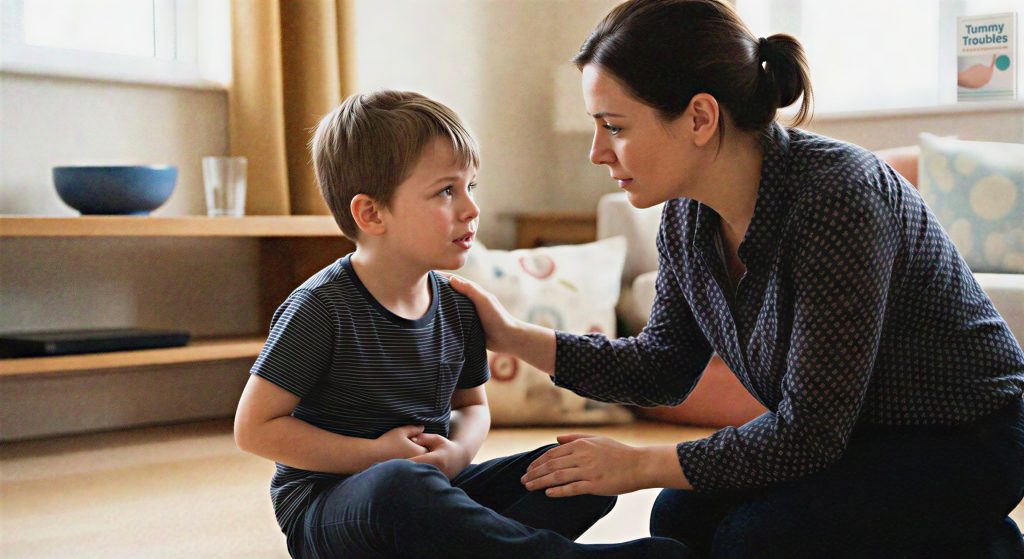
This is the most common cause. It often starts with one painful poo. The child thinks, “That hurt; I’m not doing that again,” and holds it in. The longer they hold, the bigger and harder the stool gets, creating a painful cycle. This often happens during the following:
- Toilet training power struggles. (Age 2-3)
- Starting school. (Fear of public toilets)
3. Dehydration
Not drinking enough fluid makes the stool dry. This is rarely the only cause, but it makes everything worse.
Safe Home Remedies for Constipation in Children: A Step-by-Step Plan
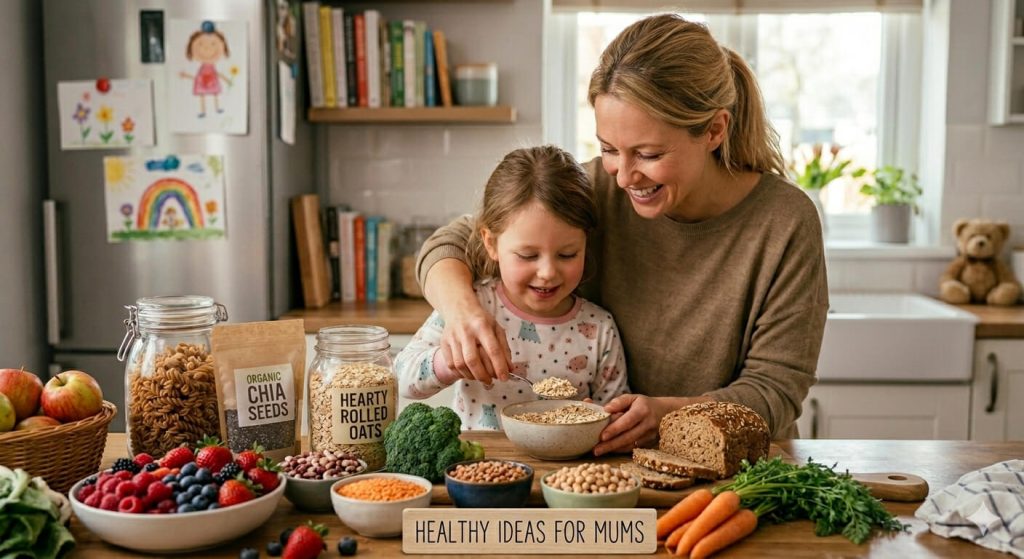
Here is your action plan. Try these steps for a few days. If you don’t see improvement within a week, or if your child has severe tummy pain or vomiting, please see your GP.
1. The Diet Makeover (The “Poo-Friendly” Pantry)
These constipation in children home remedies start with what is on their plate
We are going to load up on “P” fruits—they are nature’s laxatives.
For Babies (Under 1 year)
- Juice: If a baby is over 1 month old, you can try 1 ounce (30 ml) of pear or apple juice per month of age per day (max. 4 ounces). Prune juice is great once they hit 3 months old.
- Purees: Offer high-fibre purees twice a day. Think peas, prunes, pears, peaches, and apricots
For Toddlers & Kids (Over 1 year)
- The “5-a-Day” Rule: Aim for at least 5 servings of fruits and vegetables daily. If you hit this, you usually don’t need to count grams.
- The “P” Fruits: Stock up on prunes, plums, pears, peaches, and passionfruit.
- The “B” & “G” Veggies: Broccoli, beans, and peas are excellent.
- Swap the carbs: switch white bread for whole wheat and offer oatmeal instead of sugary cereal.
| Foods to Encourage | Foods to Limit (The Binders) |
| Fruits: Pears, prunes, kiwi, berries, peaches | Dairy: Milk, cheese, yogurt (limit to 3 servings/day) |
| Veggies: Broccoli, peas, spinach, sweet potato | Fruit: Unripe bananas, applesauce (without skin) |
| Grains: Oatmeal, whole wheat bread, bran flakes | Carbs: White bread, pasta, white rice |
| Legumes: Beans, lentils, chickpeas | Processed: Fast food, chips, large amounts of chocolate |
| Hydration: Water, diluted pear/prune juice |
2. The Hydration Hack
You can’t soften a stool without water. A simple rule of thumb: kids need 1 eight-ounce cup of water per age.
Example: A 3-year-old needs about 3 cups (24 ounces) of water daily.
If your child hates water, try the following:
- Infused water: Add slices of strawberry or orange.
- Ice pops: Make ice pops from diluted pear juice.
- Soups: Broth-based soups count toward fluid intake.
3. The Toilet Posture Trick (This is a Game Changer)
Most kids sit on the toilet with their legs dangling. This actually closes off the rectum, making it harder to push!
The Fix: Get a footstool.
When your child sits on the toilet, their knees should be higher than their hips (in a squatting position). This straightens the anorectal angle and lets the poop slide out without straining.
4. Tummy Time & Bicycle Legs
- For babies: Gently pump their legs like they are riding a bike. You can also hold their knees against their chest to mimic squatting.
- For older kids: Encourage running, jumping, and playing outside. Exercise wakes up the lazy bowel.
5. Warm Water Therapy
If your child is straining and in pain, a warm bath can work wonders. The warmth helps relax the anal sphincter. For infants, you can even put a warm, wet cotton ball on the anus and vibrate it gently side to side for 10 seconds to encourage relaxation.
Recipe: The “Poo-nami” Fiber Cookies
One of the biggest gaps I see in other parenting articles is the lack of practical recipes. Telling a mum to “increase fibre” is useless if the kid refuses to eat the healthy stuff.
I love this recipe from Lakeside Natural Medicine (adapted from Nourishing Meals). These “poop cookies” contain about 7 grams of fibre each—that’s almost a full day’s worth for a toddler.
Ingredients:
- ¼ cup ground chia seeds
- ½ cup hot water
- ½ cup melted coconut oil
- 1 cup almond butter
- 1 cup coconut sugar
- 5 cups rolled oats
- ¾ tsp baking soda
- ¾ tsp sea salt
- 1 tbsp cinnamon
- 1 cup raisins (or dark chocolate chips)
Instructions:
- Preheat oven to 325°F (163°C).
- In a large bowl, mix the ground chia and hot water. Let it sit for a few minutes until it forms a gel.
- Add the coconut oil, almond butter, and sugar. Whisk well.
- Stir in oats, baking soda, salt, and cinnamon.
- Fold in raisins/chocolate chips.
- Drop spoonfuls onto a greased tray and flatten slightly.
- Bake for 12-15 minutes.
When to Call the Doctor (Red Flags)
While home remedies work for mild cases, sometimes you need professional help. As per NICE guidelines, do not try home remedies if your child has any of the following:
- Vomiting bile (green color)
- Severe abdominal distension (hard, swollen belly)
- Blood in the stool (that isn’t just a streak on the paper)
- Failure to thrive (not gaining weight)
- Constipation starting from birth (first few weeks of life)
- Leg weakness or motor delay
- If they are under 2 months old and severely constipated
Frequently Asked Questions
How long does constipation last in children?
With diet changes, you should see improvement within 2-3 days. However, if your child has been holding for a while, it can take 1-2 weeks of consistent fibre and fluid intake to resolve the cycle.
Can I give my child laxatives?
Never give laxatives without consulting your doctor first. If diet changes aren’t working, your GP may recommend a stool softener like lactulose or Movicol—but these should only be used under medical guidance.
What if my child refuses to eat the “P” fruits?
Try smoothies! Blend pear, spinach, and a little yoghurt. You can also freeze them into ice pops. Hiding pureed prunes in oatmeal or pancakes works wonders, too.
Is constipation a sign of a cow’s milk allergy?
Sometimes. If your child has constipation along with eczema, reflux, or poor weight gain, it could be a cow’s milk protein allergy. Speak to your doctor about trialling a dairy-free period.
Will constipation affect toilet training?
Yes, absolutely. If your child is constipated, pause toilet training immediately. The pressure and pain will create a negative association with the potty. Focus on softening the stool first, then reintroduce training.
The Bottom Line
Remember, these constipation remedies for children are gentle, effective, and nurse-approved.
Constipation is a treatable condition, but it often takes a few weeks to fully resolve. Be patient with your little one. Avoid power struggles over the potty—if they are holding, put them back in a pull-up for a few days to break the fear cycle.
Praise the poo! Seriously. Use stickers, high-fives, and rewards. Making it a positive experience is half the battle.
Have you tried any of these remedies? Or do you have a secret “poo” recipe that works for your family? Share it in the comments below to help other mums in our community!

Nurse K is a practising PHC nurse in South Africa. She writes anonymously to help busy mums raise healthy little ones. Real advice. No jargon. No judgement.
Medical Disclaimer
Medical Disclaimer
The information provided on BusyMumsWorld is for general informational and educational purposes only. This website does not constitute medical advice, diagnosis, or treatment.
About Me
I am a registered nurse with the South African Nursing Council (SANC). I draw upon my nursing training and clinical experience to provide helpful, evidence-informed information for mothers, babies, and families. However, my role on this website is that of an educator and content creator, not your personal healthcare provider.
No Nurse-Patient Relationship
Your use of this website does not create a nurse-patient relationship between you and me. The content on this site does not replace an in-person clinical assessment, physical examination, or professional medical consultation. In accordance with the Nursing Act, 2005 (Act No. 33 of 2005) and the SANC Code of Ethics, I clearly distinguish between my role as a registered nurse in clinical practice and my role as a content creator.
For Babies and Children
Content related to infant and child health is for educational purposes only. Every child is unique. What works for one child may not be appropriate for another. Always consult your paediatrician, clinic sister, family doctor, or other qualified healthcare provider regarding any medical concerns about your child, including changes in behaviour, feeding, sleep, growth, or physical symptoms.
For Mothers
Content related to pregnancy, antenatal care, postpartum recovery, breastfeeding, and maternal health is for educational purposes only. Your healthcare needs are individual and may change during pregnancy and the postnatal period. Always seek guidance from your doctor, midwife, obstetrician, lactation consultant, or local clinic for any questions about your or your baby’s health.
South African Context
Where possible, I aim to provide information relevant to the South African healthcare context, including public and private healthcare considerations. However, healthcare resources, protocols, and availability may vary by province, facility, and individual circumstance. Always confirm information with your own healthcare provider.
SANC Compliance
In compliance with the rules and ethical guidelines of the South African Nursing Council (SANC):
- I clearly state that the information on this site does not constitute the practice of nursing as defined in the Nursing Act
- I do not offer individualised nursing assessments, diagnoses, or treatment plans through this website
- I encourage all readers to seek in-person care from registered healthcare professionals for their specific health needs
- I maintain professional boundaries by not providing specific medical advice in response to comments, emails, or messages
Emergency Warning
If you or your child is experiencing a medical emergency, do not use this website for advice. Call emergency services immediately. Alternatively, go to your nearest hospital emergency department, clinic, or doctor immediately.
Do not delay seeking emergency care because of something you have read on this website.
Limitation of Liability
I make every effort to ensure the accuracy of the information published on this site. However, medical knowledge is constantly evolving, and information may become outdated. I cannot guarantee that all information is complete, current, or accurate for every individual circumstance. I assume no responsibility or liability for any errors or omissions in the content of this site. Your use of this website is at your own risk.
Affiliate Disclosure
BusyMumsWorld participates in affiliate marketing programmes. This means that some links on this site may be affiliate links. If you choose to purchase through these links, I may earn a small commission at no additional cost to you.
My Commitment to You
I am a registered nurse with the South African Nursing Council (SANC). My recommendations are based on my professional knowledge, clinical experience, and genuine belief that a product may be helpful to my audience. Affiliate partnerships do not influence my clinical judgement, the information I provide, or my commitment to evidence-based content.
Important Note
Products mentioned on this site are for informational purposes only. If a product makes medical claims, please consult your doctor, paediatrician, or other qualified healthcare provider before use. My nursing credentials do not constitute an endorsement of any specific product, and I do not receive compensation for clinical recommendations.
Last Updated: March 2026