Teething is often blamed for everything from sleepless nights to runny noses and high temperatures. If your baby is drooling, chewing on everything, and suddenly feels warm, it’s natural to wonder whether teething is responsible or whether something else might be going on.
As a Primary Health Care (PHC) nurse, one of the questions parents ask me most often is, “Can teething cause a fever?” It’s an understandable concern. Teething and common childhood illnesses often occur at the same age, making it difficult to distinguish normal teething symptoms from signs that a baby may actually be sick.
The good news is that most teething symptoms are mild and temporary. However, while teething may make babies uncomfortable and slightly warmer than usual, a true fever should not automatically be blamed on teething.
In this guide, you’ll learn what symptoms are considered normal during teething, how to tell the difference between teething and illness, and when it’s time to seek medical advice.
Quick Answer: Can Teething Cause Fever?
No, teething does not usually cause a true fever.
Teething can cause drooling, chewing, swollen gums, fussiness, disturbed sleep, and a slight temperature rise. However, a temperature of 38°C (100.4°F) or higher should not automatically be blamed on teething.
If your baby has a fever or appears unwell, another illness may be responsible.
Bottom line: Teething may make babies uncomfortable, but a high fever is not considered a normal teething symptom.
Why Does Teething Seem to Cause Fever?
Teething usually begins between four and seven months of age. Coincidentally, this is also the stage when babies start putting everything into their mouths, gradually lose some protection from maternal antibodies, and become exposed to more viruses.
Because these events occur simultaneously, infections often occur during teething. This overlap explains why many parents associate fever with teething, even though research shows that teething itself does not usually cause a true fever.
Can Teething and Illness Happen at the Same Time?
Yes.
This is something I frequently explain to parents in primary healthcare. A baby can be cutting teeth and have a viral infection, ear infection, or another illness at the same time.
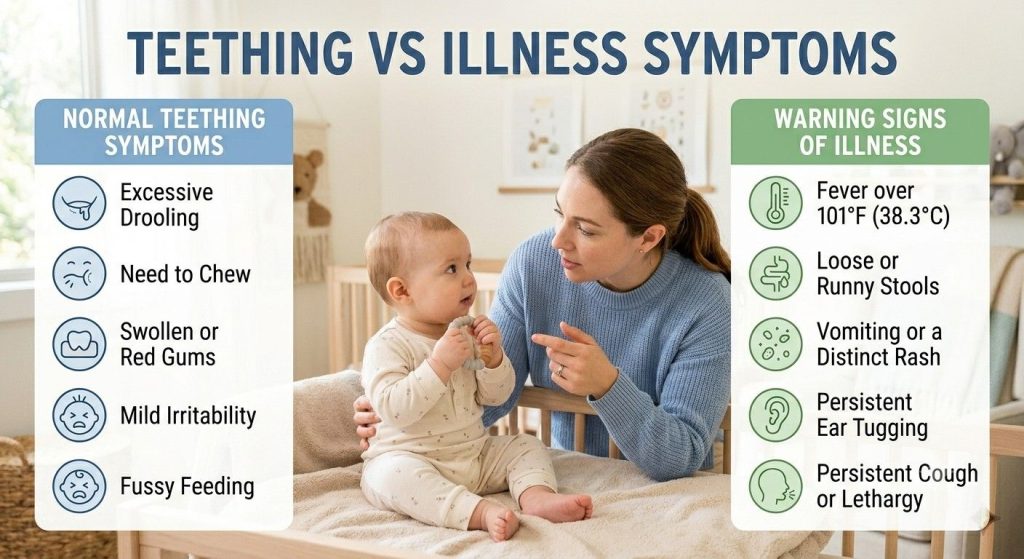
Teething does not protect babies from getting sick, nor does it explain every symptom they develop.
If your baby has a high fever, is vomiting, has severe diarrhoea, has breathing difficulties, or seems unusually sleepy, don’t assume it’s “just teething”. These symptoms deserve medical attention.
What Are Normal Teething Symptoms?
Every baby is different. Some hardly seem bothered by teething, while others become clingier and fussier for several days.
Typical signs include increased drooling, chewing on fingers or toys, swollen gums, and mild irritability. Sleep may be disturbed temporarily, and some babies feed less enthusiastically because sore gums make sucking uncomfortable.
Most symptoms improve once the tooth breaks through the gum.
What Temperature Is Too High to Be Teething?
Many parents tell me their baby “feels hot” during teething. Some babies do become slightly warmer than usual, but there is an important difference between feeling warm and having a fever.
A temperature of 38°C (100.4°F) or higher is considered a fever. Current evidence suggests that teething alone should not cause temperatures this high.
If your baby develops a fever, especially if they seem unwell, it is worth considering other causes rather than assuming teething is responsible.
How Can You Soothe a Teething Baby?
Fortunately, most teething discomfort can be managed with simple comfort measures.
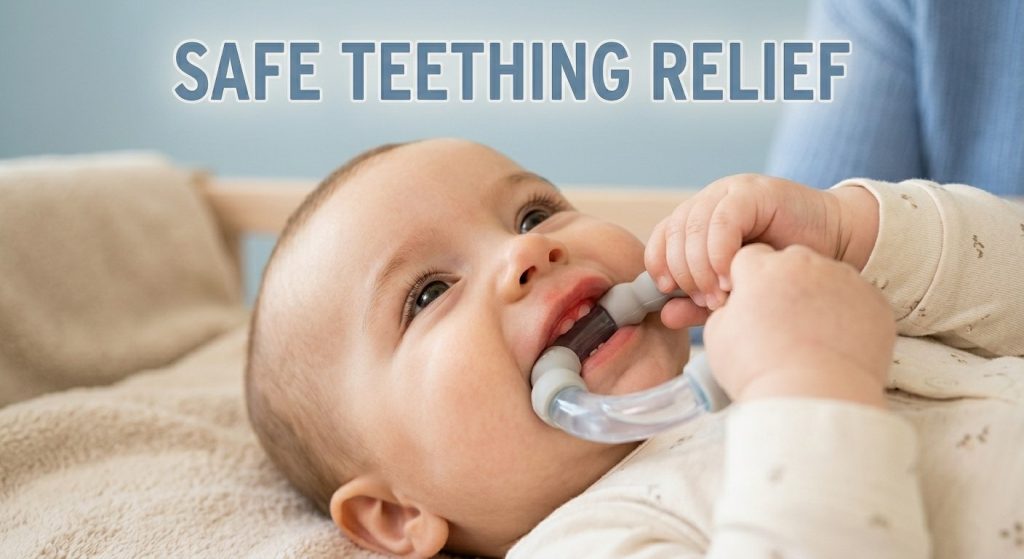
A chilled teething ring or a cool, clean washcloth may help numb sore gums. Some babies enjoy a gentle gum massage with a clean finger. Continuing breastfeeds, formula feeds, and regular fluids help prevent dehydration, especially if your baby is eating less than usual.
Extra cuddles and reassurance are often just as important. Teething can be uncomfortable, and babies frequently need more comfort during this stage.
What Remedies Should You Avoid?
Parents naturally want to ease their baby’s discomfort, but not all remedies are safe.
Teething necklaces and amber beads are not recommended because they can pose choking and strangulation risks. Rubbing alcohol on the gums and using unproven home remedies should also be avoided.
If you’re considering medications or teething gels, speak with a healthcare professional or pharmacist first to ensure they are suitable for your child.
Read: Teething in Babies: The Complete Nurse’s Guide to Symptoms, Myths, Relief & When to Worry
When Should You Seek Medical Advice?
Most teething symptoms settle on their own. However, a baby with a fever of 38°C or higher, difficulty breathing, severe diarrhoea, vomiting, poor feeding, or fewer wet nappies should not simply be assumed to be teething.
Similarly, symptoms that are worsening rather than improving deserve medical assessment.
As a PHC nurse, one piece of advice I often give parents is this:
Trust your instincts. If your child seems unusually unwell or simply “not themselves”, it’s always okay to seek medical advice.
Frequently Asked Questions
Can teething cause a fever of 39°C?
No. A temperature of 39°C should never be assumed to be caused by teething alone. Another illness may be responsible.
Can teething cause diarrhoea?
Teething may increase drooling, and swallowed saliva may sometimes make stools slightly looser. Persistent diarrhoea, however, is not considered a normal teething symptom.
Can teething make babies sleep more?
Some babies sleep more because they are uncomfortable, while others sleep less because gum pain disrupts their sleep.
Can teething cause loss of appetite?
Yes. Sore gums may make feeding uncomfortable for a few days.
How long do teething symptoms last?
Symptoms are usually most noticeable for several days before and after a tooth erupts.
Does every baby get teething symptoms?
No. Some babies show very few symptoms, while others become noticeably fussier.
A PHC Nurse’s Take
After years of working in primary health care, one lesson I have learned is that teething gets blamed for almost everything.
Drooling, chewing, and a few restless nights are all part of normal teething. But high fever, severe diarrhoea, vomiting, difficulty breathing, or a baby who seems genuinely unwell deserves more than the reassurance that “it’s just teeth”.
Most illnesses turn out to be minor, but it’s always better to have concerns assessed than to ignore symptoms that may need attention.
Parents know their children best, and those instincts are worth listening to.
Key Takeaway
Teething can make babies uncomfortable and slightly warmer than usual, but it should not cause a true fever.
If your baby has a temperature of 38°C or higher or appears unwell, don’t automatically blame teething. Another illness may be responsible, and medical advice may be needed.
If you found this post helpful, you might also enjoy:
Baby Won’t Stop Crying: Causes, Soothing Tips & When to Worry
Baby Symptoms Guide: What’s Normal & When to Worry (A Nurse’s Guide for Parents)
Blocked Nose in Babies: Safe Ways to Clear Congestion and Help Your Baby Breathe Easier
Child Fever: What Is Normal and What Isn’t
Dehydration in Children: Signs, Symptoms, and Safe Rehydration – A Nurse’s Guide
Child Vomiting But No Fever: Causes, Red Flags, and What Parents Should Do

Nurse K is a practising PHC nurse in South Africa. She writes anonymously to help busy mums raise healthy little ones. Real advice. No jargon. No judgement.
Medical Disclaimer
Medical Disclaimer
The information provided on BusyMumsWorld is for general informational and educational purposes only. This website does not constitute medical advice, diagnosis, or treatment.
About Me
I am a registered nurse with the South African Nursing Council (SANC). I draw upon my nursing training and clinical experience to provide helpful, evidence-informed information for mothers, babies, and families. However, my role on this website is that of an educator and content creator, not your personal healthcare provider.
No Nurse-Patient Relationship
Your use of this website does not create a nurse-patient relationship between you and me. The content on this site does not replace an in-person clinical assessment, physical examination, or professional medical consultation. In accordance with the Nursing Act, 2005 (Act No. 33 of 2005) and the SANC Code of Ethics, I clearly distinguish between my role as a registered nurse in clinical practice and my role as a content creator.
For Babies and Children
Content related to infant and child health is for educational purposes only. Every child is unique. What works for one child may not be appropriate for another. Always consult your paediatrician, clinic sister, family doctor, or other qualified healthcare provider regarding any medical concerns about your child, including changes in behaviour, feeding, sleep, growth, or physical symptoms.
For Mothers
Content related to pregnancy, antenatal care, postpartum recovery, breastfeeding, and maternal health is for educational purposes only. Your healthcare needs are individual and may change during pregnancy and the postnatal period. Always seek guidance from your doctor, midwife, obstetrician, lactation consultant, or local clinic for any questions about your or your baby’s health.
South African Context
Where possible, I aim to provide information relevant to the South African healthcare context, including public and private healthcare considerations. However, healthcare resources, protocols, and availability may vary by province, facility, and individual circumstance. Always confirm information with your own healthcare provider.
SANC Compliance
In compliance with the rules and ethical guidelines of the South African Nursing Council (SANC):
- I clearly state that the information on this site does not constitute the practice of nursing as defined in the Nursing Act
- I do not offer individualised nursing assessments, diagnoses, or treatment plans through this website
- I encourage all readers to seek in-person care from registered healthcare professionals for their specific health needs
- I maintain professional boundaries by not providing specific medical advice in response to comments, emails, or messages
Emergency Warning
If you or your child is experiencing a medical emergency, do not use this website for advice. Call emergency services immediately. Alternatively, go to your nearest hospital emergency department, clinic, or doctor immediately.
Do not delay seeking emergency care because of something you have read on this website.
Limitation of Liability
I make every effort to ensure the accuracy of the information published on this site. However, medical knowledge is constantly evolving, and information may become outdated. I cannot guarantee that all information is complete, current, or accurate for every individual circumstance. I assume no responsibility or liability for any errors or omissions in the content of this site. Your use of this website is at your own risk.
Affiliate Disclosure
BusyMumsWorld participates in affiliate marketing programmes. This means that some links on this site may be affiliate links. If you choose to purchase through these links, I may earn a small commission at no additional cost to you.
My Commitment to You
I am a registered nurse with the South African Nursing Council (SANC). My recommendations are based on my professional knowledge, clinical experience, and genuine belief that a product may be helpful to my audience. Affiliate partnerships do not influence my clinical judgement, the information I provide, or my commitment to evidence-based content.
Important Note
Products mentioned on this site are for informational purposes only. If a product makes medical claims, please consult your doctor, paediatrician, or other qualified healthcare provider before use. My nursing credentials do not constitute an endorsement of any specific product, and I do not receive compensation for clinical recommendations.
Last Updated: March 2026