Breathe Easier
Hearing your baby snuffle, snort, or struggle to feed because of a blocked nose can be worrying, especially during the night. Many parents wonder whether their baby has a cold, needs medicine, or should see a doctor.
The good news is that a blocked nose in babies is very common and usually improves with simple home care. Because babies have tiny nasal passages and breathe mainly through their noses, even a small amount of mucus can make them sound very congested.
As a primary health care nurse in South Africa, one of the most common questions I hear from worried parents is, “How can I unblock my baby’s nose safely?” Fortunately, most cases can be managed at home without medication.
In this guide, I’ll explain safe ways to relieve congestion, remedies to avoid, and the warning signs that indicate your baby needs to be assessed by a health care professional.
How Do You Clear a Blocked Nose in Babies?
Most blocked noses in babies can be relieved safely at home. Saline nose drops, gentle suction, frequent feeds, and a cool-mist humidifier can help loosen mucus and make breathing easier. Seek medical care if your baby is struggling to breathe, feeding poorly, or becoming unusually sleepy.
Most babies improve within a few days without needing medication.
Why Do Babies Get Blocked Noses?
Babies have very small nasal passages and breathe mainly through their noses, especially while feeding. Even a little mucus or swelling can make breathing sound noisy.
Common causes include:
- The common cold
- Dry winter air
- Dust and smoke exposure
- Normal newborn “snuffles”.
- Exposure to sick contacts
- Seasonal allergies in older babies
A blocked nose without fever is very common and is usually not a sign of serious illness.
Why Does My Baby Sound Congested but No Mucus Comes Out?
Babies often sound congested even when no mucus is visible. Mucus may sit higher up inside the nose where parents cannot see it, and newborns naturally make snuffling sounds because their airways are so small. If your baby is feeding well, breathing comfortably, and having regular wet nappies, this is usually normal.
You may notice:
- Snorting sounds
- Noisy breathing during sleep
- Occasional sneezing
- Mild stuffiness without a runny nose
Clear or white mucus is usually harmless.
Signs Your Baby Has Nasal Congestion
Your baby may:
- Sound stuffy or snorty
- Breathe noisily while sleeping
- Feed more slowly
- Pull away from the breast or bottle to breathe
- Wake more frequently
- Become irritable
- Sneeze occasionally
Most congestion improves with time and supportive care.
Safe Ways to Clear a Blocked Nose in Babies
Use saline nose drops.
Saline drops help loosen thick mucus and are one of the safest remedies for babies.
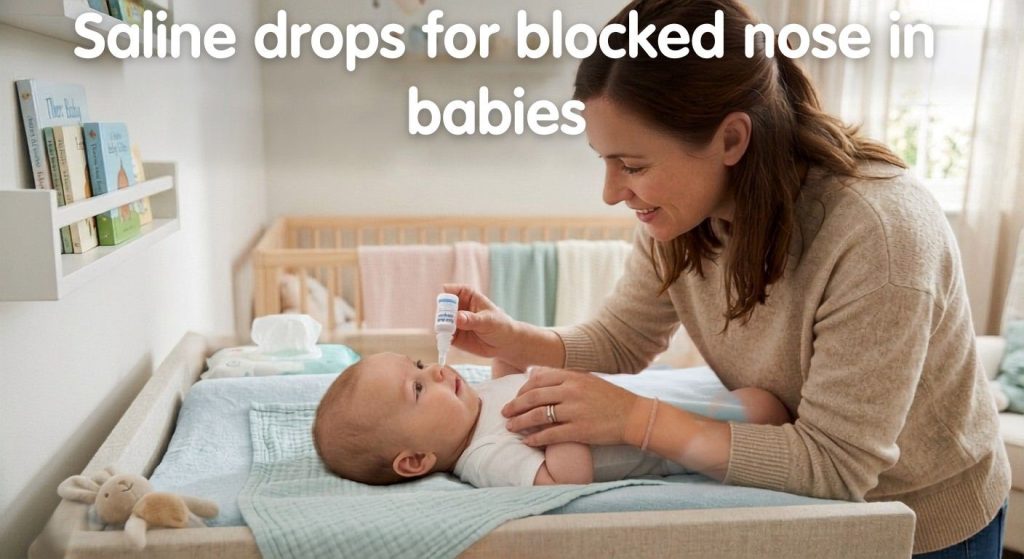
They are particularly useful:
- Before feeds
- Before bedtime
- Before using a nasal aspirator
Follow the instructions on the packaging or advice from your healthcare provider.
Avoid medicated nasal sprays unless recommended by a doctor.
Gently Suction the Nose
A bulb syringe or nasal aspirator can help remove loosened mucus.
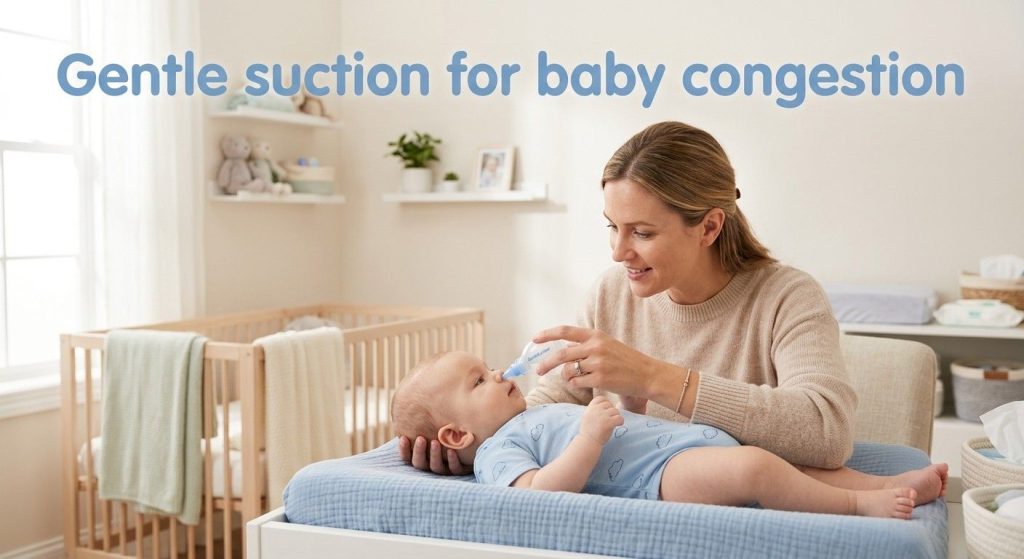
Gentle suction before feeds or bedtime may help babies feed and sleep more comfortably.
Too much suction can irritate the inside of the nose and worsen congestion, so use it only when necessary.
Use a cool-mist humidifier.
Dry air and indoor heaters can worsen congestion.
Adding moisture to the air may help loosen mucus and improve comfort.
Remember to clean the humidifier regularly according to the manufacturer’s instructions.
Sit With Your Baby in a Steamy Bathroom
Running a hot shower and sitting with your baby in the steamy bathroom for 10 to 15 minutes may help loosen mucus.
Do not expose your baby directly to steam or hot water.
Offer Smaller, More Frequent Feeds
Breast milk or formula helps prevent dehydration and keeps mucus thinner.
Babies with blocked noses may tire more easily while feeding, so smaller and more frequent feeds may help.
Watch for regular wet nappies, which are a good sign your baby is getting enough fluids.
Keep Your Baby Upright While Awake
Holding your baby upright after feeds may help mucus drain naturally.
However, babies should always be placed flat on their backs for sleep.
Avoid:
- Pillows
- Rolled blankets
- Sleep positioners
- Elevating the mattress
These increase the risk of suffocation and sudden infant death syndrome (SIDS).
What Helps a Baby’s Blocked Nose at Night?
Congestion often seems worse at night because mucus pools when babies lie down. Saline drops, gentle suction if needed, a cool-mist humidifier, and a smoke-free sleeping environment can help babies breathe more comfortably during sleep.
Before bedtime, try:
- Saline drops
- Gentle suction if needed
- Offering a feed
- Running a cool-mist humidifier
- Keeping the room smoke-free
Can Babies Sleep With a Blocked Nose?
Yes. Most babies with mild congestion can sleep safely. Always place your baby on their back on a firm, flat mattress without pillows, sleep positioners, or loose blankets. Seek medical care if your baby is struggling to breathe or cannot feed properly.
Following safe sleep recommendations remains important, even when your baby has a cold.
Can a Blocked Nose Affect Feeding?
Yes. Babies breathe mainly through their noses, so congestion can make feeding difficult. Some babies pull away from the breast or bottle to catch their breath. Offering smaller, more frequent feeds and clearing the nose before feeding may help.
Seek medical attention if your baby:
- Refuses feeds
- Produces fewer wet nappies
- Appears lethargic
- Shows signs of dehydration
Home Remedies to Avoid
Many remedies shared online are not safe for babies.
Avoid:
- menthol rub inside the nostrils
- Essential oils
- Over-the-counter cough and cold medicines
- Honey in babies younger than one year
- Antibiotics without a prescription
- Tilting the mattress
- Forceful suctioning
- Putting breast milk into the nose
‘Natural’ does not always mean ‘safe’.
When Should I Worry About My Baby’s Blocked Nose?
Seek urgent medical attention if your baby has difficulty breathing, fast breathing, chest pulling in under the ribs, grunting sounds, poor feeding, fewer wet nappies, unusual sleepiness, blue lips, or fever in a baby younger than three months.
Red flags include:
- Fast breathing
- Chest pulling in under the ribs
- Grunting noises
- Blue lips or face
- Poor feeding
- Fewer wet nappies
- Extreme sleepiness
Fever in a baby younger than 3 months
Symptoms are getting worse instead of improving
Trust your instincts. If your baby looks unwell or if something doesn’t seem right, seek medical advice.
How Long Does Congestion Last in Babies?
Most blocked noses caused by a common cold improve within 7 to 10 days. Some congestion may last up to two weeks. Seek medical advice if symptoms are worsening, feeding becomes difficult, or your baby develops a fever.
Frequently Asked Questions
Why is my baby congested but not sick?
Babies have tiny nasal passages, and normal mucus build-up or dry air can make them sound congested even when they are otherwise well.
Should I suction my baby’s nose every time?
No. Excessive suctioning can irritate the nose. Use it only when congestion affects feeding or sleep.
Is a blocked nose dangerous for babies?
Most blocked noses are harmless and improve with time. However, breathing difficulties, dehydration, poor feeding, or fever in young infants require prompt medical assessment.
A Nurse’s Final Thoughts
Blocked noses are one of the most common reasons parents become anxious during the first year of life. Fortunately, most cases are mild and improve with simple home care.
As a PHC nurse, I encourage parents to focus on three things: breathing, feeding, and hydration. These tell us much more than the amount of mucus you can see.
If your baby is breathing comfortably, feeding well, and producing regular wet nappies, a blocked nose will usually clear in time. But if your baby is struggling to breathe, feeding poorly, becoming unusually sleepy, or doesn’t seem like themselves, it’s always worth seeking medical advice.
If you found this post helpful, you might also like:
Child Fever: What Is Normal and What Isn’t
Baby Symptoms Guide: What’s Normal & When to Worry (A Nurse’s Guide for Parents)
Fast Breathing in Babies: What’s Normal and When to Worry
Dehydration in Children: Signs, Symptoms, and Safe Rehydration – A Nurse’s Guide
Child Vomiting But No Fever: Causes, Red Flags, and What Parents Should Do

Nurse K is a practising PHC nurse in South Africa. She writes anonymously to help busy mums raise healthy little ones. Real advice. No jargon. No judgement.
Medical Disclaimer
Medical Disclaimer
The information provided on BusyMumsWorld is for general informational and educational purposes only. This website does not constitute medical advice, diagnosis, or treatment.
About Me
I am a registered nurse with the South African Nursing Council (SANC). I draw upon my nursing training and clinical experience to provide helpful, evidence-informed information for mothers, babies, and families. However, my role on this website is that of an educator and content creator, not your personal healthcare provider.
No Nurse-Patient Relationship
Your use of this website does not create a nurse-patient relationship between you and me. The content on this site does not replace an in-person clinical assessment, physical examination, or professional medical consultation. In accordance with the Nursing Act, 2005 (Act No. 33 of 2005) and the SANC Code of Ethics, I clearly distinguish between my role as a registered nurse in clinical practice and my role as a content creator.
For Babies and Children
Content related to infant and child health is for educational purposes only. Every child is unique. What works for one child may not be appropriate for another. Always consult your paediatrician, clinic sister, family doctor, or other qualified healthcare provider regarding any medical concerns about your child, including changes in behaviour, feeding, sleep, growth, or physical symptoms.
For Mothers
Content related to pregnancy, antenatal care, postpartum recovery, breastfeeding, and maternal health is for educational purposes only. Your healthcare needs are individual and may change during pregnancy and the postnatal period. Always seek guidance from your doctor, midwife, obstetrician, lactation consultant, or local clinic for any questions about your or your baby’s health.
South African Context
Where possible, I aim to provide information relevant to the South African healthcare context, including public and private healthcare considerations. However, healthcare resources, protocols, and availability may vary by province, facility, and individual circumstance. Always confirm information with your own healthcare provider.
SANC Compliance
In compliance with the rules and ethical guidelines of the South African Nursing Council (SANC):
- I clearly state that the information on this site does not constitute the practice of nursing as defined in the Nursing Act
- I do not offer individualised nursing assessments, diagnoses, or treatment plans through this website
- I encourage all readers to seek in-person care from registered healthcare professionals for their specific health needs
- I maintain professional boundaries by not providing specific medical advice in response to comments, emails, or messages
Emergency Warning
If you or your child is experiencing a medical emergency, do not use this website for advice. Call emergency services immediately. Alternatively, go to your nearest hospital emergency department, clinic, or doctor immediately.
Do not delay seeking emergency care because of something you have read on this website.
Limitation of Liability
I make every effort to ensure the accuracy of the information published on this site. However, medical knowledge is constantly evolving, and information may become outdated. I cannot guarantee that all information is complete, current, or accurate for every individual circumstance. I assume no responsibility or liability for any errors or omissions in the content of this site. Your use of this website is at your own risk.
Affiliate Disclosure
BusyMumsWorld participates in affiliate marketing programmes. This means that some links on this site may be affiliate links. If you choose to purchase through these links, I may earn a small commission at no additional cost to you.
My Commitment to You
I am a registered nurse with the South African Nursing Council (SANC). My recommendations are based on my professional knowledge, clinical experience, and genuine belief that a product may be helpful to my audience. Affiliate partnerships do not influence my clinical judgement, the information I provide, or my commitment to evidence-based content.
Important Note
Products mentioned on this site are for informational purposes only. If a product makes medical claims, please consult your doctor, paediatrician, or other qualified healthcare provider before use. My nursing credentials do not constitute an endorsement of any specific product, and I do not receive compensation for clinical recommendations.
Last Updated: March 2026