Worried because your baby is not pooping? In many cases, especially in breastfed babies, going several days without a bowel movement can be completely normal. However, hard stools, vomiting, bloating, fever, poor feeding, or obvious pain may signal constipation or illness and should be checked by a doctor.
Few parenting moments create panic quite like opening a nappy and finding… nothing.
You start counting days in your head. You replay every feed. You gently press on your baby’s tummy, wondering if something is blocked, painful, or seriously wrong.
For many parents, especially first-time parents, a baby not pooping feels frightening.
But very often, it is not dangerous at all.
One of the biggest surprises for new parents is discovering how unpredictable baby poop patterns actually are. Some babies poop after almost every feed. Others suddenly go several days without a bowel movement and remain completely healthy.
As a primary health care nurse, I hear this concern almost daily. The difficult part is knowing when delayed stools are harmless and when they may signal constipation, dehydration, or illness.
Baby Not Pooping: What Is Normal?
Many parents assume babies should poop every single day.
In reality, baby bowel habits vary enormously depending on the following:
- age
- feeding type
- hydration
- digestive maturity
- whether solids have started
The number of dirty nappies matters far less than how your baby is behaving overall.
A baby who is:
- feeding normally
- comfortable
- hydrated
- alert
- gaining weight
is usually far less concerning than a baby with vomiting, bloating, fever, or obvious pain.
Normal Baby Poop Frequency by Age and Feeding Type
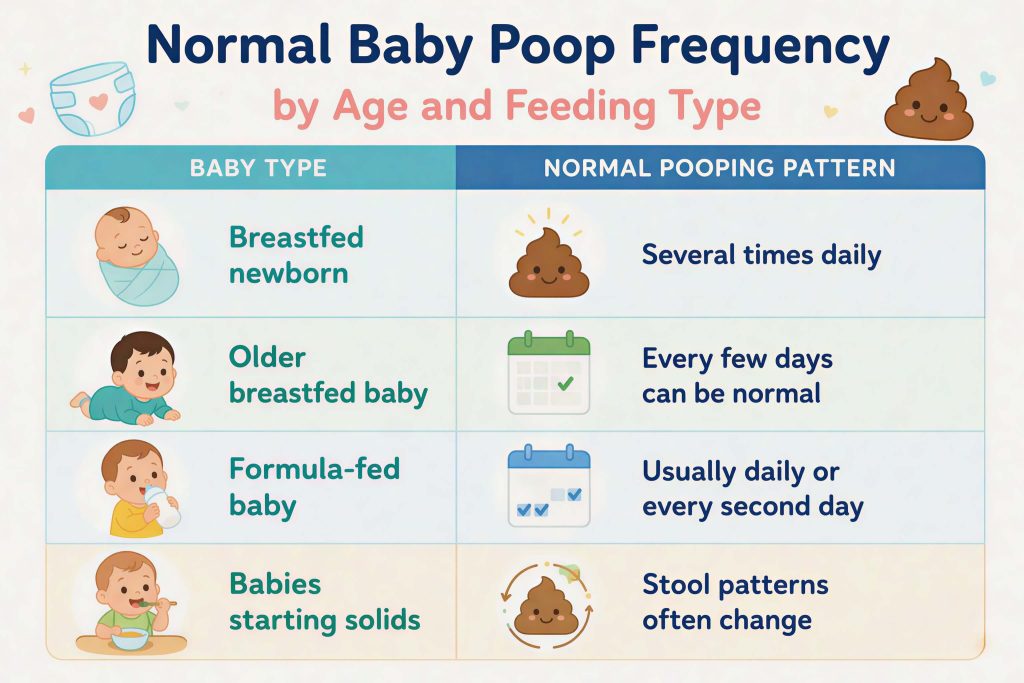
Every baby develops their own pattern over time.
Breastfed Baby Not Pooping for Days
A breastfed baby not pooping for several days is one of the most common reasons parents visit clinics.
Breast milk is highly digestible. As babies grow, their bodies absorb most of the milk very efficiently, leaving behind very little waste.
This means some healthy breastfed babies may go 3 to 5 days or even longer without pooping.
As long as your baby is:
- feeding well
- comfortable
- producing wet nappies
- passing soft stool eventually
- growing normally
This is often completely normal.
Formula-Fed Baby Not Pooping
Formula-fed babies usually poop more regularly than breastfed babies.
Their stools are often:
- firmer
- bulkier
- slower to pass
Because formula is harder to digest, constipation is more common in formula-fed babies.
A formula-fed baby who develops hard, dry, painful stools may need medical assessment, especially if feeding becomes difficult.
Newborn Not Pooping: When Should You Worry?
A newborn baby who suddenly stops pooping can worry parents a great deal.
In the first few weeks of life, newborns usually pass stool frequently.
You should seek medical advice urgently if:
- Your newborn never passed stool after birth
- Vomiting develops
- The tummy becomes swollen
- Your baby refuses to feed
- Your baby becomes unusually sleepy
These symptoms may occasionally suggest an intestinal blockage or another medical condition requiring urgent care.
Baby Not Pooping but Passing Gas
Many parents worry when their baby is not pooping but continues farting normally.
In many cases, this is actually reassuring.
Passing gas often means the digestive system is still moving. The stool may not be ready to pass yet.
This is usually less concerning if your baby:
- feeds normally
- has a soft tummy
- remains comfortable
- continues producing wet nappies
However, severe bloating, vomiting, fever, or obvious distress should always be checked urgently.
Why Your Baby Is Not Pooping for Days
Several common reasons may cause babies to poop less often.
Digestive Maturity
As babies grow, their digestive systems become more efficient. Breastfed babies especially absorb almost everything they drink.
Parents often mistake this for constipation when it may actually be normal.
Feeding Changes
Babies may temporarily poop less if they are feeding less because of the following:
- teething
- mild illness
- nasal congestion
- sleep changes
- fussiness
Starting Formula or Solids
Constipation commonly appears after:
- formula changes
- starting infant cereal
- introducing purees
- beginning solid foods
The digestive system suddenly has to work harder to process heavier foods.
Baby Not Pooping After Starting Solids
Many babies become constipated after starting solids.
Foods like:
- rice cereal
- bananas
- processed snacks
may slow digestion in some babies.
At the same time, babies may drink less milk once solids are introduced, which can reduce hydration and harden stools.
A temporary change in stool pattern after solids is common, but persistent pain or hard stools should be assessed.
Baby Straining but Not Pooping: Is It Normal?
Watching a baby strain intensely without producing stool can feel alarming.
Many babies:
- grunt
- squirm
- go red in the face
- pull up their legs
while trying to poop.
Surprisingly, this is often completely normal.
Young babies are still learning how to coordinate:
- pushing pressure in the abdomen
- relaxing the muscles needed to release stool
The process can look dramatic even when the stool itself is soft.
The actual texture of the stool matters far more than the grunting.
Signs of Baby Constipation
Constipation is not only about how often a baby poops.
A baby may go several days without stool and still not be constipated.
True baby constipation usually involves the following:
- hard stool
- pain
- difficulty passing stool
Signs of constipation in babies include:
- hard pellet-like stool
- dry stool
- crying during bowel movements
- bloated tummy
- straining with obvious pain
- blood streaks from straining
- severe fussiness during pooping
When a Baby Not Pooping Could Be Dangerous
Although delayed stools are often harmless, some symptoms require urgent medical attention.
Seek urgent medical care if your baby develops:
- vomiting
- swollen or hard tummy
- fever
- poor feeding
- dehydration
- extreme sleepiness
- severe irritability
- blood in stool
- weight loss
- fewer wet nappies
A baby with vomiting and abdominal swelling should always be assessed urgently.
How to Help a Baby Who Is Not Pooping
One of the hardest parts of parenting is resisting the urge to fix things immediately.
If your baby is otherwise healthy and comfortable, supportive care is often enough.
You can try:
- continuing regular feeds
- gentle bicycle leg movements
- tummy massage
- a warm bath
- keeping your baby hydrated
These may help relax tummy muscles and stimulate bowel activity naturally.
What NOT to Give a Constipated Baby
Parents should avoid giving:
- herbal remedies
- oils
- adult laxatives
- adult constipation medicine
- suppositories unless prescribed
Some home remedies can be dangerous for babies.
Always seek professional advice before giving constipation treatments to infants.
When to Call a Doctor for a Baby Not Pooping
Speak to a doctor or clinic if your baby:
- seems unwell
- refuses feeds
- develops vomiting
- has a swollen tummy
- passes hard, painful stools
- becomes dehydrated
- develops fever
- has blood in stool
- becomes unusually sleepy
Parents know their babies best.
If something feels wrong, it is always reasonable to seek medical advice.
Reassurance for Parents Worried About Baby Not Pooping
A baby not pooping can feel incredibly stressful, especially when you are already exhausted and anxious.
But in many cases, especially in breastfed babies, irregular bowel movements are completely normal.
The most important signs to watch are the following:
- feeding
- hydration
- comfort
- wet nappies
- normal behaviour
- soft stool when it eventually comes
Those signs matter far more than simply counting days between dirty nappies.
Learning your baby’s normal bowel pattern takes time.
Frequently Asked Questions About Baby Not Pooping
Is it normal for a breastfed baby not to poop every day?
Yes. Healthy breastfed babies may sometimes go several days without pooping because breast milk leaves very little waste behind.
How long can a baby go without pooping?
Some healthy breastfed babies may go 5–7 days without pooping. What matters most is normal feeding, wet nappies, comfort, and soft stool when it eventually passes.
Can formula cause constipation in babies?
Yes. Formula-fed babies are more likely to develop firmer stools and constipation than breastfed babies.
Baby is grunting but not pooping — should I worry?
Not always. Many babies grunt and strain normally while learning how to coordinate bowel movements. Hard or painful stools are more concerning.
When should I worry about a baby not pooping?
Seek medical attention if your baby develops vomiting, bloating, fever, dehydration, poor feeding, blood in stool, or severe discomfort.
If you liked this article, you may also like:
Baby Won’t Stop Crying: Causes, Soothing Tips & When to Worry
Baby Symptoms Guide: What’s Normal & When to Worry (A Nurse’s Guide for Parents)
Constipation in Children: Safe Home Remedies Every Mum Needs to Know
Green Poop in Babies: Common Causes and When to Worry

Nurse K is a practising PHC nurse in South Africa. She writes anonymously to help busy mums raise healthy little ones. Real advice. No jargon. No judgement.
Medical Disclaimer
Medical Disclaimer
The information provided on BusyMumsWorld is for general informational and educational purposes only. This website does not constitute medical advice, diagnosis, or treatment.
About Me
I am a registered nurse with the South African Nursing Council (SANC). I draw upon my nursing training and clinical experience to provide helpful, evidence-informed information for mothers, babies, and families. However, my role on this website is that of an educator and content creator, not your personal healthcare provider.
No Nurse-Patient Relationship
Your use of this website does not create a nurse-patient relationship between you and me. The content on this site does not replace an in-person clinical assessment, physical examination, or professional medical consultation. In accordance with the Nursing Act, 2005 (Act No. 33 of 2005) and the SANC Code of Ethics, I clearly distinguish between my role as a registered nurse in clinical practice and my role as a content creator.
For Babies and Children
Content related to infant and child health is for educational purposes only. Every child is unique. What works for one child may not be appropriate for another. Always consult your paediatrician, clinic sister, family doctor, or other qualified healthcare provider regarding any medical concerns about your child, including changes in behaviour, feeding, sleep, growth, or physical symptoms.
For Mothers
Content related to pregnancy, antenatal care, postpartum recovery, breastfeeding, and maternal health is for educational purposes only. Your healthcare needs are individual and may change during pregnancy and the postnatal period. Always seek guidance from your doctor, midwife, obstetrician, lactation consultant, or local clinic for any questions about your or your baby’s health.
South African Context
Where possible, I aim to provide information relevant to the South African healthcare context, including public and private healthcare considerations. However, healthcare resources, protocols, and availability may vary by province, facility, and individual circumstance. Always confirm information with your own healthcare provider.
SANC Compliance
In compliance with the rules and ethical guidelines of the South African Nursing Council (SANC):
- I clearly state that the information on this site does not constitute the practice of nursing as defined in the Nursing Act
- I do not offer individualised nursing assessments, diagnoses, or treatment plans through this website
- I encourage all readers to seek in-person care from registered healthcare professionals for their specific health needs
- I maintain professional boundaries by not providing specific medical advice in response to comments, emails, or messages
Emergency Warning
If you or your child is experiencing a medical emergency, do not use this website for advice. Call emergency services immediately. Alternatively, go to your nearest hospital emergency department, clinic, or doctor immediately.
Do not delay seeking emergency care because of something you have read on this website.
Limitation of Liability
I make every effort to ensure the accuracy of the information published on this site. However, medical knowledge is constantly evolving, and information may become outdated. I cannot guarantee that all information is complete, current, or accurate for every individual circumstance. I assume no responsibility or liability for any errors or omissions in the content of this site. Your use of this website is at your own risk.
Affiliate Disclosure
BusyMumsWorld participates in affiliate marketing programmes. This means that some links on this site may be affiliate links. If you choose to purchase through these links, I may earn a small commission at no additional cost to you.
My Commitment to You
I am a registered nurse with the South African Nursing Council (SANC). My recommendations are based on my professional knowledge, clinical experience, and genuine belief that a product may be helpful to my audience. Affiliate partnerships do not influence my clinical judgement, the information I provide, or my commitment to evidence-based content.
Important Note
Products mentioned on this site are for informational purposes only. If a product makes medical claims, please consult your doctor, paediatrician, or other qualified healthcare provider before use. My nursing credentials do not constitute an endorsement of any specific product, and I do not receive compensation for clinical recommendations.
Last Updated: March 2026