As a primary healthcare nurse, I hear the same question from new mums constantly. Understanding baby rashes: what is normal? They unzip the onesie, see red spots, and panic. So let me ease your mind right now.
Baby skin is not supposed to look like adult skin. A newborn’s skin has been floating in fluid for nine months. Now it has to deal with air, clothing, washing powder, milk spills, and nappies.
Why Understanding Baby Rashes: What Is Normal Starts With Newborn Skin
Baby skin is thinner, more sensitive, and still developing its protective barrier. That is why rashes appear so easily. Most are not allergies, infections, or anything you did wrong. They are just the skin settling into life outside the womb.
Three Facts to Help You Start Understanding Baby Rashes: What Is Normal
- Most newborn rashes clear on their own without any treatment.
- Rashes look worse than they feel. Your baby is often fine even when their skin looks dramatic.
- Redness comes and goes with crying, heat, or feeding. That is normal blood flow, not a spreading rash.
Harmless Baby Rashes That Require Zero Treatment (Just Patience)
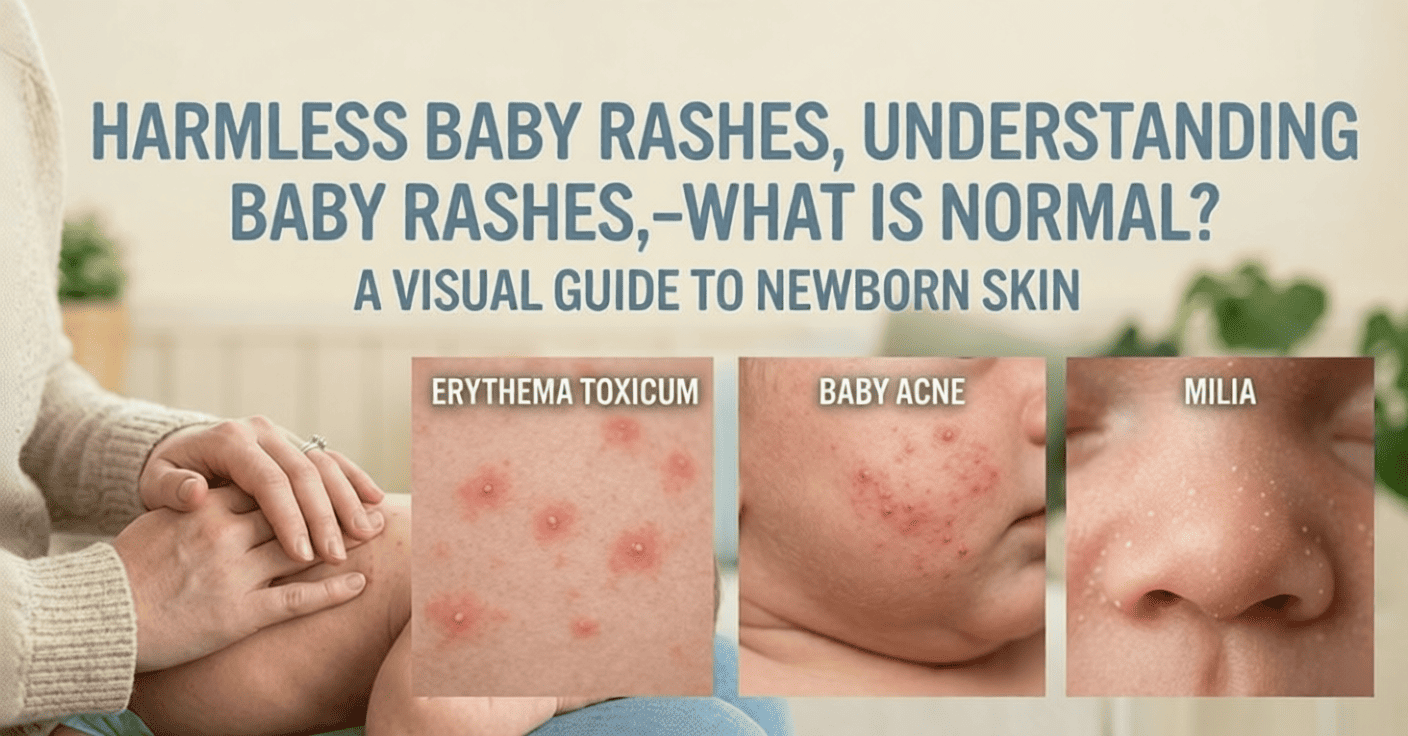
These rashes look dramatic. They might cover the whole body. But when you start understanding what baby rashes are and what is normal, you will learn these are actually signs that the baby’s immune system is waking up correctly.
Erythema Toxicum – A Key Part of Understanding Baby Rashes: What Is Normal
- What it looks like: Red blotches with a tiny white or yellow bump in the middle. Looks a bit like flea bites or insect stings.
- When it appears: 2 to 5 days after birth.
- Where: Face, chest, back, arms. Never on the palms or soles.
- What to do: Absolutely nothing. It vanishes on its own within two weeks.
- Nurse note: This is so common that hospital paediatricians barely look at it anymore. Understanding baby rashes: what is normal means recognising this one and relaxing.
Baby Acne (Neonatal Acne) – Another Normal Rash to Know
- What it looks like: Tiny red bumps and whiteheads on the cheeks, nose, and forehead.
- When it appears: Around 2 to 4 weeks old.
- What causes it: Mum’s hormones are still circulating in the baby’s body.
- What to do: Wash gently with water. Do not use adult acne creams, oils, or scrubs. It clears by 4 months.
- Mum tip: It often looks worse when the baby is crying or hot. That is still normal.
Milia – Tiny White Bumps That Help You Start Understanding Baby Rashes: What Is Normal
- What it looks like: Little pearly white cysts, like a grain of salt stuck under the skin.
- Where: nose, chin, cheeks, and sometimes forehead.
- What to do: Nothing. They are blocked oil glands. They open naturally within a few weeks.
- What NOT to do: Do not squeeze them. They are not pimples.
Rashes That Need a Little Home Care (Understanding Baby Rashes: What Is Normal)
These rashes are still not dangerous, but they cause discomfort. You can help your baby feel better.
Heat Rash (Miliaria) – A Common Rash When Understanding Baby Rashes: What Is Normal
- What it looks like: Tiny red or clear fluid-filled bumps. Often appears in skin folds or areas where clothing is tight.
- Where: neck, armpits, nappy area, and behind the knees.
- What causes it: The baby is too hot. Sweat glands are blocked.
- What to do:
- Remove a layer of clothing.
- Move to a cooler room.
- Keep skin dry.
- Give a lukewarm bath without soap.
- When to worry: If the area becomes warm or swollen or starts oozing yellow fluid (that is, infection, not heat rash).
Cradle Cap – A Normal Rash That Looks Worse Than It Is
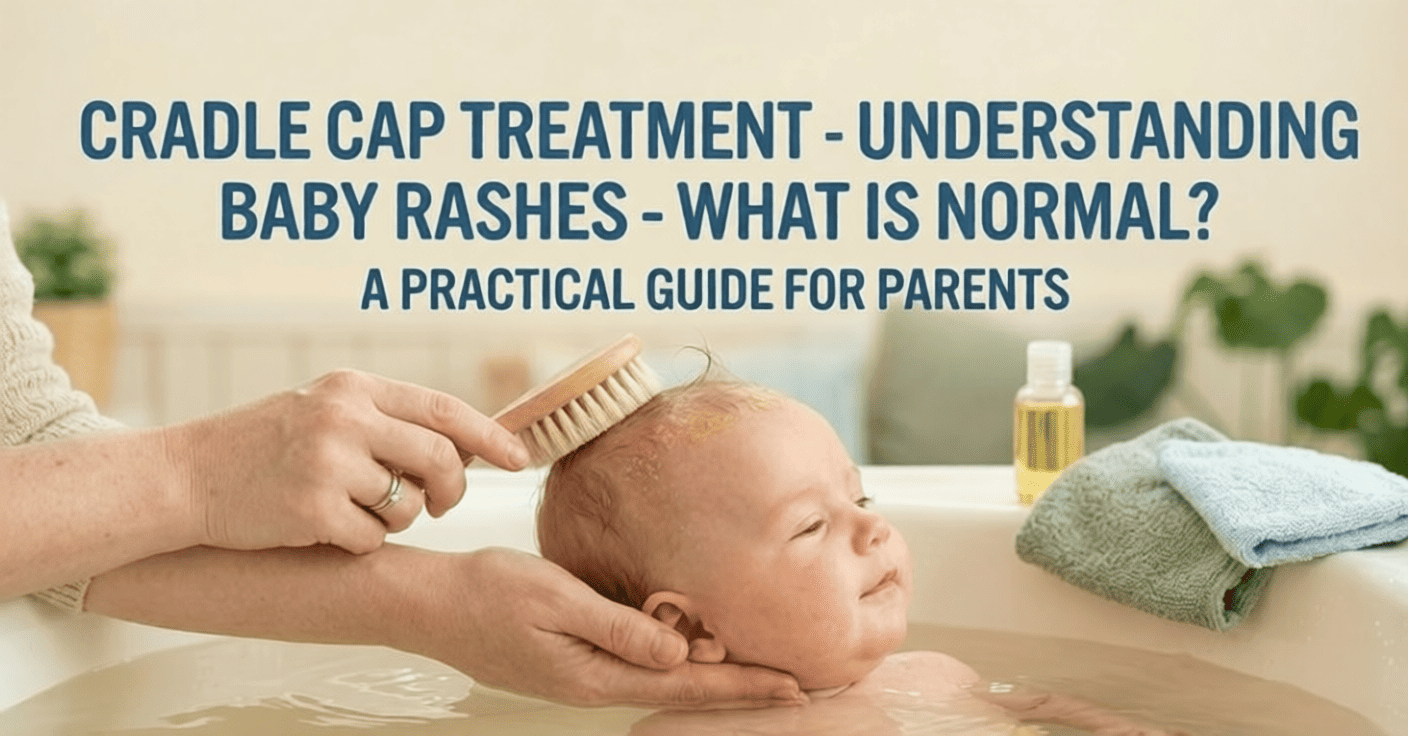
- What it looks like: Greasy, yellow, scaly patches on the scalp, sometimes on eyebrows or behind the ears.
- What causes it: Overactive oil glands. Not poor hygiene. Not an allergy.
- What to do:
- Rub a small amount of coconut oil or baby oil onto the scalp before a bath.
- Let it sit for 10 minutes.
- Gently brush with a soft baby brush.
- Wash with mild baby shampoo.
- Nurse note: It may take weeks to fully clear. It does not bother the baby at all. It bothers you visually. That is fine.
When to Worry About Baby Rashes – Red Flags That Go Beyond Normal
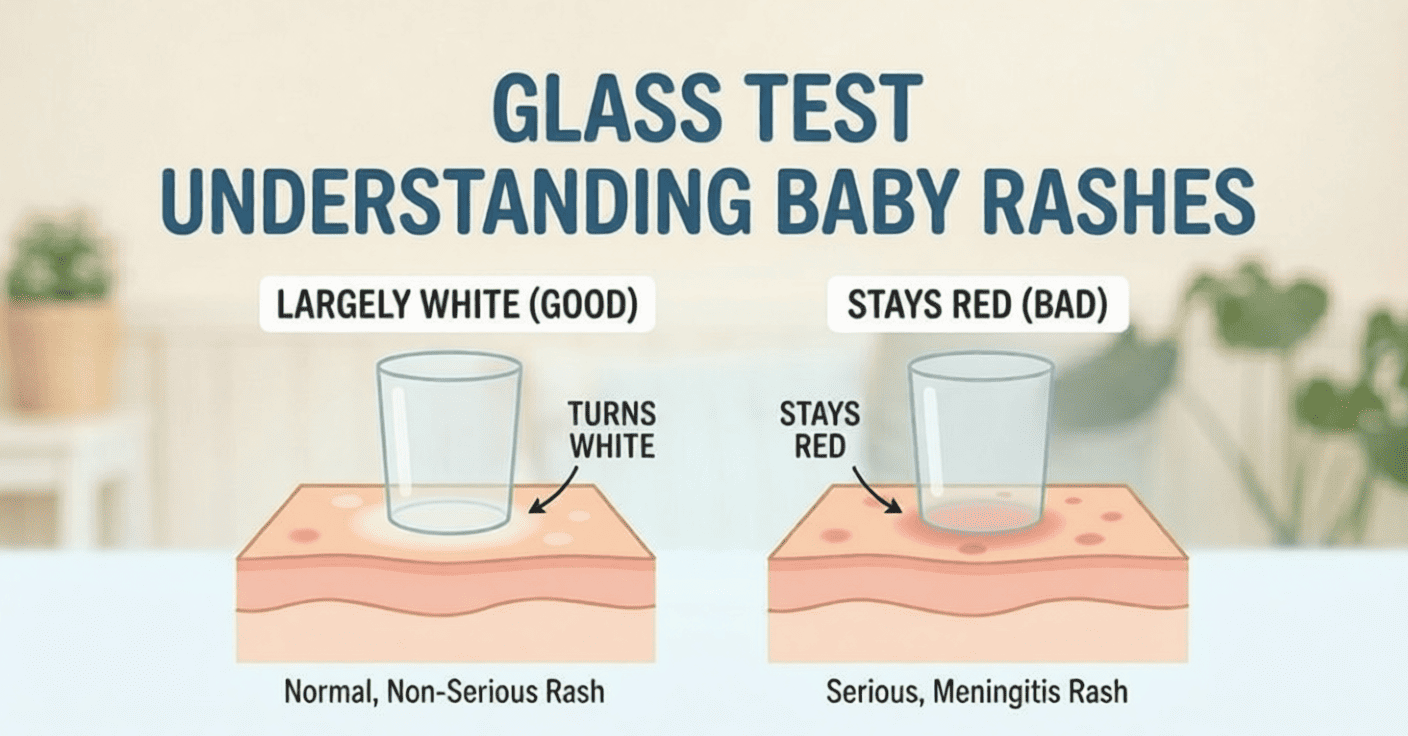
Most rashes are nothing. But a small number of rashes are the body waving a red flag. This is the most important part of understanding baby rashes – what is normal and what isn’t
Red Flag 1 – The Rash Does Not Blench (The Glass Test)
Press a clear drinking glass firmly against the rash.
If the rash turns white or disappears under pressure, it’s a good sign (normal).
If the rash stays red or purple under pressure, this can be a sign of meningitis or a serious infection.
Action: If it does not blanch and your child is unwell, go to the emergency department immediately.
Red Flag 2 – Rash Plus Fever
- A rash on its own is fine.
- A rash + fever (especially over 38.5°C) needs assessment.
- Why: Some childhood illnesses like measles, chickenpox, or meningococcal disease start with fever and rash together.
Red Flag 3 – Rash Looks Like Bruises or Tiny Blood Spots
- If you see purple or red spots that look like pinpricks (petechiae) or actual bruises and the baby hasn’t bumped anything, seek medical attention.
- These do not blanch under the glass test.
- Action: Urgent medical review.
Red Flag 4 – Your Baby Is Unwell (Not Just Spotty)
- Lethargic (hard to wake).
- Not feeding.
- Floppy.
- High-pitched cry.
- Breathing fast or struggling.
If you see ANY of the above, trust your gut and go in. Understanding baby rashes – what is normal – also means knowing when to stop watching and start driving.
Baby Eczema vs Allergy Rash – A Key Comparison for Understanding Baby Rashes: What Is Normal
This is a very common question from new mums who are unsure about baby rashes and what is normal.
| Feature | Baby Eczema | Allergy Rash (Hives) |
|---|---|---|
| Appearance | Dry, scaly, thickened patches. Sometimes cracked or weeping. | Raised, pink or red welts. Looks like mosquito bites. |
| Shape | Patches. No clear edges. | Individual round bumps that change shape and move around. |
| Itching | Extremely itchy. | Very itchy. |
| Timing | Comes and goes over weeks or months. | Appears within minutes to hours of exposure. |
| Common triggers | Dry air, soaps, wool, and drool. | Food (eggs, peanuts), medication, and insect bites. |
| What to do | Moisturise heavily. Avoid irritants. | Food (eggs, peanuts), medication, and insect bites. |
Nurse note: A one-off rash after eating a new food is likely an allergy. Dry patches on the cheeks and elbows that keep coming back are likely eczema. Both need management, but only allergies carry the risk of anaphylaxis (breathing difficulty). If swelling of the lips or face happens, call an ambulance.
Frequently Asked Questions About Understanding Baby Rashes: What Is Normal
Q: Can teething cause a rash on the face?
A: Teething does not cause a body rash. But the constant dribble from teething can cause a drool rash on the chin, cheeks, and chest. This looks like red, chapped, slightly raised skin. Wipe, dribble gently, and apply a barrier cream before naps.
Q: My baby has a rash but is happy and feeding. Do I need to see a doctor?
A: Almost certainly not. A cheerful, feeding, alert baby with a rash is usually a baby with a harmless rash. Understanding baby rashes is normal, which means recognising that behaviour matters more than spots. Monitor for fevers or changes in behaviour. If neither appears, watch and wait.
Q: When should I take my baby to the emergency room for a rash?
A: Three situations only:
- The rash does not blanch with the glass test.
- Rash + fever + lethargy.
- Rash + difficulty breathing or swollen lips/face.
Q: Can I put nappy rash cream on other baby rashes?
A: No. Nappy rash cream (zinc oxide) is designed for wet, irritated nappy areas. It can clog pores on the face or body. Use a plain moisturiser.
Summary – Your Quick Reference for Understanding Baby Rashes: What Is Normal
Mum, here is your cheat sheet for the next time you unzip that onesie:
| If baby looks… | And rash looks… | Then… |
|---|---|---|
| Happy, feeding, alert | Red spots, blotchy, scaly, yellow | Watch and wait. This is normal. |
| Unwell, feverish, floppy | Any rash | See a doctor. |
| Happy but rash has purple spots that don’t fade | Pinprick or bruise-like | Emergency. |
Your baby’s skin is going to do weird things for the first year. It will be red, then bumpy, then dry, then clear, then red again. This is normal development, not a medical emergency. Now that you understand baby rashes and what is normal, you can breathe easier.
If you found this post helpful, you might also like:
Teething Rash: What It Looks Like, Why It Happens, and When to Worry

Nurse K is a practising PHC nurse in South Africa. She writes anonymously to help busy mums raise healthy little ones. Real advice. No jargon. No judgement.
Medical Disclaimer
Medical Disclaimer
The information provided on BusyMumsWorld is for general informational and educational purposes only. This website does not constitute medical advice, diagnosis, or treatment.
About Me
I am a registered nurse with the South African Nursing Council (SANC). I draw upon my nursing training and clinical experience to provide helpful, evidence-informed information for mothers, babies, and families. However, my role on this website is that of an educator and content creator, not your personal healthcare provider.
No Nurse-Patient Relationship
Your use of this website does not create a nurse-patient relationship between you and me. The content on this site does not replace an in-person clinical assessment, physical examination, or professional medical consultation. In accordance with the Nursing Act, 2005 (Act No. 33 of 2005) and the SANC Code of Ethics, I clearly distinguish between my role as a registered nurse in clinical practice and my role as a content creator.
For Babies and Children
Content related to infant and child health is for educational purposes only. Every child is unique. What works for one child may not be appropriate for another. Always consult your paediatrician, clinic sister, family doctor, or other qualified healthcare provider regarding any medical concerns about your child, including changes in behaviour, feeding, sleep, growth, or physical symptoms.
For Mothers
Content related to pregnancy, antenatal care, postpartum recovery, breastfeeding, and maternal health is for educational purposes only. Your healthcare needs are individual and may change during pregnancy and the postnatal period. Always seek guidance from your doctor, midwife, obstetrician, lactation consultant, or local clinic for any questions about your or your baby’s health.
South African Context
Where possible, I aim to provide information relevant to the South African healthcare context, including public and private healthcare considerations. However, healthcare resources, protocols, and availability may vary by province, facility, and individual circumstance. Always confirm information with your own healthcare provider.
SANC Compliance
In compliance with the rules and ethical guidelines of the South African Nursing Council (SANC):
- I clearly state that the information on this site does not constitute the practice of nursing as defined in the Nursing Act
- I do not offer individualised nursing assessments, diagnoses, or treatment plans through this website
- I encourage all readers to seek in-person care from registered healthcare professionals for their specific health needs
- I maintain professional boundaries by not providing specific medical advice in response to comments, emails, or messages
Emergency Warning
If you or your child is experiencing a medical emergency, do not use this website for advice. Call emergency services immediately. Alternatively, go to your nearest hospital emergency department, clinic, or doctor immediately.
Do not delay seeking emergency care because of something you have read on this website.
Limitation of Liability
I make every effort to ensure the accuracy of the information published on this site. However, medical knowledge is constantly evolving, and information may become outdated. I cannot guarantee that all information is complete, current, or accurate for every individual circumstance. I assume no responsibility or liability for any errors or omissions in the content of this site. Your use of this website is at your own risk.
Affiliate Disclosure
BusyMumsWorld participates in affiliate marketing programmes. This means that some links on this site may be affiliate links. If you choose to purchase through these links, I may earn a small commission at no additional cost to you.
My Commitment to You
I am a registered nurse with the South African Nursing Council (SANC). My recommendations are based on my professional knowledge, clinical experience, and genuine belief that a product may be helpful to my audience. Affiliate partnerships do not influence my clinical judgement, the information I provide, or my commitment to evidence-based content.
Important Note
Products mentioned on this site are for informational purposes only. If a product makes medical claims, please consult your doctor, paediatrician, or other qualified healthcare provider before use. My nursing credentials do not constitute an endorsement of any specific product, and I do not receive compensation for clinical recommendations.
Last Updated: March 2026