When Your Baby Suddenly Stops Eating During Teething
It is worrying when a baby who was feeding well suddenly starts refusing the breast, bottle, or solids.
They may latch for a few seconds and pull away. They may cry during feeds or refuse altogether.
Naturally, the first thought is: “Is my baby sick?”
In many cases, the answer is no — your baby may simply be teething.
As a Primary Health Care (PHC) nurse, I often reassure parents that teething can temporarily affect feeding, but it should not completely stop a baby from taking fluids for long periods.
Understanding what is normal — and what is not — allows for proper action.
Can Teething Affect Feeding?
Yes, it can.
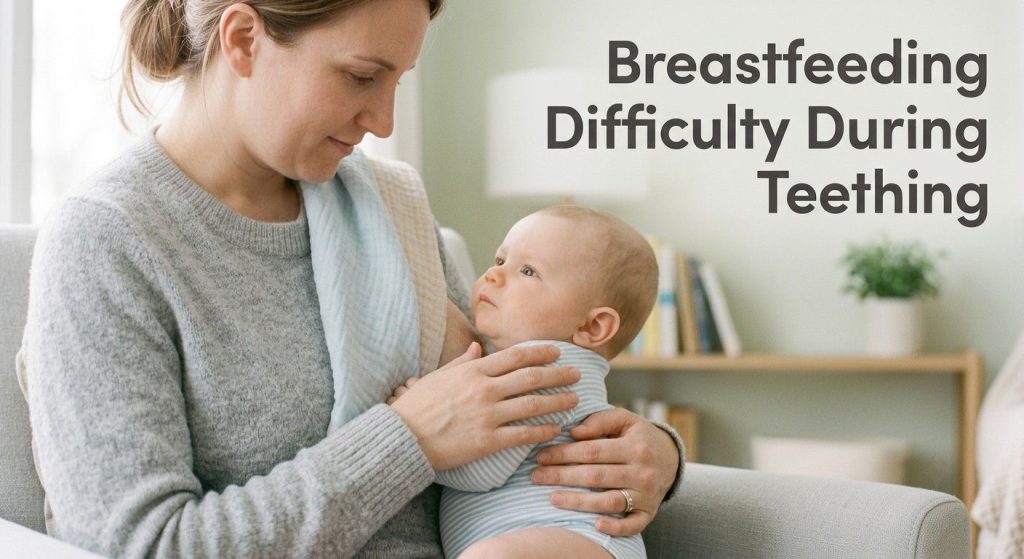
When a tooth is about to break through the gum, the area becomes swollen and sensitive. For a baby, sucking is not just feeding — it creates pressure in the mouth. That pressure can make already sore gums feel worse.
So what happens is not a loss of appetite, but a temporary association between feeding and discomfort.
Some babies continue feeding with only minor changes. Others become more unsettled and feed less for a few days.
What is important to understand is this: teething may change feeding, but it should not stop it completely for long periods.
What Feeding Changes Look Like During Teething
Parents often notice small but clear changes.
Babies may feed for shorter periods than usual or become easily distracted at the breast or bottle. Some prefer cooler milk or softer textures when starting solids.
It is also common for a baby to seem hungry but then pull away once feeding begins, especially if the gums are particularly sore at that moment.
You may also notice biting during breastfeeding or bottle feeding. This is not deliberate — it is often the baby trying to relieve pressure on the gums.
Alongside feeding changes, drooling, chewing on objects, and mild irritability are usually present.
These symptoms tend to come and go and are usually worse just before a tooth appears.
When Baby Not Eating During Teething Is NOT Normal
While mild feeding changes are expected, sometimes reduced eating is seen as a teething problem.
A baby who refuses all feeds for long periods, especially fluids, needs closer attention.
If nappies become less wet than usual, or if your baby seems unusually sleepy, weak, or difficult to wake, this is not typical teething. Here is when to take your baby to hospital.
Fever also needs careful interpretation. A slight temperature increase can happen with teething, but a persistent high fever usually suggests an infection rather than teething itself.
Other warning signs include vomiting, diarrhoea, dry lips, or no tears when crying. These are signs of dehydration and require medical attention.
As a nurse, this is the key clinical message: teething is common, but it should never be used to explain away serious symptoms.
How Long Does Feeding Refusal Last During Teething?
In most babies, feeding changes are short-lived.
They usually start a day or two before the tooth appears and settle within a few days after eruption.
Most episodes last between one and five days.
If feeding problems continue beyond a week, it is important to consider other causes such as viral infections, ear infections, or oral thrush.
Teething and illness often overlap in this age group, which is why parents can easily mistake one for the other.
Why Babies Refuse Feeds During Teething
The key to understanding this behaviour is pain that comes in waves.
Teething discomfort is not constant. It increases when pressure builds under the gum as the tooth moves closer to the surface.
When feeding begins, sucking increases that pressure. The baby may then pull away because feeding temporarily worsens the discomfort.
In simple terms, the baby is not refusing food — they are trying to avoid pain.
This is why many babies still show hunger cues yet struggle to feed comfortably at the breast or bottle.
What You Can Do to Help Your Baby Feed Better
Support during this stage is mostly about comfort.
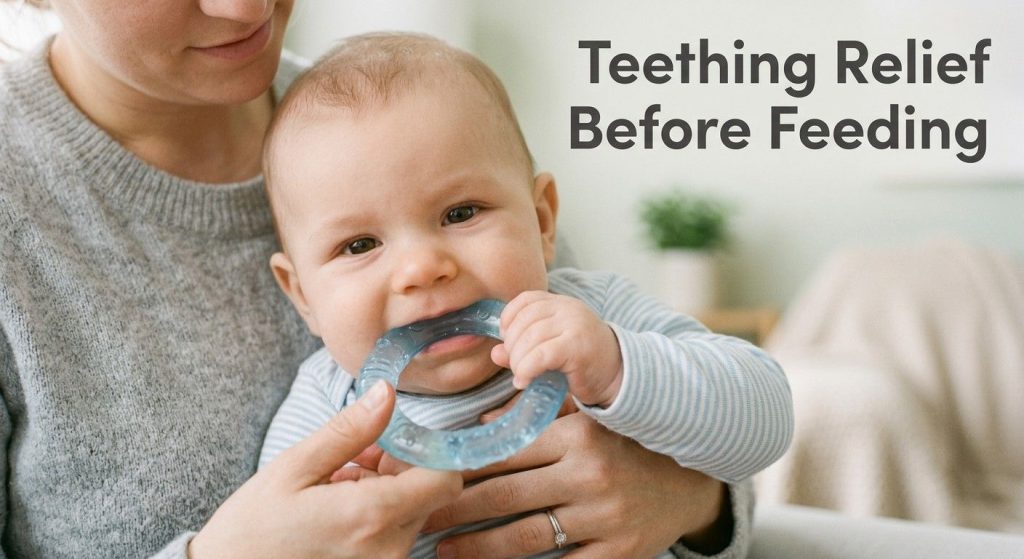
Many babies feed better when their gums are soothed beforehand. A chilled teething ring or gentle gum massage can reduce discomfort for comfortable feeding.
Some babies do better in a calm, quiet environment with fewer distractions. Others feed better when offered smaller, more frequent feeds rather than long sessions.
Breastfed babies may benefit from feeding when sleepy, as they are less aware of gum discomfort at that time. In bottle-fed babies, trying different positions can sometimes help reduce pressure on sore areas.
For babies already on solids, softer and cooler foods are usually easier to tolerate.
When You Should Seek Medical Advice
Even though teething is normal, there are times when professional assessment is important.
If your baby is not taking fluids and shows any signs of dehydration, seeking medical assistance should not be delayed.
A persistent fever or a baby who becomes increasingly lethargic also needs urgent attention.
If feeding refusal lasts more than 24 to 48 hours and is worsening rather than better, it is safer to have your baby checked.
The key principle is simple: if something feels wrong, it is better to assess than assume it is teething.
The Clinical Reality (Important for Parents to Know)
Teething is a normal developmental milestone, not a disease.
But it often happens at the same time as common childhood infections.
This is why symptoms can overlap so easily.
As a PHC nurse, I always encourage parents to trust the pattern: mild irritability and short-term feeding changes may be teething, but persistent signs of illness should never be dismissed.
Read the full post on: Teething in Babies: The Complete Nurse’s Guide to Symptoms, Myths, Relief & When to Worry
Frequently Asked Questions
Can teething cause a baby to stop eating completely?
No. It may temporarily reduce feeding, but complete refusal usually suggests another cause.
How long does loss of appetite last during teething?
Most babies experience changes for about one to five days.
Is it normal for a baby to refuse breast milk while teething?
Yes, temporary breastfeeding refusal can happen due to gum pain.
How do I get my teething baby to eat?
Smaller, more frequent feeds, comfort measures before feeding, and calm environments often help.
When should I worry about my baby not eating?
If there are signs of dehydration, persistent fever, or refusal lasting more than 24–48 hours.
If you found this post helpful, you might also like:
Teething vs Illness: How to Tell the Difference
Can Teething Cause Fever? What Parents Need to Know
Teething and Breastfeeding: Why Babies Bite, Feed Less, and Refuse the Breast
TEETHING IN BABIES: SYMPTOMS – WHAT’S NORMAL VS NOT

Nurse K is a practising PHC nurse in South Africa. She writes anonymously to help busy mums raise healthy little ones. Real advice. No jargon. No judgement.
Medical Disclaimer
Medical Disclaimer
The information provided on BusyMumsWorld is for general informational and educational purposes only. This website does not constitute medical advice, diagnosis, or treatment.
About Me
I am a registered nurse with the South African Nursing Council (SANC). I draw upon my nursing training and clinical experience to provide helpful, evidence-informed information for mothers, babies, and families. However, my role on this website is that of an educator and content creator, not your personal healthcare provider.
No Nurse-Patient Relationship
Your use of this website does not create a nurse-patient relationship between you and me. The content on this site does not replace an in-person clinical assessment, physical examination, or professional medical consultation. In accordance with the Nursing Act, 2005 (Act No. 33 of 2005) and the SANC Code of Ethics, I clearly distinguish between my role as a registered nurse in clinical practice and my role as a content creator.
For Babies and Children
Content related to infant and child health is for educational purposes only. Every child is unique. What works for one child may not be appropriate for another. Always consult your paediatrician, clinic sister, family doctor, or other qualified healthcare provider regarding any medical concerns about your child, including changes in behaviour, feeding, sleep, growth, or physical symptoms.
For Mothers
Content related to pregnancy, antenatal care, postpartum recovery, breastfeeding, and maternal health is for educational purposes only. Your healthcare needs are individual and may change during pregnancy and the postnatal period. Always seek guidance from your doctor, midwife, obstetrician, lactation consultant, or local clinic for any questions about your or your baby’s health.
South African Context
Where possible, I aim to provide information relevant to the South African healthcare context, including public and private healthcare considerations. However, healthcare resources, protocols, and availability may vary by province, facility, and individual circumstance. Always confirm information with your own healthcare provider.
SANC Compliance
In compliance with the rules and ethical guidelines of the South African Nursing Council (SANC):
- I clearly state that the information on this site does not constitute the practice of nursing as defined in the Nursing Act
- I do not offer individualised nursing assessments, diagnoses, or treatment plans through this website
- I encourage all readers to seek in-person care from registered healthcare professionals for their specific health needs
- I maintain professional boundaries by not providing specific medical advice in response to comments, emails, or messages
Emergency Warning
If you or your child is experiencing a medical emergency, do not use this website for advice. Call emergency services immediately. Alternatively, go to your nearest hospital emergency department, clinic, or doctor immediately.
Do not delay seeking emergency care because of something you have read on this website.
Limitation of Liability
I make every effort to ensure the accuracy of the information published on this site. However, medical knowledge is constantly evolving, and information may become outdated. I cannot guarantee that all information is complete, current, or accurate for every individual circumstance. I assume no responsibility or liability for any errors or omissions in the content of this site. Your use of this website is at your own risk.
Affiliate Disclosure
BusyMumsWorld participates in affiliate marketing programmes. This means that some links on this site may be affiliate links. If you choose to purchase through these links, I may earn a small commission at no additional cost to you.
My Commitment to You
I am a registered nurse with the South African Nursing Council (SANC). My recommendations are based on my professional knowledge, clinical experience, and genuine belief that a product may be helpful to my audience. Affiliate partnerships do not influence my clinical judgement, the information I provide, or my commitment to evidence-based content.
Important Note
Products mentioned on this site are for informational purposes only. If a product makes medical claims, please consult your doctor, paediatrician, or other qualified healthcare provider before use. My nursing credentials do not constitute an endorsement of any specific product, and I do not receive compensation for clinical recommendations.
Last Updated: March 2026