A Primary Health Care Nurse Guide for Worried Parents
Teething can temporarily change breastfeeding because swollen, tender gums make sucking uncomfortable. Babies may feed less, bite during feeds, or refuse the breast for a short period. These changes are normal and usually settle once the tooth erupts.
Your Baby Was Feeding Fine… and Suddenly Everything Changed
One day, breastfeeding feels completely normal. The next day, your baby is suddenly different.
They may pull away from the breast, cry when you try to latch them, feed for only a few minutes, or even start biting during feeds. Some babies refuse the breast altogether, which can feel worrying and confusing.
Many parents immediately think something is wrong with their milk supply or that breastfeeding is coming to an end.
In most cases, however, the explanation is far simpler: teething.
When teeth start pushing through the gums, the area becomes swollen and tender. Sucking at the breast can feel uncomfortable, and babies respond in different ways depending on their sensitivity and temperament.
The reassuring part is that this phase is usually temporary and improves once the tooth erupts.
How Teething Changes Breastfeeding
Teething does not affect every baby in the same way. Some continue feeding normally without any change at all. Others become unsettled and show clear shifts in feeding behaviour.
You may notice shorter feeds, more frequent pulling off the breast, or increased fussiness during feeds. Some babies suddenly prefer feeding when they are sleepy, while others may refuse the breast during the day but feed better at night.
In some cases, babies also seek the breast more often for comfort rather than nutrition. This is especially common during night feeds when they are less distracted and more in need of reassurance.
Why Teething Makes Feeding Uncomfortable
Teething happens when a tooth moves through the gum tissue. This process causes swelling, pressure, and tenderness in the gums.
When a baby suckles, that pressure increases. For a sore gum, this can feel uncomfortable or even painful, which is why feeding patterns change.
Instead of feeding steadily, babies may stop early, latch and unlatch repeatedly, or become fussy at the breast. Some babies also bite as a way of coping with the pressure they feel in their gums.
From a primary health care perspective, this is a normal developmental phase and not a breastfeeding problem.
Why Babies Feed Less During Teething
It is very common for babies to feed less during teething, especially during the day. Some manage a few minutes before becoming unsettled, while others prefer frequent short feeds instead of longer, calmer sessions.
Interestingly, many babies feed better at night. When they are sleepy, they are less aware of gum discomfort and more likely to settle at the breast.
It is important to reassure parents that shorter feeds do not mean milk supply is decreasing. Breast milk production is based on demand, and even brief feeds help maintain supply.
Why Babies Bite During Breastfeeding
Biting is often the most distressing part of teething for mothers.
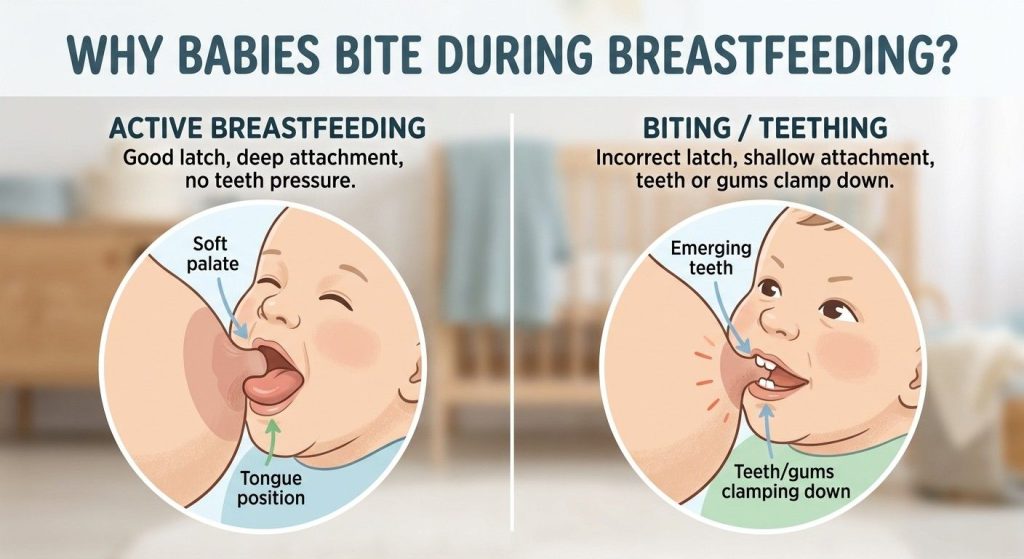
However, babies rarely bite intentionally. It usually happens when feeding slows down, and the baby is no longer actively sucking. At that point, they may become distracted or use their gums to explore sensations in their mouth.
Sometimes biting also happens because babies are trying to relieve pressure on sore gums.
Early Signs That a Baby May Bite
Most babies give subtle signals before they bite. Feeding slows, swallowing decreases, and there may be long pauses during which the baby is latched but no longer actively drinking.
Some babies also turn their heads slightly or clamp their jaws.
If you notice these changes, gently unlatching your baby before biting happens can help prevent discomfort.
Is Breast Refusal Normal During Teething?
Yes. Temporary breast refusal is quite common during teething and is often called a nursing strike.
A baby may refuse the breast because sucking increases pressure on sore gums. This can be frustrating for parents, but it is usually short-lived and may last only a few hours or a few days.
In some babies, mild congestion or ear discomfort can also contribute to this behaviour, which is why feeding patterns may suddenly change.
Most babies return to breastfeeding once they feel more comfortable.
Can Teething Cause a Nursing Strike?
Yes. Teething is one of the common triggers of a nursing strike.
During this time, a baby may cry when offered the breast and latch and then pull away or refuse feeds during the day but still feed at night. Many also prefer comfort sucking when they are sleepy.
This does not mean the baby is weaning.
Night Feeding Often Changes First
One of the most common patterns parents notice is a change in night feeding.
Some babies who refuse feeds during the day will suddenly breastfeed more at night. This happens because night feeds are calmer, quieter, and less stimulating.
Babies are also more relaxed at night, which makes it easier for them to tolerate gum discomfort and settle at the breast.
This pattern is very common and usually temporary.
Should You Stop Breastfeeding During Teething?
Breastfeeding should continue during teething.
In fact, breastfeeding is often one of the most comforting things for a teething baby. It provides hydration, pain relief, warmth, and emotional reassurance.
Breastfeeding also remains safe after teeth erupt. When the latch is correct, the tongue naturally protects the breast from the teeth.
What To Do If Your Baby Bites
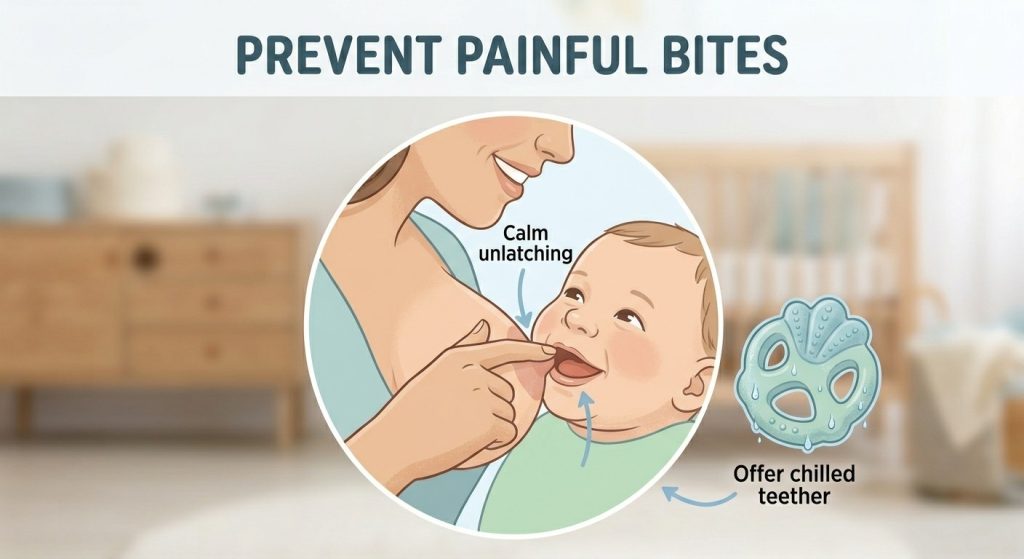
If your baby bites, try to stay calm. Gently break the suction with a clean finger and pause the feed briefly. A calm, firm “no biting” is usually enough for older babies to begin learning the boundary.
Avoid pulling your baby away suddenly, as this can startle them and sometimes increase biting behaviour.
Most importantly, remember that biting is not deliberate. It is part of learning and discomfort management.
How to Reduce Biting
Biting tends to happen more when babies are distracted or when feeds continue for too long after they stop actively drinking.
You can reduce biting by ending feeds before your baby becomes playful or distracted and by feeding in calm, low-stimulation environments.
Some babies also benefit from having their gums soothed before feeding with a chilled teether or cool cloth.
Does Teething Affect Milk Supply?
Teething does not reduce breast milk supply.
Milk production depends on how often milk is removed, not how long each feed lasts. Even short or interrupted feeds still signal your body to continue producing milk.
In most cases, supply remains stable even when feeding patterns change temporarily.
Does Breastfeeding Help Teething Pain?
Yes. Many babies seek the breast more during teething because it provides comfort and relief.
The warmth, sucking motion, and close contact can help soothe sore gums and reduce irritability, especially at night.
When Should You Be Concerned?
Although teething can explain many feeding changes, there are times when medical advice is needed.
You should seek help if your baby refuses all feeds for more than 24 hours, has fewer wet nappies than usual, becomes unusually sleepy or difficult to wake, or shows signs of dehydration or persistent high fever.
These are not typical teething symptoms and should be assessed.
Read: Teething in Babies: The Complete Nurse’s Guide to Symptoms, Myths, Relief & When to Worry
Frequently Asked Questions
How long does breastfeeding disruption last during teething?
Usually, a few days around each tooth eruption.
Can teething make a baby breastfeed more?
Yes, especially at night when babies seek comfort.
Can babies breastfeed with teeth?
Yes. Most babies continue breastfeeding without problems after their teeth appear.
Does teething mean my baby is weaning?
No. It is a temporary developmental phase.
Final Thoughts From a PHC Nurse
Teething can temporarily disrupt breastfeeding and make feeding feel unpredictable.
Some babies bite, some feed less, and some refuse the breast for a short time. While this can feel worrying, it is usually a normal and temporary stage of development.
Your baby is not rejecting breastfeeding. They are simply adjusting to discomfort in their mouth.
With patience, reassurance, and gentle consistency, most breastfeeding patterns return to normal within a short time.
If you found this post helpful, you might also like:
Baby Not Feeding Well: What It Really Means and When to Worry
Ear Pain in Children: Teething, Ear Infection, or Something Serious?
Fever in Children: The “Wait or Worry” Checklist
Baby Symptoms Guide: What’s Normal & When to Worry (A Nurse’s Guide for Parents)
Child Fever: What Is Normal and What Isn’t

Nurse K is a practising PHC nurse in South Africa. She writes anonymously to help busy mums raise healthy little ones. Real advice. No jargon. No judgement.
Medical Disclaimer
Medical Disclaimer
The information provided on BusyMumsWorld is for general informational and educational purposes only. This website does not constitute medical advice, diagnosis, or treatment.
About Me
I am a registered nurse with the South African Nursing Council (SANC). I draw upon my nursing training and clinical experience to provide helpful, evidence-informed information for mothers, babies, and families. However, my role on this website is that of an educator and content creator, not your personal healthcare provider.
No Nurse-Patient Relationship
Your use of this website does not create a nurse-patient relationship between you and me. The content on this site does not replace an in-person clinical assessment, physical examination, or professional medical consultation. In accordance with the Nursing Act, 2005 (Act No. 33 of 2005) and the SANC Code of Ethics, I clearly distinguish between my role as a registered nurse in clinical practice and my role as a content creator.
For Babies and Children
Content related to infant and child health is for educational purposes only. Every child is unique. What works for one child may not be appropriate for another. Always consult your paediatrician, clinic sister, family doctor, or other qualified healthcare provider regarding any medical concerns about your child, including changes in behaviour, feeding, sleep, growth, or physical symptoms.
For Mothers
Content related to pregnancy, antenatal care, postpartum recovery, breastfeeding, and maternal health is for educational purposes only. Your healthcare needs are individual and may change during pregnancy and the postnatal period. Always seek guidance from your doctor, midwife, obstetrician, lactation consultant, or local clinic for any questions about your or your baby’s health.
South African Context
Where possible, I aim to provide information relevant to the South African healthcare context, including public and private healthcare considerations. However, healthcare resources, protocols, and availability may vary by province, facility, and individual circumstance. Always confirm information with your own healthcare provider.
SANC Compliance
In compliance with the rules and ethical guidelines of the South African Nursing Council (SANC):
- I clearly state that the information on this site does not constitute the practice of nursing as defined in the Nursing Act
- I do not offer individualised nursing assessments, diagnoses, or treatment plans through this website
- I encourage all readers to seek in-person care from registered healthcare professionals for their specific health needs
- I maintain professional boundaries by not providing specific medical advice in response to comments, emails, or messages
Emergency Warning
If you or your child is experiencing a medical emergency, do not use this website for advice. Call emergency services immediately. Alternatively, go to your nearest hospital emergency department, clinic, or doctor immediately.
Do not delay seeking emergency care because of something you have read on this website.
Limitation of Liability
I make every effort to ensure the accuracy of the information published on this site. However, medical knowledge is constantly evolving, and information may become outdated. I cannot guarantee that all information is complete, current, or accurate for every individual circumstance. I assume no responsibility or liability for any errors or omissions in the content of this site. Your use of this website is at your own risk.
Affiliate Disclosure
BusyMumsWorld participates in affiliate marketing programmes. This means that some links on this site may be affiliate links. If you choose to purchase through these links, I may earn a small commission at no additional cost to you.
My Commitment to You
I am a registered nurse with the South African Nursing Council (SANC). My recommendations are based on my professional knowledge, clinical experience, and genuine belief that a product may be helpful to my audience. Affiliate partnerships do not influence my clinical judgement, the information I provide, or my commitment to evidence-based content.
Important Note
Products mentioned on this site are for informational purposes only. If a product makes medical claims, please consult your doctor, paediatrician, or other qualified healthcare provider before use. My nursing credentials do not constitute an endorsement of any specific product, and I do not receive compensation for clinical recommendations.
Last Updated: March 2026