A Primary Health Care Nurse’s Guide for Worried Parents
Parents become anxious when their baby suddenly becomes fussy, clingy, or refuses feeds. One of the most common concerns I hear from parents in the clinic is, “Is this just teething, or is my baby getting sick?”
As a primary health care nurse and as a mother myself, I understand how difficult it can be to tell the difference. Teething and illness often happen around the same age, and many symptoms overlap. It’s easy to blame everything on teething, but sometimes there is something else going on.
The good news is that there are a few clues that can help you decide whether your little one is simply cutting a tooth or whether they need medical attention.
Teething vs Illness: The Quick Answer
Teething usually causes mild symptoms such as drooling, chewing on objects, swollen gums, mild fussiness, and temporary changes in sleep or appetite.
High fever, vomiting, diarrhoea, severe cough, difficulty breathing, unusual sleepiness, dehydration, or a baby who seems very unwell are not typical signs of teething and should not be ignored.
If your baby has a temperature of 38°C (100.4°F) or higher, it is safest to think about infection or illness rather than assuming teething is the cause.
Why Parents Often Confuse Teething With Illness
Teething commonly begins around six months of age. Coincidentally, this is also when babies start putting everything into their mouths, become more mobile, and are exposed to more viruses.
In my experience as a primary health care nurse, many parents are surprised to learn that teething itself does not cause high fevers, diarrhoea, vomiting, or severe illness. Teeth often get blamed simply because the timing overlaps.
What Are Normal Signs of Teething?
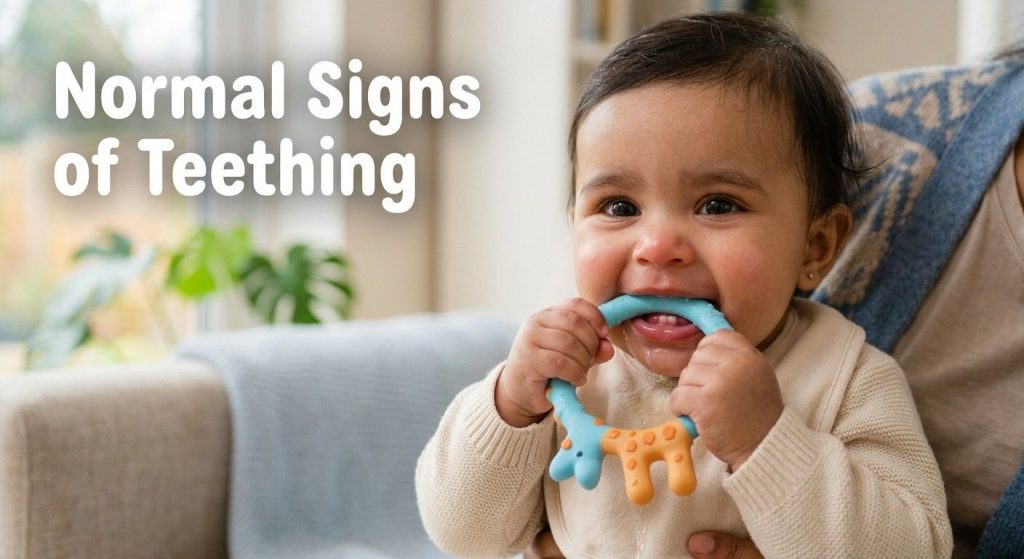
Most babies experience only mild symptoms. These can include:
- Increased drooling.
- Chewing on hands, toys, or anything within reach.
- Mild irritability.
- Swollen or tender gums.
- Wanting extra cuddles.
- Brief sleep disturbances.
- Temporary reduced interest in solids.
Some babies sail through teething with hardly any symptoms, while others become more unsettled for a few days before the tooth appears.
What Symptoms Suggest Illness Instead?
Symptoms that deserve closer attention include:
Fever
A mild rise in temperature may occur, but a true fever of 38°C or higher should not be blamed on teething.
Persistent Runny Nose and Cough
While teething can cause some extra drooling and a mild, clear runny nose, it does not cause a persistent cough or thick mucus. If your baby develops a lasting cough, wheezing, or trouble breathing, it’s more likely a cold or infection than teething, and it’s worth checking with your doctor.
Vomiting or Diarrhea
Many parents ask whether teething causes diarrhoea.
Current evidence shows that severe diarrhoea and vomiting are not caused by teething. A stomach bug or another infection is much more likely.
Severe Fussiness
Teething discomfort usually improves with cuddles and comfort.
If your baby cries inconsolably, seems floppy, is difficult to wake, or cannot be comforted, this is not typical teething behaviour.
Refusing Fluids
Babies with sore gums may temporarily eat less, but they should still drink and produce wet nappies.
Reduced urine output, dry mouth, no tears when crying, or sunken eyes are warning signs of dehydration and need urgent medical attention.
Teething vs Illness: A Simple Comparison
Signs More Likely Due to Teething
- Drooling.
- Chewing everything.
- Mild fussiness.
- Swollen gums.
- Brief sleep changes.
- Slight decrease in appetite.
- Symptoms last for a few days around the tooth eruption.
Signs More Likely Due to Illness
- Fever above 38°C.
- Vomiting.
- Diarrhoea.
- Persistent cough.
- Difficulty breathing.
- Rash all over the body.
- Severe lethargy.
- Poor feeding.
- Fewer wet nappies.
- Symptoms worsening instead of improving.
If you’re unsure when to take your baby to the hospital, read Clinic or Hospital for a Sick Baby? Emergency Warning Signs Parents Should Know
Can Teething Cause Fever?
This is probably the question I hear most often.
Research shows that teething may cause a slight increase in temperature, but it does not cause a true fever. If your baby’s temperature reaches 38°C or higher, it is important to look for another cause rather than assuming it’s “just teething”. If you’re worried about fever, you can read my article on Child Fever: What Is Normal and What Isn’t
Can Teething Cause Ear Pulling?
Yes, sometimes.
The nerves around the gums, jaw, and ears are connected, so babies who are teething may pull their ears.
However, ear pulling accompanied by fever, severe irritability, or crying when lying down may indicate an ear infection and should be assessed by a healthcare professional.
Can Teething Cause Poor Sleep?
Yes.
Some babies become restless or wake more often for a few nights while a tooth is erupting. However, prolonged sleep problems lasting weeks are unlikely to be caused by teething alone.
What Can Parents Do at Home?
Most teething discomfort can be managed with simple measures.
Offer a chilled teething ring or cool washcloth to chew on.
Gently massage your baby’s gums with a clean finger.
Continue breastfeeding or offering fluids regularly.
Provide extra cuddles and reassurance.
Keep drool away from the skin to prevent a rash around the mouth and chin.
Avoid amber teething necklaces because they pose choking and strangulation risks.
Avoid teething gels containing benzocaine or homoeopathic remedies unless specifically recommended by your healthcare provider.
When Should You Seek Medical Attention?
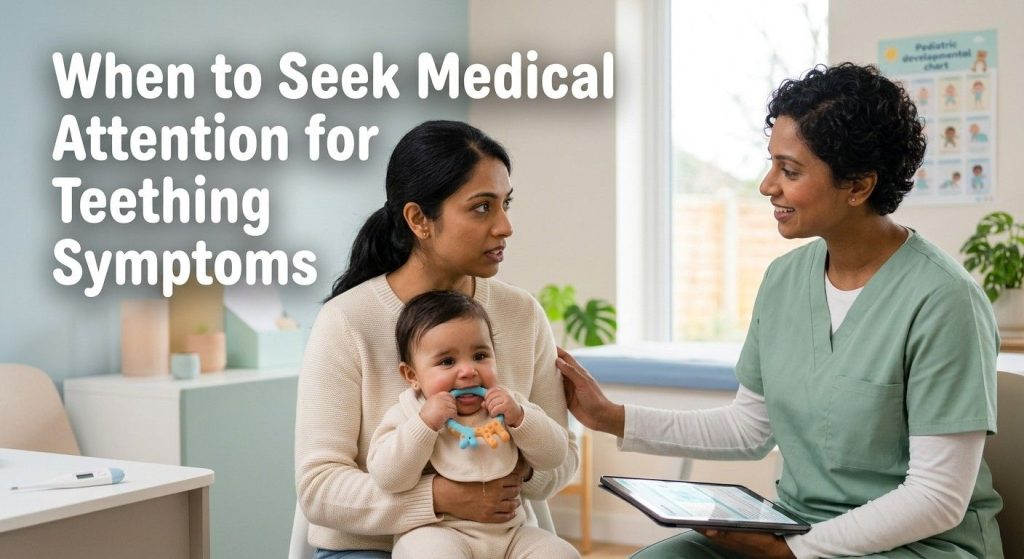
Contact your healthcare provider if your baby:
- Has a fever of 38°C or above.
- Refuses fluids.
- Produces fewer wet nappies.
- Vomits repeatedly.
- Has severe diarrhoea.
- Develops breathing difficulties.
- Appears unusually sleepy or difficult to wake.
- Has symptoms lasting longer than expected.
- Seems much sicker than “normal teething”.
For babies younger than three months with a fever, urgent medical assessment is recommended.
Read: Teething in Babies: The Complete Nurse’s Guide to Symptoms, Myths, Relief & When to Worry
Frequently Asked Questions
How do I know if it’s teething or an ear infection?
Teething can sometimes cause ear pulling because the nerves in the jaw and ear area are connected. However, fever, severe pain, waking frequently at night, crying when lying down, or fluid draining from the ear suggest an ear infection rather than teething.
How long do teething symptoms last?
Most symptoms come and go over a few days and improve once the tooth breaks through.
Can teething cause a runny nose?
Drooling may cause mild, clear mucus, but a thick, runny nose, congestion, and cough are more suggestive of a cold.
Can teething cause diarrhoea?
No. Persistent diarrhoea should not be blamed on teething.
Absolutely. Teething and illness can occur at the same time, which is why it’s important not to assume that teething is the cause of every symptom.
Is loss of appetite normal during teething?
A temporary reduction in solids intake is common, but babies should continue to take fluids and produce wet nappies. If you’re concerned about feeding, read my full guide on Baby Not Feeding Well: What It Really Means and When to Worry.
A Word From Nurse K
One of the biggest mistakes I see is parents feeling reassured by the phrase, “It’s probably just teething.”
Sometimes it is.
But sometimes babies are genuinely unwell, and symptoms such as fever, vomiting, breathing difficulties, severe lethargy, or dehydration deserve prompt medical attention.
Trust your instincts. You know your baby best. If something doesn’t feel right, it’s always reasonable to seek advice.
If you found this post helpful, you might also like:
Can Teething Cause Fever? What Parents Need to Know
TEETHING IN BABIES: SYMPTOMS – WHAT’S NORMAL VS NOT
Teething and Breastfeeding: Why Babies Bite, Feed Less, and Refuse the Breast
Ear Pain in Children: Teething, Ear Infection, or Something Serious?

Nurse K is a practising PHC nurse in South Africa. She writes anonymously to help busy mums raise healthy little ones. Real advice. No jargon. No judgement.
Medical Disclaimer
Medical Disclaimer
The information provided on BusyMumsWorld is for general informational and educational purposes only. This website does not constitute medical advice, diagnosis, or treatment.
About Me
I am a registered nurse with the South African Nursing Council (SANC). I draw upon my nursing training and clinical experience to provide helpful, evidence-informed information for mothers, babies, and families. However, my role on this website is that of an educator and content creator, not your personal healthcare provider.
No Nurse-Patient Relationship
Your use of this website does not create a nurse-patient relationship between you and me. The content on this site does not replace an in-person clinical assessment, physical examination, or professional medical consultation. In accordance with the Nursing Act, 2005 (Act No. 33 of 2005) and the SANC Code of Ethics, I clearly distinguish between my role as a registered nurse in clinical practice and my role as a content creator.
For Babies and Children
Content related to infant and child health is for educational purposes only. Every child is unique. What works for one child may not be appropriate for another. Always consult your paediatrician, clinic sister, family doctor, or other qualified healthcare provider regarding any medical concerns about your child, including changes in behaviour, feeding, sleep, growth, or physical symptoms.
For Mothers
Content related to pregnancy, antenatal care, postpartum recovery, breastfeeding, and maternal health is for educational purposes only. Your healthcare needs are individual and may change during pregnancy and the postnatal period. Always seek guidance from your doctor, midwife, obstetrician, lactation consultant, or local clinic for any questions about your or your baby’s health.
South African Context
Where possible, I aim to provide information relevant to the South African healthcare context, including public and private healthcare considerations. However, healthcare resources, protocols, and availability may vary by province, facility, and individual circumstance. Always confirm information with your own healthcare provider.
SANC Compliance
In compliance with the rules and ethical guidelines of the South African Nursing Council (SANC):
- I clearly state that the information on this site does not constitute the practice of nursing as defined in the Nursing Act
- I do not offer individualised nursing assessments, diagnoses, or treatment plans through this website
- I encourage all readers to seek in-person care from registered healthcare professionals for their specific health needs
- I maintain professional boundaries by not providing specific medical advice in response to comments, emails, or messages
Emergency Warning
If you or your child is experiencing a medical emergency, do not use this website for advice. Call emergency services immediately. Alternatively, go to your nearest hospital emergency department, clinic, or doctor immediately.
Do not delay seeking emergency care because of something you have read on this website.
Limitation of Liability
I make every effort to ensure the accuracy of the information published on this site. However, medical knowledge is constantly evolving, and information may become outdated. I cannot guarantee that all information is complete, current, or accurate for every individual circumstance. I assume no responsibility or liability for any errors or omissions in the content of this site. Your use of this website is at your own risk.
Affiliate Disclosure
BusyMumsWorld participates in affiliate marketing programmes. This means that some links on this site may be affiliate links. If you choose to purchase through these links, I may earn a small commission at no additional cost to you.
My Commitment to You
I am a registered nurse with the South African Nursing Council (SANC). My recommendations are based on my professional knowledge, clinical experience, and genuine belief that a product may be helpful to my audience. Affiliate partnerships do not influence my clinical judgement, the information I provide, or my commitment to evidence-based content.
Important Note
Products mentioned on this site are for informational purposes only. If a product makes medical claims, please consult your doctor, paediatrician, or other qualified healthcare provider before use. My nursing credentials do not constitute an endorsement of any specific product, and I do not receive compensation for clinical recommendations.
Last Updated: March 2026