As a primary healthcare nurse, I know that managing mild allergies at home is something every parent needs to learn. The first time your child develops hives, it is terrifying. But here is the truth: most allergic reactions in children are mild and can be managed safely at home. The key is knowing what you are looking at. In this guide, I will teach you how to recognise a mild reaction, how to treat it safely, and—most importantly—when to stop home care and seek medical help.
What Is a Mild Allergic Reaction? Start Here for Managing Mild Allergies at Home
Before you treat anything, you need to know what a mild allergic reaction looks like. This is the foundation of managing mild allergies at home.
Mild to moderate allergic reactions typically affect only one body system – usually the skin or the digestive system.
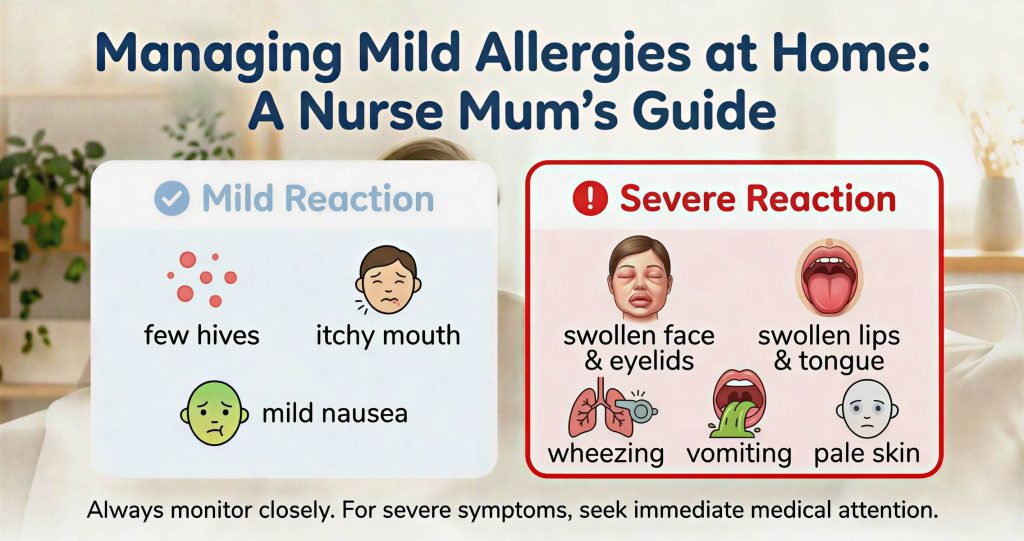
Mild reaction symptoms include:
| Symptom | What It Looks Like |
|---|---|
| Localised hives | A few raised, red, itchy bumps (like mosquito bites) on one area of the body |
| Mild itching | Itchy mouth, lips, or skin |
| Mild nausea | Stomach discomfort without vomiting |
| Sneezing or a runny nose | Clear, watery discharge (not thick or yellow) |
Example: Your child eats a new food and develops a few hives around their mouth. They are still happy, playing, and breathing normally. This is a mild reaction.
Important: Mild symptoms can become severe. That is why managing mild allergies at home requires close observation
When Is It Not Mild? Recognising Severe Reactions (Anaphylaxis)
This is the most important section. Managing mild allergies at home means knowing when to stop home care and seek emergency help.
Severe reaction symptoms (seek immediate medical attention):
| Body System | Warning Signs |
|---|---|
| Breathing | Wheezing, trouble breathing, hoarseness, throat tightness |
| Mouth/Throat | Swelling of the lips, tongue, or throat |
| Skin | Hives all over the body (not just one area) |
| Heart/Circulation | Pale or blue skin, dizziness, fainting, weak pulse |
| Digestive | Severe vomiting or diarrhoea |
| Behaviour | Sudden floppiness, confusion, restlessness, or “impending doom” feeling |
If you see ANY of these, do not try managing mild allergies at home. Use an epinephrine auto-injector (EpiPen) if you have one. Go to an emergency centre or doctor immediately.
How to Manage Mild Allergies at Home – Safe, Non-Medication Steps
Once you have confirmed the reaction is mild, follow these steps to manage mild allergies at home.
Step 1 – Remove the Trigger
Remove the cause immediately. For food allergies, stop feeding that food. For environmental allergies (pollen, pet dander), move your child away from the source.
Step 2 – Apply a Cool Compress
A cool compress is the safest first treatment for skin reactions. Apply it to hives or itchy areas for 5-10 minutes. This reduces swelling and numbs the itch. Repeat as needed.
Step 3 – Give a Cool Bath
For widespread hives or itching, a cool (not cold) bath can provide relief. Keep the bath lukewarm and avoid harsh soaps. Let your child soak for 10-15 minutes. Pat skin dry gently – do not rub it.
Step 4 – Dress in Loose, Cotton Clothing
Tight or rough fabrics can irritate hives. Dress your child in loose, soft, breathable cotton clothing. This prevents scratching and allows the skin to cool.
Step 5 – Distract and Comfort
Young children scratch without thinking. Keep their hands busy with toys, books, or a calm activity. Keep fingernails short to reduce skin damage if scratching happens.
Step 6 – Observe Closely for 1-2 Hours
After taking these steps, watch your child carefully. Mild symptoms usually improve within this time. If symptoms worsen, spread to other parts of the body, or new symptoms appear, seek medical care.
Common Allergy Triggers in Children (And How to Reduce Exposure)
Part of managing mild allergies at home is prevention. Here are the most common triggers and simple home strategies.
Food Allergies (The Most Common)
The most common food allergens in children include:
- Peanuts and tree nuts
- Eggs
- Milk and dairy
- Wheat
- Soy
- Fish and shellfish
Home management: Read food labels carefully. Inform schools and carers. Introduce new foods one at a time. Keep a food diary if you suspect a trigger.
Environmental Allergies
| Trigger | Home Management Tips |
|---|---|
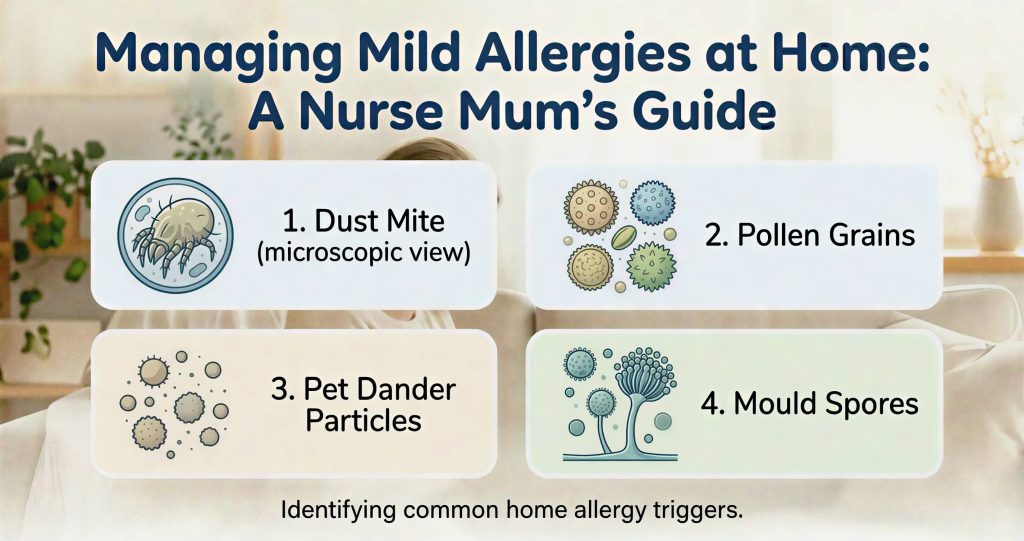
| Dust mites | Wash bedding weekly in hot water. Use allergy-proof covers. Remove carpet from bedrooms where possible. |
| Pollen | Keep windows closed during high pollen seasons. Change clothes after outdoor play. Wash hair before bed. |
| Pet dander | Keep pets out of your child’s bedroom. Bathe pets regularly. Use HEPA air purifiers if available. |
| Mould | Use a dehumidifier. Clean mouldy areas. Fix water leaks promptly. |
Insect Stings (Bees, Wasps, Ants)
For mild local reactions (swelling at the sting site), apply a cold compress and monitor. Remove the stinger by scraping (not squeezing) if visible. Severe reactions (swelling away from the sting site, difficulty breathing) require emergency care.
Cold vs Allergies – How to Tell the Difference
Parents often ask me: “Is this a cold or allergies?” This is essential for managing mild allergies at home correctly.
| Feature | Cold | Allergies |
|---|---|---|
| Nasal discharge | Clear but slightly thicker and may change colour | Clear and watery, always |
| Fever | Possible (mild) | Never |
| Itchy eyes or nose | Rare | Common |
| Duration | 7-10 days | Weeks or months (while exposed) |
| Timing | More common in cooler months | Seasonal or year-round |
| Body aches | Possible | No |
Quick check: If your child’s symptoms come and go depending on location or season, allergies are more likely. If your child has a fever or thick yellow mucus, it is likely a cold.
The Eczema Connection – A Risk Factor for Allergies
If your child has eczema (atopic dermatitis), their risk of developing food allergies is higher.
Why? Eczema damages the skin barrier. Food proteins can enter through broken skin and trigger the immune system before the child ever eats the food.
What you can do:
- Keep eczema well-managed with regular moisturising
- Introduce new foods one at a time – discuss timing with your doctor
- Watch for reactions when introducing new foods
Nurse note: Managing eczema well is important in managing mild allergies at home because healthy skin is a good barrier.
Frequently Asked Questions About Managing Mild Allergies at Home
Q: How long does it take for an allergic reaction to appear?
A: Most reactions appear within minutes to a few hours after exposure. Severe reactions usually happen within 30-60 minutes. That is why close observation after a potential trigger is so important.
Q: My child has hives but no other symptoms. Should I go to the emergency room?
A: If the hives are localised (in one area) and your child is happy, breathing normally, and acting like themselves, managing mild allergies at home with a cool compress and close observation is appropriate. However, if hives spread to the whole body or your child seems unwell, seek medical care. While hives are common in allergies, other red spots might look similar but be completely harmless. If you are unsure whether the rash is an allergy or a normal baby rash, read our guide on understanding baby rashes: what is normal.
Q: Can my child outgrow food allergies?
A: Yes. Many children outgrow allergies to milk, eggs, soy, and wheat. Allergies to peanuts, tree nuts, fish, and shellfish are less likely to be outgrown. Your doctor can advise on testing and monitoring.
Q: Should I buy an epinephrine auto-injector (EpiPen) for my child?
A: This is a discussion for your doctor. Epinephrine auto-injectors are prescribed for children with known severe allergies or a history of anaphylaxis. If your child has ever had a severe reaction or if you have a strong family history of severe allergies, speak to your doctor about whether an auto-injector is appropriate.
Q: Can I use antihistamines for my child’s allergic reaction?
A: Antihistamines are available in many countries. However, laws and age recommendations vary by country. Always speak to your local pharmacist or doctor before giving any medication to a child. Never give medication to a child under 2 years without professional advice. This article focuses on non-medication approaches to managing mild allergies at home.
Summary – Your Checklist for Managing Mild Allergies at Home
Mum, here is your quick reference:
| Step | Action |
|---|---|
| 1. Identify | Is this mild (one body system, happy child) or severe (two+ systems, unwell child)? |
| 2. Remove | Take away the trigger (food, pet, pollen, insect) |
| 3. Cool | Apply a cool compress or give a cool bath |
| 4. Comfort | Dress in loose cotton clothing. Distract from scratching. |
| 5. Observe | Watch closely for 1-2 hours |
| 6. Escalate | If symptoms worsen or spread, seek medical care |
Remember the red flags for severe reactions:
- Difficulty breathing or wheezing
- Swelling of the lips, tongue, or throat
- Hives all over the body (not just one area)
- Vomiting or severe diarrhoea
- Pale, floppy, or unconscious
If you see any of these, do not continue managing mild allergies at home. Call emergency services immediately.
You have got this, mum. Knowing the difference between mild and severe is half the battle. Trust your gut. When in doubt, get it checked out.

Nurse K is a practising PHC nurse in South Africa. She writes anonymously to help busy mums raise healthy little ones. Real advice. No jargon. No judgement.
Medical Disclaimer
Medical Disclaimer
The information provided on BusyMumsWorld is for general informational and educational purposes only. This website does not constitute medical advice, diagnosis, or treatment.
About Me
I am a registered nurse with the South African Nursing Council (SANC). I draw upon my nursing training and clinical experience to provide helpful, evidence-informed information for mothers, babies, and families. However, my role on this website is that of an educator and content creator, not your personal healthcare provider.
No Nurse-Patient Relationship
Your use of this website does not create a nurse-patient relationship between you and me. The content on this site does not replace an in-person clinical assessment, physical examination, or professional medical consultation. In accordance with the Nursing Act, 2005 (Act No. 33 of 2005) and the SANC Code of Ethics, I clearly distinguish between my role as a registered nurse in clinical practice and my role as a content creator.
For Babies and Children
Content related to infant and child health is for educational purposes only. Every child is unique. What works for one child may not be appropriate for another. Always consult your paediatrician, clinic sister, family doctor, or other qualified healthcare provider regarding any medical concerns about your child, including changes in behaviour, feeding, sleep, growth, or physical symptoms.
For Mothers
Content related to pregnancy, antenatal care, postpartum recovery, breastfeeding, and maternal health is for educational purposes only. Your healthcare needs are individual and may change during pregnancy and the postnatal period. Always seek guidance from your doctor, midwife, obstetrician, lactation consultant, or local clinic for any questions about your or your baby’s health.
South African Context
Where possible, I aim to provide information relevant to the South African healthcare context, including public and private healthcare considerations. However, healthcare resources, protocols, and availability may vary by province, facility, and individual circumstance. Always confirm information with your own healthcare provider.
SANC Compliance
In compliance with the rules and ethical guidelines of the South African Nursing Council (SANC):
- I clearly state that the information on this site does not constitute the practice of nursing as defined in the Nursing Act
- I do not offer individualised nursing assessments, diagnoses, or treatment plans through this website
- I encourage all readers to seek in-person care from registered healthcare professionals for their specific health needs
- I maintain professional boundaries by not providing specific medical advice in response to comments, emails, or messages
Emergency Warning
If you or your child is experiencing a medical emergency, do not use this website for advice. Call emergency services immediately. Alternatively, go to your nearest hospital emergency department, clinic, or doctor immediately.
Do not delay seeking emergency care because of something you have read on this website.
Limitation of Liability
I make every effort to ensure the accuracy of the information published on this site. However, medical knowledge is constantly evolving, and information may become outdated. I cannot guarantee that all information is complete, current, or accurate for every individual circumstance. I assume no responsibility or liability for any errors or omissions in the content of this site. Your use of this website is at your own risk.
Affiliate Disclosure
BusyMumsWorld participates in affiliate marketing programmes. This means that some links on this site may be affiliate links. If you choose to purchase through these links, I may earn a small commission at no additional cost to you.
My Commitment to You
I am a registered nurse with the South African Nursing Council (SANC). My recommendations are based on my professional knowledge, clinical experience, and genuine belief that a product may be helpful to my audience. Affiliate partnerships do not influence my clinical judgement, the information I provide, or my commitment to evidence-based content.
Important Note
Products mentioned on this site are for informational purposes only. If a product makes medical claims, please consult your doctor, paediatrician, or other qualified healthcare provider before use. My nursing credentials do not constitute an endorsement of any specific product, and I do not receive compensation for clinical recommendations.
Last Updated: March 2026