It can be very worrying for parents to notice that their baby is breathing faster than usual. Many parents find themselves watching their baby’s chest rise and fall, wondering whether what they are seeing is normal or a cause for concern.
The reassuring truth is that babies naturally breathe faster than older children and adults. Their breathing can also change throughout the day depending on whether they are crying, feeding, sleeping, or slightly unwell.
In many cases, fast breathing is temporary and harmless. However, there are times when it may be a sign that a baby needs medical attention. Knowing the difference can help parents feel more confident and act quickly when needed.
This guide will help you understand what normal breathing looks like in babies, what causes temporary fast breathing, and the warning signs that should not be ignored.
What Normal Breathing Looks Like in Babies
A baby’s breathing is naturally different from an adult’s. It is usually faster, lighter, and sometimes irregular, especially in the early months of life.
Newborns tend to breathe the fastest, and as they grow, their breathing gradually becomes slower and steadier. This means that what looks like “fast breathing” in a young baby may still be completely normal for their age.
It is also important to remember that babies often change their breathing patterns depending on what they are doing. When they are crying, feeding, or unsettled, their breathing will naturally speed up. When they are calm or asleep, it should slow down again.
Because of this natural variation, the most accurate time to observe breathing is when your baby is relaxed or sleeping.
Normal Breathing Rates by Age
As a general guide, a newborn may breathe between 30 and 60 breaths per minute when resting. Older babies gradually slow down as they develop.
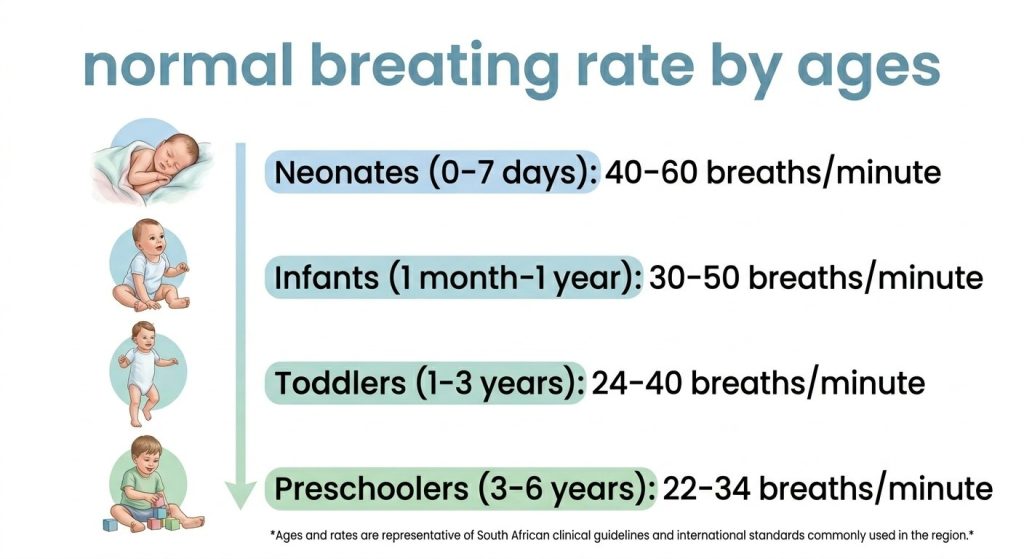
By around one year of age, breathing is usually a little slower and more regular, and by toddler age, it slows further.
These ranges are only a guide, and what matters most is how your baby looks and behaves overall. A baby who is feeding well, alert, and comfortable is usually not in distress, even if breathing appears a little fast at times.
How to Check Your Baby’s Breathing
If you are worried about fast breathing, the simplest way to check is to observe your baby when they are calm or asleep.
Watch the chest or tummy rise and fall. Each complete rise and fall counts as one breath. It is important to count for a full 60 seconds rather than guessing over a shorter time, as breathing can change from moment to moment.
This gives you the most accurate picture of whether your baby’s breathing is within a normal range for their age.
Common Reasons Babies Breathe Faster
There are several everyday reasons why a baby may breathe faster without it being dangerous.
Crying is one of the most common causes. After a crying episode, a baby’s breathing can stay fast for a short time while they settle.
Feeding can also temporarily increase breathing rate because it takes effort and coordination. Mild fever, excitement, and slight overheating can also make breathing appear faster than usual.
Another very common reason is nasal congestion. Babies mainly breathe through their noses, so even a small blocked nose can make breathing sound faster or noisier than normal.
In most of these situations, breathing settles once the trigger passes.
Fast Breathing While Sleeping
Many parents notice fast or uneven breathing during sleep and worry that something is wrong.
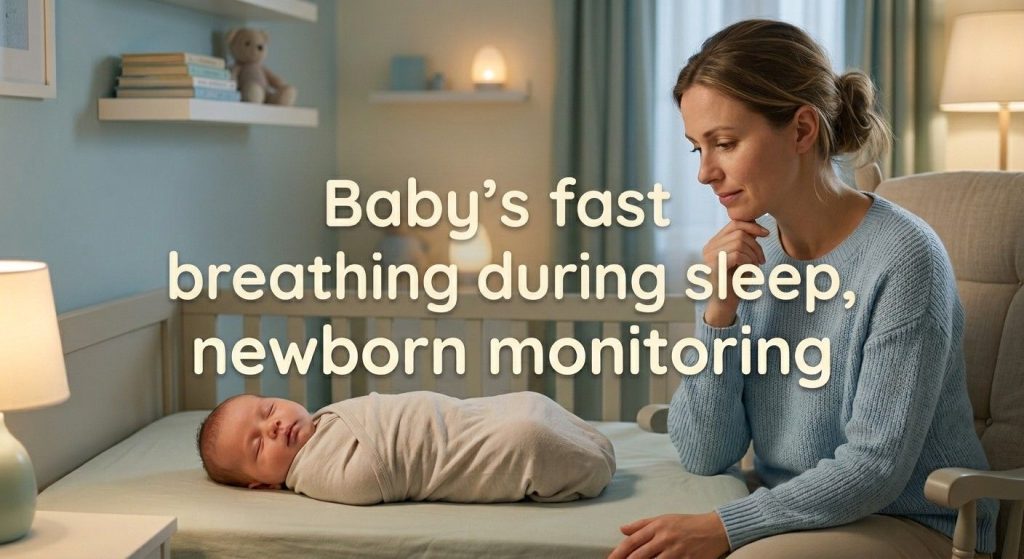
In young babies, especially newborns, breathing is often irregular. It may speed up, slow down, or even pause briefly before returning to normal.
This pattern is part of normal development and is usually not a cause for concern on its own.
However, breathing should not look consistently laboured. If you notice that your baby is working hard to breathe, making grunting sounds, or showing any change in skin colour, this should be assessed by a healthcare professional.
When Fast Breathing Becomes a Concern
Fast breathing on its own is not always dangerous. What matters most is whether your baby is showing signs of effort or distress.
If you notice the chest pulling in under the ribs or between the ribs, or the nostrils flaring with each breath, this suggests your baby is working harder than normal to breathe.
Other warning signs include grunting sounds, wheezing, unusual sleepiness, difficulty waking, poor feeding, or a change in skin colour, such as pale or bluish lips.
These signs should always be taken seriously, especially in young babies, as breathing problems can worsen quickly.
When to Seek Urgent Medical Care
You should seek immediate medical attention if your baby is struggling to breathe, has blue lips or skin, is too weak to feed, is difficult to wake, or has long pauses in breathing.
Even if you are unsure, it is always safer to have your baby checked. Trusting your instincts as a parent is important, especially when something feels different or wrong.
What You Can Do While Waiting for Help
If your baby is breathing fast but not in immediate distress, keeping them calm is important. Holding them upright can sometimes make breathing easier, especially if they have a blocked nose.
Avoid overheating by removing extra layers of clothing and offering smaller, more frequent feeds if they are willing.
If the nose is blocked, gentle saline drops may help clear congestion.
Most importantly, continue to observe your baby closely for any changes.
Final Thoughts
Fast breathing in babies is something many parents notice and worry about, and in many cases, it is completely normal. Babies breathe differently from adults, and their breathing changes naturally throughout the day.
However, because babies can become unwell quickly, it is important to recognise the warning signs of breathing difficulty.
If your baby shows signs such as chest pulling, blue colouring, poor feeding, or unusual sleepiness, seek medical care immediately.
When in doubt, it is always safer to have your baby assessed.
If you found this post helpful, you might also like:
Clinic or Hospital for a Sick Baby? Emergency Warning Signs Parents Should Know
Baby Symptoms Guide: What’s Normal & When to Worry (A Nurse’s Guide for Parents)
Baby Breathing Noises: What’s Normal and When to Worry
Baby Not Feeding Well: What It Really Means and When to Worry

Nurse K is a practising PHC nurse in South Africa. She writes anonymously to help busy mums raise healthy little ones. Real advice. No jargon. No judgement.
Medical Disclaimer
Medical Disclaimer
The information provided on BusyMumsWorld is for general informational and educational purposes only. This website does not constitute medical advice, diagnosis, or treatment.
About Me
I am a registered nurse with the South African Nursing Council (SANC). I draw upon my nursing training and clinical experience to provide helpful, evidence-informed information for mothers, babies, and families. However, my role on this website is that of an educator and content creator, not your personal healthcare provider.
No Nurse-Patient Relationship
Your use of this website does not create a nurse-patient relationship between you and me. The content on this site does not replace an in-person clinical assessment, physical examination, or professional medical consultation. In accordance with the Nursing Act, 2005 (Act No. 33 of 2005) and the SANC Code of Ethics, I clearly distinguish between my role as a registered nurse in clinical practice and my role as a content creator.
For Babies and Children
Content related to infant and child health is for educational purposes only. Every child is unique. What works for one child may not be appropriate for another. Always consult your paediatrician, clinic sister, family doctor, or other qualified healthcare provider regarding any medical concerns about your child, including changes in behaviour, feeding, sleep, growth, or physical symptoms.
For Mothers
Content related to pregnancy, antenatal care, postpartum recovery, breastfeeding, and maternal health is for educational purposes only. Your healthcare needs are individual and may change during pregnancy and the postnatal period. Always seek guidance from your doctor, midwife, obstetrician, lactation consultant, or local clinic for any questions about your or your baby’s health.
South African Context
Where possible, I aim to provide information relevant to the South African healthcare context, including public and private healthcare considerations. However, healthcare resources, protocols, and availability may vary by province, facility, and individual circumstance. Always confirm information with your own healthcare provider.
SANC Compliance
In compliance with the rules and ethical guidelines of the South African Nursing Council (SANC):
- I clearly state that the information on this site does not constitute the practice of nursing as defined in the Nursing Act
- I do not offer individualised nursing assessments, diagnoses, or treatment plans through this website
- I encourage all readers to seek in-person care from registered healthcare professionals for their specific health needs
- I maintain professional boundaries by not providing specific medical advice in response to comments, emails, or messages
Emergency Warning
If you or your child is experiencing a medical emergency, do not use this website for advice. Call emergency services immediately. Alternatively, go to your nearest hospital emergency department, clinic, or doctor immediately.
Do not delay seeking emergency care because of something you have read on this website.
Limitation of Liability
I make every effort to ensure the accuracy of the information published on this site. However, medical knowledge is constantly evolving, and information may become outdated. I cannot guarantee that all information is complete, current, or accurate for every individual circumstance. I assume no responsibility or liability for any errors or omissions in the content of this site. Your use of this website is at your own risk.
Affiliate Disclosure
BusyMumsWorld participates in affiliate marketing programmes. This means that some links on this site may be affiliate links. If you choose to purchase through these links, I may earn a small commission at no additional cost to you.
My Commitment to You
I am a registered nurse with the South African Nursing Council (SANC). My recommendations are based on my professional knowledge, clinical experience, and genuine belief that a product may be helpful to my audience. Affiliate partnerships do not influence my clinical judgement, the information I provide, or my commitment to evidence-based content.
Important Note
Products mentioned on this site are for informational purposes only. If a product makes medical claims, please consult your doctor, paediatrician, or other qualified healthcare provider before use. My nursing credentials do not constitute an endorsement of any specific product, and I do not receive compensation for clinical recommendations.
Last Updated: March 2026