Seeing green poop in your baby’s nappy can be alarming. Many parents immediately worry about infection, feeding problems, or something being seriously wrong.
The reassuring truth is that in most cases, green stool is normal. Babies have immature digestive systems, and stool colour can vary widely depending on feeding, digestion speed, and mild temporary changes in the gut.
As a general rule, stool colour alone is less important than your baby’s overall condition — especially feeding, weight gain, and alertness.
What Does Green Poop in Babies Mean?
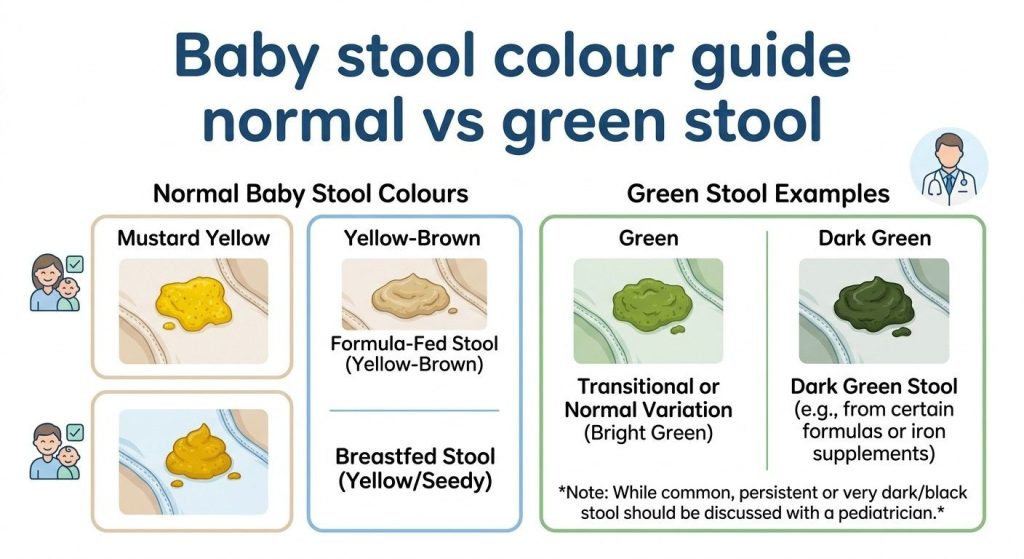
Baby stool colour is mainly influenced by bile, a natural digestive fluid produced in the liver.
Bile starts green and gradually changes to yellow or brown as it moves through the intestines. If digestion occurs quickly, bile does not fully break down, and the stool may stay green.
This is often completely normal in babies and, on its own, is usually not a sign of illness.
Common Causes of Green Poop in Babies
Green stool can appear for several everyday reasons, most of which are related to feeding or normal digestive changes.
One of the most common causes is how milk or formula is digested. When food moves more quickly through the gut than usual, bile does not have enough time to change colour, resulting in green stool.
Feeding patterns
In breastfed babies, green stool can sometimes occur when a baby takes in more foremilk (the thinner, watery milk at the start of a feed) than hindmilk (the richer, fattier milk that comes later). This may happen with shorter feeds or frequent switching between breasts.
In formula-fed babies, green stool is often linked to:
- Iron-fortified formula (which commonly darkens stool)
- Switching between formulas
- The digestive system is adjusting to a new formula
These changes are usually temporary and settle once the baby adapts.
Green Poop in Breastfed Babies
In breastfed babies, green stool is quite common and is usually not a concern.
It may simply reflect feeding patterns, especially during growth spurts when babies feed more frequently or for shorter periods.
If your baby is otherwise well-fed, has enough wet nappies, and is gaining weight, green stool alone is typically not a cause for concern.
Green Poop in Formula-Fed Babies
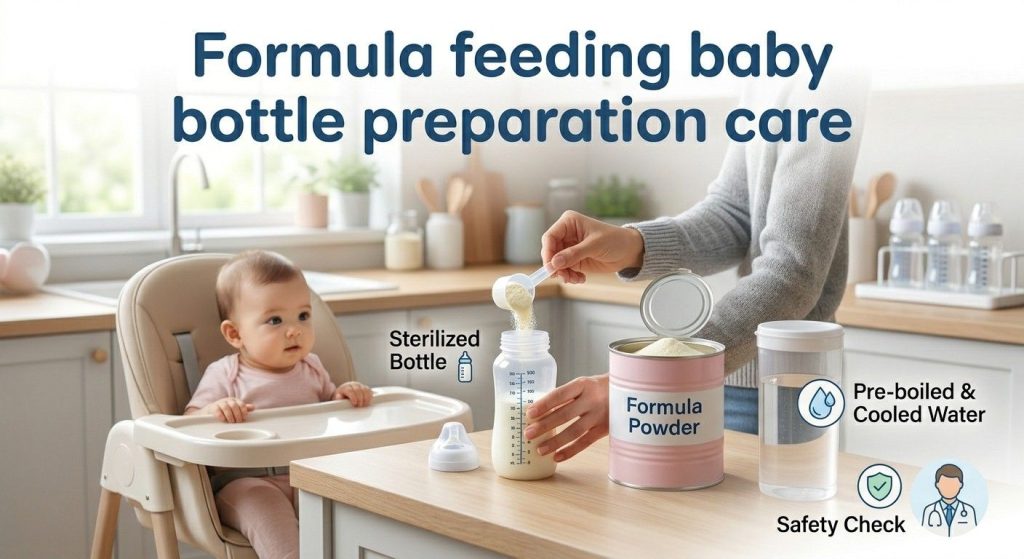
Formula-fed babies may pass green stool more often than breastfed babies, and this is often related to the formula itself rather than illness.
It is especially common when:
- Starting a new formula
- Changing formula brands
- Using an iron-enriched formula
As the digestive system adjusts, stool colour usually returns to normal within a few days.
Teething and Green Stool
Teething is often blamed for many baby symptoms, including changes in stool colour.
While teething does not directly cause green poop, babies may swallow more saliva during this stage. This can slightly affect digestion and lead to looser or occasionally greener stools.
The key point is that any stool changes during teething should still be short-lived and mild.
When Green Poop May Be a Concern
Although green stool is usually harmless, it should be taken more seriously if it occurs alongside other symptoms.
You should seek medical advice if you notice:
- Persistent diarrhoea
- Blood or mucus in the stool
- Vomiting
- Fever
- Poor feeding or refusal to feed
- Fewer wet nappies (possible dehydration)
- Unusual sleepiness, irritability, or lethargy
These symptoms may suggest infection or another condition that needs assessment.
Green Poop and Infection
In some cases, green stool can be linked to an infection.
When the digestive system moves too quickly due to illness, bile does not fully break down, which can result in green diarrhoea.
This becomes more concerning if accompanied by fever, vomiting, or signs of dehydration. In these cases, the baby may appear generally unwell and should be assessed promptly.
What You Can Do at Home
If your baby has green stool but is otherwise well, there is usually no need for treatment.
The best approach is to continue normal feeding and monitor your baby’s overall condition. Focus on:
- Regular feeding patterns
- Adequate wet nappies
- Alertness and normal behaviour
- Signs of hydration
In most cases, the stool colour settles on its own without any intervention.
When to See a Doctor
It is important to seek medical advice if:
- Green stool persists for more than a few days without improvement
- Your baby is feeding poorly
- There is blood in the stool
- Signs of dehydration appear
- Your baby seems unusually tired, floppy, or unwell
When it comes to infants, parental instinct matters; if something feels off, it is always better to have your baby checked.
Final Thoughts
Green poop in babies is usually part of normal digestive variation and is most often linked to feeding patterns or mild, temporary changes in the gut.
While it can look concerning, it is rarely dangerous on its own. The most important thing to watch is your baby’s overall wellbeing — not just stool colour.
However, when green stool appears alongside symptoms such as fever, vomiting, diarrhoea, or poor feeding, it should be assessed by a healthcare professional.
If you found this post helpful, you might also like:
Clinic or Hospital for a Sick Baby? Emergency Warning Signs Parents Should Know
Baby Not Pooping: What’s Normal, What’s Not, and When to Worry
Baby Not Feeding Well: What It Really Means and When to Worry
Baby Symptoms Guide: What’s Normal & When to Worry (A Nurse’s Guide for Parents)
Home Care for Diarrhoea in Toddlers: A Nurse’s Guide for Busy Mums

Nurse K is a practising PHC nurse in South Africa. She writes anonymously to help busy mums raise healthy little ones. Real advice. No jargon. No judgement.
Medical Disclaimer
Medical Disclaimer
The information provided on BusyMumsWorld is for general informational and educational purposes only. This website does not constitute medical advice, diagnosis, or treatment.
About Me
I am a registered nurse with the South African Nursing Council (SANC). I draw upon my nursing training and clinical experience to provide helpful, evidence-informed information for mothers, babies, and families. However, my role on this website is that of an educator and content creator, not your personal healthcare provider.
No Nurse-Patient Relationship
Your use of this website does not create a nurse-patient relationship between you and me. The content on this site does not replace an in-person clinical assessment, physical examination, or professional medical consultation. In accordance with the Nursing Act, 2005 (Act No. 33 of 2005) and the SANC Code of Ethics, I clearly distinguish between my role as a registered nurse in clinical practice and my role as a content creator.
For Babies and Children
Content related to infant and child health is for educational purposes only. Every child is unique. What works for one child may not be appropriate for another. Always consult your paediatrician, clinic sister, family doctor, or other qualified healthcare provider regarding any medical concerns about your child, including changes in behaviour, feeding, sleep, growth, or physical symptoms.
For Mothers
Content related to pregnancy, antenatal care, postpartum recovery, breastfeeding, and maternal health is for educational purposes only. Your healthcare needs are individual and may change during pregnancy and the postnatal period. Always seek guidance from your doctor, midwife, obstetrician, lactation consultant, or local clinic for any questions about your or your baby’s health.
South African Context
Where possible, I aim to provide information relevant to the South African healthcare context, including public and private healthcare considerations. However, healthcare resources, protocols, and availability may vary by province, facility, and individual circumstance. Always confirm information with your own healthcare provider.
SANC Compliance
In compliance with the rules and ethical guidelines of the South African Nursing Council (SANC):
- I clearly state that the information on this site does not constitute the practice of nursing as defined in the Nursing Act
- I do not offer individualised nursing assessments, diagnoses, or treatment plans through this website
- I encourage all readers to seek in-person care from registered healthcare professionals for their specific health needs
- I maintain professional boundaries by not providing specific medical advice in response to comments, emails, or messages
Emergency Warning
If you or your child is experiencing a medical emergency, do not use this website for advice. Call emergency services immediately. Alternatively, go to your nearest hospital emergency department, clinic, or doctor immediately.
Do not delay seeking emergency care because of something you have read on this website.
Limitation of Liability
I make every effort to ensure the accuracy of the information published on this site. However, medical knowledge is constantly evolving, and information may become outdated. I cannot guarantee that all information is complete, current, or accurate for every individual circumstance. I assume no responsibility or liability for any errors or omissions in the content of this site. Your use of this website is at your own risk.
Affiliate Disclosure
BusyMumsWorld participates in affiliate marketing programmes. This means that some links on this site may be affiliate links. If you choose to purchase through these links, I may earn a small commission at no additional cost to you.
My Commitment to You
I am a registered nurse with the South African Nursing Council (SANC). My recommendations are based on my professional knowledge, clinical experience, and genuine belief that a product may be helpful to my audience. Affiliate partnerships do not influence my clinical judgement, the information I provide, or my commitment to evidence-based content.
Important Note
Products mentioned on this site are for informational purposes only. If a product makes medical claims, please consult your doctor, paediatrician, or other qualified healthcare provider before use. My nursing credentials do not constitute an endorsement of any specific product, and I do not receive compensation for clinical recommendations.
Last Updated: March 2026