Watching your baby’s first teeth come through is an exciting milestone, but it can also bring plenty of new worries. One day you notice more drooling than usual, and the next, there’s a red rash around your baby’s mouth or chin. It’s only natural to wonder, is this teething? Could it be an allergy? Should I be worried?
One of the most common concerns I hear from parents as a primary health care nurse is whether teething can cause a rash. The good news is that most teething rashes are harmless and can be managed at home with gentle skin care. The challenge is knowing when it’s simply a drool rash and when it could be something else that needs medical attention.
This guide will help you understand what a teething rash looks like, why it happens, how to soothe your baby’s skin, and the warning signs that mean it’s time to see a healthcare provider.
Can teething cause a rash?
Yes—but not in the way many people think.
Teething itself does not directly cause a rash. Instead, babies often drool much more while teething. When saliva sits on delicate skin for long periods, it can irritate the skin and cause what is commonly called a teething rash or drool rash.
The rash is caused by constant moisture and skin irritation, not by the tooth pushing through the gums.
Understanding this small difference is important because it helps explain why teething doesn’t cause rashes anywhere else on the body. If your baby develops a widespread rash, there may be another cause that may need a healthcare professional to assess it.
What does a teething rash look like?
A teething rash usually appears anywhere saliva regularly makes contact with the skin.
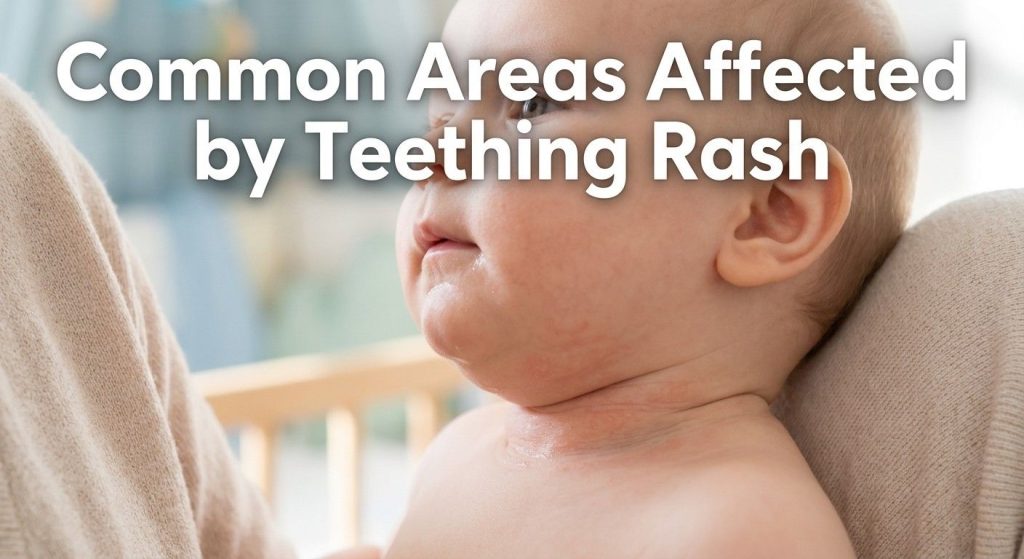
Drool rashes usually appear where saliva comes into contact with the skin.
The most common areas include:
- Around the mouth
- Chin
- Cheeks
- Neck folds
- Upper chest
The rash may look like this:
- Pink or red
- Slightly raised
- Dry or rough
- Chapped
- Small red bumps
- Mildly flaky
Sometimes the skin looks worse after naps because saliva has stayed against the skin for several hours.
In my experience as a primary health care nurse, many parents worry that the rash looks painful. Fortunately, most babies are bothered far more by sore gums than by the rash itself, although very irritated skin can become uncomfortable.
Why does drool irritate the skin?
Many parents are surprised to learn that saliva isn’t just water.
Saliva contains digestive enzymes and tiny food particles that help begin the digestion process. When saliva sits on the skin all day, it slowly breaks down the skin’s protective barrier. Combined with constant wiping, friction from clothing or bibs, and sensitive baby skin, irritation develops quite easily.
Think of it like wearing wet clothing all day. Eventually the skin becomes sore.
When are babies most likely to get a teething rash?
Although every baby develops differently, teething rash is most common between 4 and 18 months.
Many babies actually begin drooling several months before their first tooth appears.
Your baby may also drool more when they
- chew on toys
- suck their fingers
- use a dummy
- sleep on one side
- have several teeth erupting together
Some babies hardly develop a rash at all, while others seem to get one with every new tooth.
Is a teething rash itchy?
Usually not.
Most teething rashes are caused by irritation rather than allergy, so they are not usually itchy.
Instead, parents often notice that the skin looks the following:
- sore
- dry
- rough
- slightly tender
If your baby seems intensely itchy, scratches constantly, or the rash spreads beyond the drool area, another skin condition such as eczema or an allergic reaction may be responsible.
How can I tell if it’s a teething rash or something else?
This is where many parents become anxious.
Not every rash around the mouth is caused by teething.
Here’s how they often differ.
Teething (drool) rash
A teething rash usually
- stays around the mouth, chin, neck or chest
- appears where saliva touches the skin
- comes and goes
- improves when the skin is kept dry
- is not usually associated with fever
- does not make your baby generally unwell
Eczema
Eczema often causes:
- very dry skin
- itchy patches
- recurring flare-ups
- rashes on the cheeks, arms and legs
- family history of eczema, asthma or allergies
Unlike a drool rash, eczema isn’t limited to areas where saliva collects.
Heat rash
Heat rash develops when sweat becomes trapped in the skin.
It commonly appears.
- in neck folds
- under clothing
- during hot weather
The bumps are usually tiny and may disappear once your baby cools down.
Allergic rash
A rash caused by an allergy may:
- appear soon after eating a new food
- spread beyond the face
- occur with swelling
- occur with hives
- sometimes be associated with vomiting or breathing difficulties
These symptoms require prompt medical assessment, especially if your baby has difficulty breathing or swelling of the lips or tongue.
Hand, Foot and Mouth Disease
Parents sometimes mistake the rash caused by Hand, Foot and Mouth Disease (HFMD) for a teething rash, especially when it first appears around the mouth. However, HFMD usually also causes painful mouth sores, a fever, poor feeding and a rash on the hands and feet.
A simple drool rash does not cause these symptoms.
Does teething cause a rash all over the body?
No.
This is one of the biggest myths surrounding teething.
Research consistently shows that teething does not cause a widespread body rash. If your baby develops a rash on their tummy, back, arms or legs, it’s important not to assume teething is the cause. Another illness, infection, allergy or skin condition may need to be considered.
Likewise, teething does not cause:
- high fever
- persistent diarrhoea
- severe illness
- widespread rash
Blaming these symptoms on teething can delay getting appropriate medical care for another condition.
How to treat a teething rash at home
The good news is that most teething rashes improve with simple skin care. The aim is to protect your baby’s delicate skin from constant moisture while giving it time to heal.
In my experience as a primary health care nurse, parents often feel they need to buy expensive creams. Most of the time, the best treatment is simply reducing the amount of saliva sitting on the skin.
Gently pat the skin dry
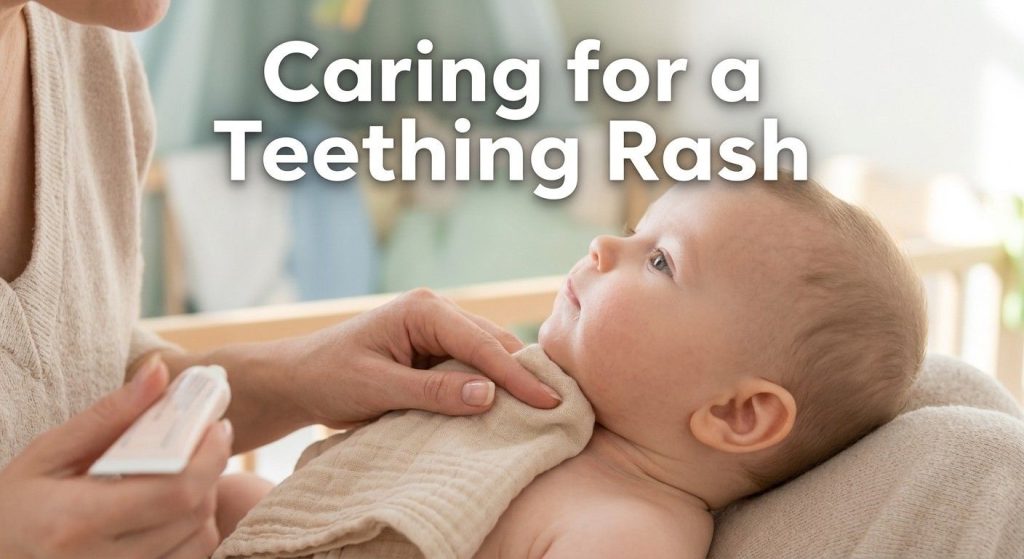
Whenever possible, gently pat your baby’s face dry instead of rubbing it.
Frequent rubbing with tissues or rough cloths can make the irritation worse. A soft muslin cloth or clean cotton cloth is usually kinder to sensitive skin.
Don’t worry if you can’t keep the skin completely dry all day—babies drool, especially while teething. The goal is to reduce how long saliva stays on the skin.
Apply a protective barrier
Once the skin is clean and dry, applying a thin layer of a protective barrier can help shield it from saliva.
Barrier products work by creating a protective layer between your baby’s skin and the drool. This gives irritated skin a chance to recover while helping prevent further moisture damage.
If you’re unsure which product is suitable for your baby, speak to your healthcare provider or pharmacist.
Change wet bibs and clothing
Many babies soak through several bibs a day while teething.
A damp bib resting against the neck can keep the skin wet for hours, leading to irritation in the neck folds and upper chest.
Changing wet bibs and clothing regularly can make a noticeable difference.
Choose soft, absorbent bibs and avoid leaving a soaked bib on for long periods.
Keep the skin clean
After feeds, gently wipe away milk, food and saliva.
Food mixed with saliva can sometimes increase skin irritation, particularly around the mouth.
Use lukewarm water and avoid harsh soaps unless advised by your healthcare provider.
Offer safe teething relief
When babies are uncomfortable, they often drool even more because they’re constantly chewing and mouthing objects.
Offering safe teething toys or other age-appropriate comfort measures may help reduce discomfort.
If your baby seems very uncomfortable, discuss suitable pain relief options with your healthcare provider or pharmacist.
What should you avoid?
Some well-meaning remedies can actually make a teething rash worse.
Avoid:
- Scrubbing the rash
- Using alcohol-based products
- Applying strongly scented creams or lotions
- Using adult skincare products
- Leaving saliva on the skin for long periods
- Keeping wet bibs on all day
It’s also best to avoid applying creams inside your baby’s mouth unless specifically recommended by a healthcare professional.
How long does a teething rash last?
Every baby is different.
Some rashes disappear within a day or two once the skin is protected.
Others come and go for several weeks because babies continue drooling as more teeth erupt.
Many parents notice a pattern:
- The drooling increases.
- The rash appears.
- The tooth breaks through.
- The drooling settles.
- The skin clears.
Then the cycle may repeat with the next tooth.
Although this can feel never-ending, it usually becomes much less of an issue once most of the baby teeth have come through.
Can a teething rash become infected?
Yes, although it isn’t common.
When irritated skin becomes cracked, bacteria or yeast can sometimes enter the damaged skin.
You should have your baby assessed if the rash:
- becomes increasingly painful
- develops yellow crusting
- starts oozing
- bleeds easily
- becomes swollen
- feels warm to the touch
- develops pus
- spreads rapidly
These changes may suggest the skin has become infected and needs medical assessment. If you are unsure of the type of rash your baby has, you might want to read this post: Understanding Baby Rashes: What is Normal?
When should I take my baby to a healthcare provider?
Most teething rashes can safely be managed at home.
However, your baby should be assessed if:
- the rash is spreading quickly
- it isn’t improving after several days of gentle skin care
- the skin becomes cracked or infected
- your baby develops a high fever
- your baby seems unusually sleepy or difficult to wake
- your baby refuses to feed
- the rash appears all over the body
- blisters develop
- there is swelling of the lips, tongue or face
- your baby has difficulty breathing
One of the most important messages I share with parents is this:
If your baby seems generally unwell, don’t assume it’s simply teething.
Teething may happen at the same time as illnesses such as viral infections, ear infections or other childhood conditions. It’s always better to have your child assessed if something doesn’t seem right.
Unsure when to take your baby to hospital? Read Clinic or Hospital for a Sick Baby? Emergency Warning Signs Parents Should Know
Common myths about teething rashes
Myth: Teething causes body rashes.
Fact: Teething-related drool usually irritates only where saliva touches the skin.
Myth: Every rash during teething is normal.
Fact: While drool rashes are common, not every rash is caused by teething. Other conditions such as eczema, allergies, viral illnesses, or infections should also be considered.
Myth: A severe rash means the tooth is about to come through.
Fact: The severity of the rash doesn’t predict when the tooth will erupt. Some babies drool heavily with very little rash, while others develop irritated skin before every new tooth.
Myth: Teething always causes fever.
Fact: Teething may cause a slight temperature rise, but it should not cause a high fever. A baby with a significant fever should be assessed for another possible cause.
A note from Nurse K
After caring for children in primary health care for many years, I’ve learned that parents usually know when something isn’t quite right.
Most teething rashes are mild, temporary and improve with gentle skin care. They can certainly look alarming, especially on fair or sensitive skin, but they rarely indicate anything serious.
Trust your instincts.
If your baby is smiling, feeding well, playing and otherwise behaving normally, a drool rash is usually nothing to panic about.
But if your child seems unusually unwell, develops a widespread rash, has difficulty breathing, or you’re simply worried, don’t hesitate to seek medical advice. It’s always better to ask than to spend the day wondering.
After all, no one knows your baby better than you.
Frequently Asked Questions
Can teething cause a rash on a baby’s face?
Yes. Increased drooling during teething can irritate delicate skin, causing a red rash around the mouth, cheeks and chin. The rash is caused by saliva sitting on the skin rather than the teething process itself.
Does every teething baby get a rash?
No. Some babies drool very little and never develop a rash, while others have sensitive skin and seem to get a drool rash with every new tooth.
Can teething cause a rash on the neck?
Yes. Saliva often runs into the neck folds, especially when babies sleep or wear bibs for long periods. Keeping the area clean and dry can help prevent irritation.
Can teething cause a rash on the chest?
Sometimes. Babies who drool heavily may develop a rash on the upper chest where saliva soaks into clothing.
Is a teething rash contagious?
No. A teething or drool rash cannot be passed from one child to another.
Can teething cause blisters?
No. Blisters are not a normal feature of a teething rash. If your baby develops blisters or sores, they should be assessed by a healthcare provider.
Should I put petroleum jelly on a teething rash?
A protective barrier may help reduce irritation by preventing saliva from sitting directly on the skin. If you’re unsure which barrier product is appropriate for your baby, ask your healthcare provider or pharmacist for advice.
How can I prevent a teething rash?
You may not be able to prevent it completely; however, you can reduce the risk by gently patting drool away, changing wet bibs promptly, keeping the skin clean and dry, and protecting the skin with an appropriate barrier product if recommended.
If you found this article helpful, you might also like:
Baby Pulling Ears While Teething: What It Means and When to Worry
Teething and Breastfeeding: Why Babies Bite, Feed Less, and Refuse the Breast
Teething in Babies: The Complete Nurse’s Guide to Symptoms, Myths, Relief & When to Worry
TEETHING IN BABIES: SYMPTOMS – WHAT’S NORMAL VS NOT

Nurse K is a practising PHC nurse in South Africa. She writes anonymously to help busy mums raise healthy little ones. Real advice. No jargon. No judgement.
Medical Disclaimer
Medical Disclaimer
The information provided on BusyMumsWorld is for general informational and educational purposes only. This website does not constitute medical advice, diagnosis, or treatment.
About Me
I am a registered nurse with the South African Nursing Council (SANC). I draw upon my nursing training and clinical experience to provide helpful, evidence-informed information for mothers, babies, and families. However, my role on this website is that of an educator and content creator, not your personal healthcare provider.
No Nurse-Patient Relationship
Your use of this website does not create a nurse-patient relationship between you and me. The content on this site does not replace an in-person clinical assessment, physical examination, or professional medical consultation. In accordance with the Nursing Act, 2005 (Act No. 33 of 2005) and the SANC Code of Ethics, I clearly distinguish between my role as a registered nurse in clinical practice and my role as a content creator.
For Babies and Children
Content related to infant and child health is for educational purposes only. Every child is unique. What works for one child may not be appropriate for another. Always consult your paediatrician, clinic sister, family doctor, or other qualified healthcare provider regarding any medical concerns about your child, including changes in behaviour, feeding, sleep, growth, or physical symptoms.
For Mothers
Content related to pregnancy, antenatal care, postpartum recovery, breastfeeding, and maternal health is for educational purposes only. Your healthcare needs are individual and may change during pregnancy and the postnatal period. Always seek guidance from your doctor, midwife, obstetrician, lactation consultant, or local clinic for any questions about your or your baby’s health.
South African Context
Where possible, I aim to provide information relevant to the South African healthcare context, including public and private healthcare considerations. However, healthcare resources, protocols, and availability may vary by province, facility, and individual circumstance. Always confirm information with your own healthcare provider.
SANC Compliance
In compliance with the rules and ethical guidelines of the South African Nursing Council (SANC):
- I clearly state that the information on this site does not constitute the practice of nursing as defined in the Nursing Act
- I do not offer individualised nursing assessments, diagnoses, or treatment plans through this website
- I encourage all readers to seek in-person care from registered healthcare professionals for their specific health needs
- I maintain professional boundaries by not providing specific medical advice in response to comments, emails, or messages
Emergency Warning
If you or your child is experiencing a medical emergency, do not use this website for advice. Call emergency services immediately. Alternatively, go to your nearest hospital emergency department, clinic, or doctor immediately.
Do not delay seeking emergency care because of something you have read on this website.
Limitation of Liability
I make every effort to ensure the accuracy of the information published on this site. However, medical knowledge is constantly evolving, and information may become outdated. I cannot guarantee that all information is complete, current, or accurate for every individual circumstance. I assume no responsibility or liability for any errors or omissions in the content of this site. Your use of this website is at your own risk.
Affiliate Disclosure
BusyMumsWorld participates in affiliate marketing programmes. This means that some links on this site may be affiliate links. If you choose to purchase through these links, I may earn a small commission at no additional cost to you.
My Commitment to You
I am a registered nurse with the South African Nursing Council (SANC). My recommendations are based on my professional knowledge, clinical experience, and genuine belief that a product may be helpful to my audience. Affiliate partnerships do not influence my clinical judgement, the information I provide, or my commitment to evidence-based content.
Important Note
Products mentioned on this site are for informational purposes only. If a product makes medical claims, please consult your doctor, paediatrician, or other qualified healthcare provider before use. My nursing credentials do not constitute an endorsement of any specific product, and I do not receive compensation for clinical recommendations.
Last Updated: March 2026